
The slim era is over. It lasted longer than it should have, and it left a generation of men convinced that a trouser fitting like a second skin was the default state of dressing well. It was not. For most of the two centuries before the skinny jean arrived, men wore different types of trousers with volume, with a proper rise, and often with pleats. This was especially true in men’s suits, where proportion carried the look. Those cuts were not stylistic experiments. They were how trousers were designed to function on a body.
What is happening in menswear right now is not a trend in the usual sense. Wide-leg trousers for men are not back because some designer decided it was time. They are back because the overcorrection finally ran its course. When everything is slim for long enough, the eye starts to understand what it was missing: the drape of a full leg, the way a high waist changes the proportion of an entire outfit, the visual logic of a pleat at rest. These are not aesthetic preferences. They are facts about how clothing works.
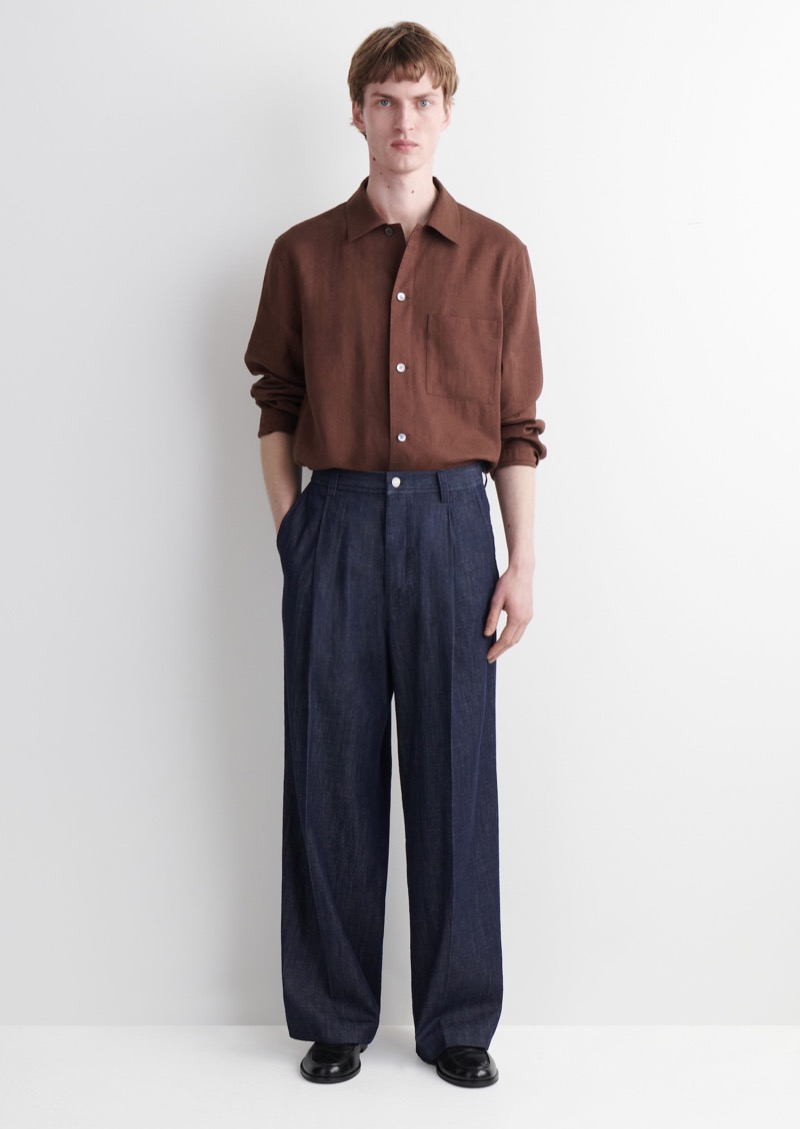
The men who dismiss these silhouettes as costume or trend-chasing are missing the point. The 1940s trouser, the 70s wide-leg, the 90s pleated dress pant were not departures from the norm. They were the norm. The aberration was the decade-plus of spray-on denim that followed.
Wide-Leg Trousers for Men
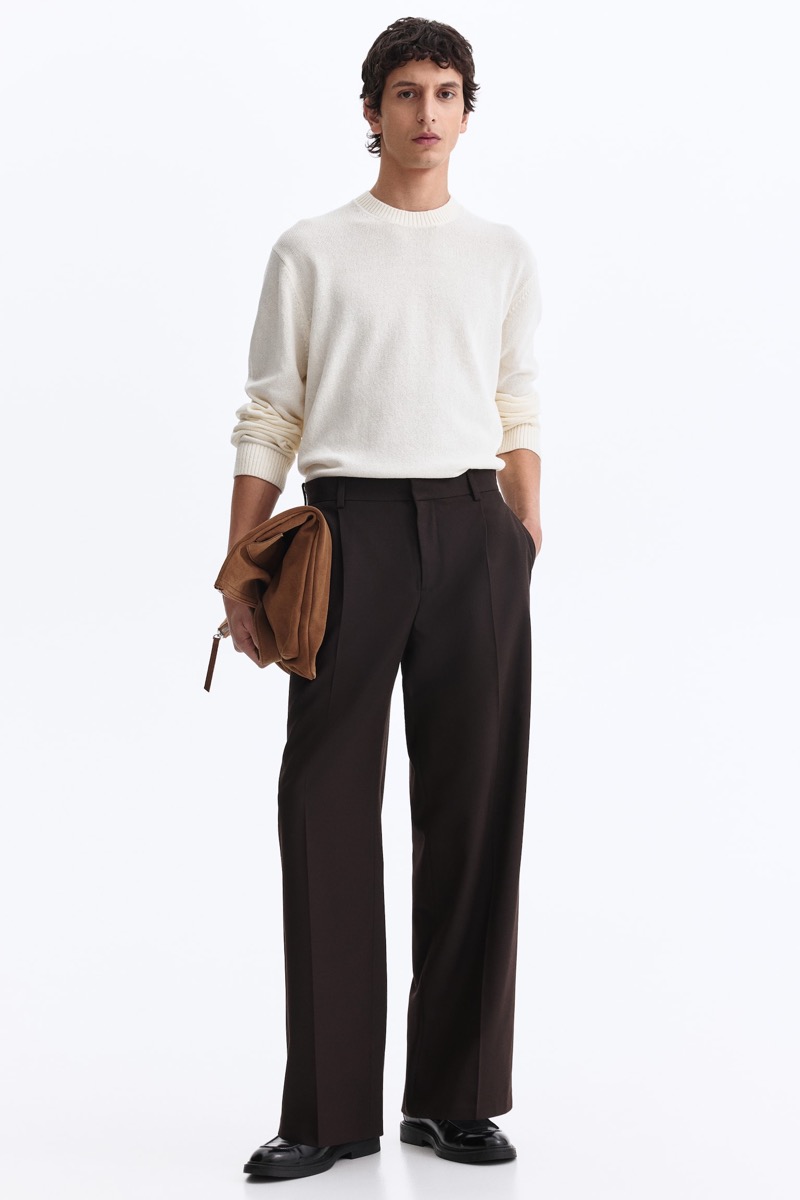
The wide-leg trouser is the most accessible entry in this group, which is also why it gets misread most often. The common mistake is treating volume as an instruction to go big everywhere. A wide-leg trouser works when the top half is fitted enough to give the leg somewhere to be. A fitted crew neck, a slim turtleneck, a plain tee with a slight tuck: all of these give the silhouette the contrast it needs.
The reference points are worth understanding because they explain why the cut works. Italian tailoring in the 1970s produced wide trousers alongside high-armhole, structured jackets: a narrow frame above, a full frame below. American sportswear of the same era did the same thing differently, pairing a simple fitted knit with a trouser that had real width and break. The logic in both cases was identical. Volume in the leg lands when something above it holds the line.
On fit: the leg opening should be wide enough to drape along its length. A cropped wide-leg looks like a half-measure. The full break, with the hem sitting over or pooling slightly at the shoe, is where the silhouette does its work.
High-Waisted Trousers
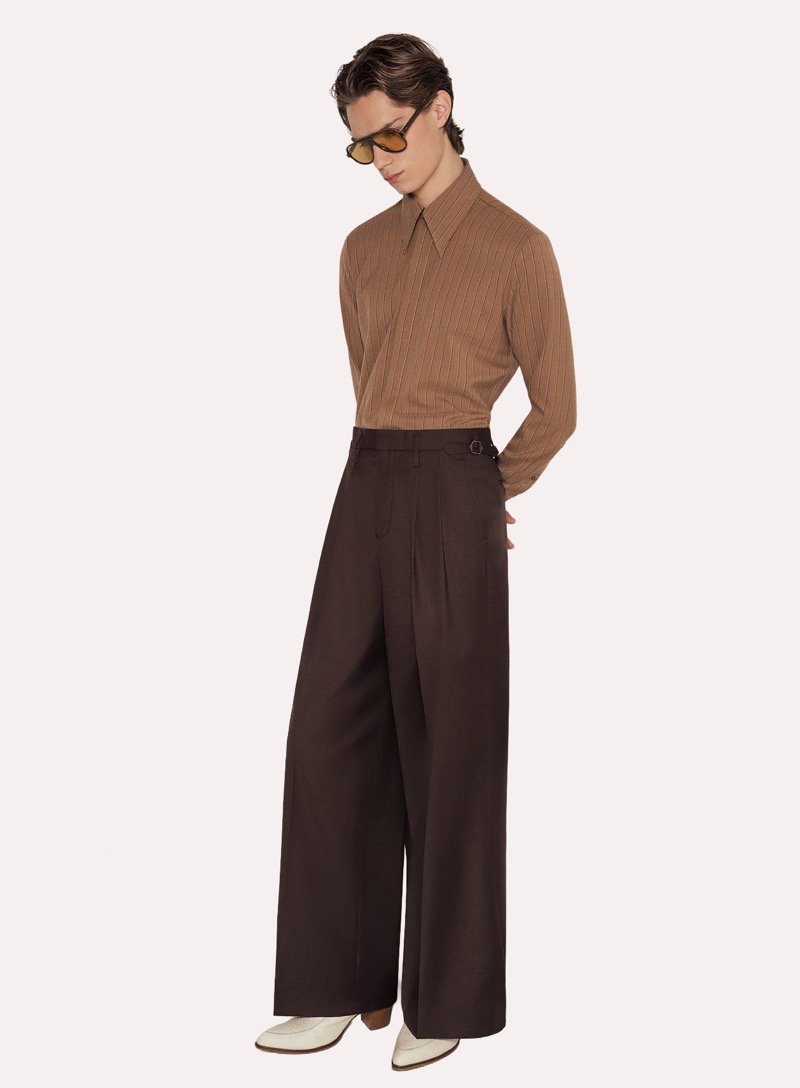
The rise of a trouser is the most underestimated detail in men’s dressing. Most men give it no thought at all, which is why so many otherwise well-chosen trousers produce a silhouette that looks slightly off. A mid or low rise shortens the torso visually, cuts the body at an unflattering horizontal, and compresses the leg line. A high rise corrects all three.
A high-waisted trouser works because it establishes the waist as the visual center of the outfit. When the trouser sits at or above the natural waist and the shirt is tucked, the leg line begins higher and appears longer. The overall silhouette is taller and cleaner than the same trouser worn low would produce.
The concern most men have about high-waisted trousers is that they will look dated. The fix is straightforward. Keep the top half contemporary: a fitted knit, a simple linen shirt, a slim turtleneck. The trouser holds the retro proportion; the top does not need to match it. The outfit looks contemporary when only one element is doing the period work.
Pleated Trousers
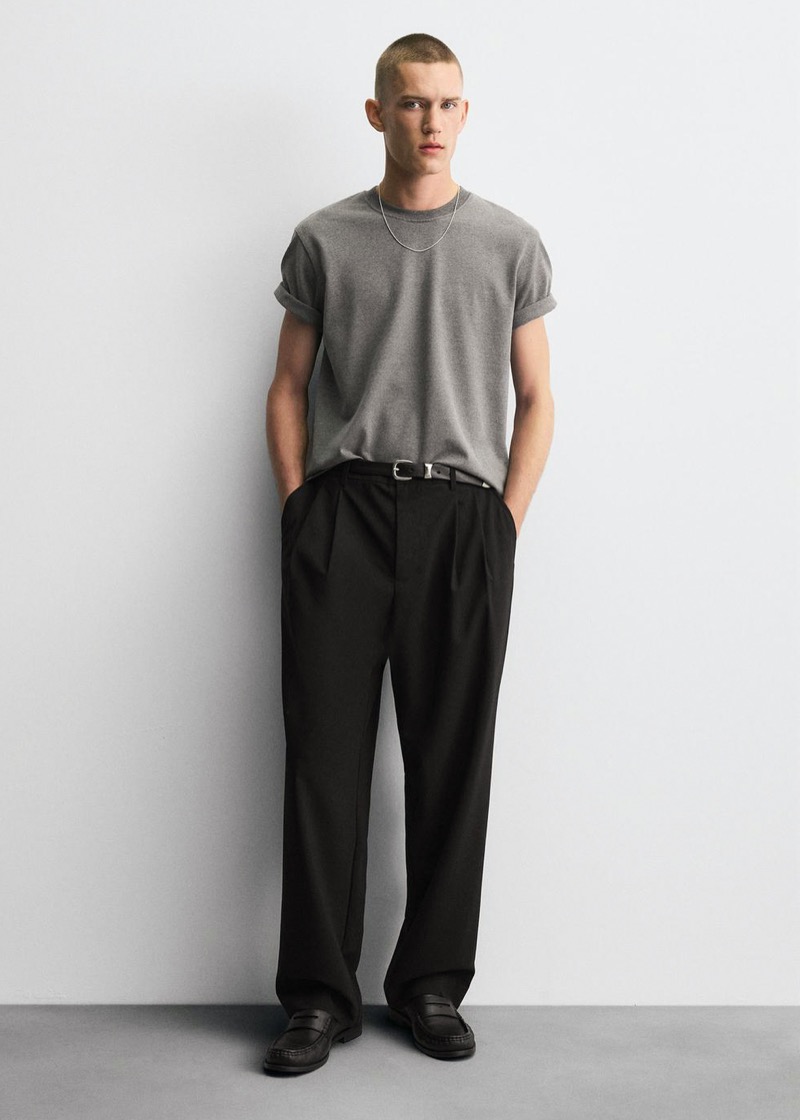
The pleat disappeared from mainstream menswear sometime in the 2000s and did not come back for nearly two decades. It did not go away because it stopped working. It went away because slim-cut trousers, by definition, have no room for one. As the silhouette opens up again, the pleat returns with it.
The case for pleats is proportional. A forward pleat, folding toward the fly, adds volume in the upper thigh and hip that a flat-front trouser does not have. For men with larger thighs or a fuller hip, this makes the trouser dramatically comfortable and flattering. For men with slimmer proportions, the pleat still produces a cleaner drape once the fabric falls into its natural hang.
Single pleats work across a wider range of outfits and body types. They add volume where it is needed and have a lighter period reference than the fuller alternative. Double pleats are the traditional option: they have a stronger 1940s reference and work in heavier fabrics like wool flannel or tweed where the material has the weight to hang correctly. In a lightweight fabric, a double pleat can look excessive. The rule is straightforward: the heavier the fabric, the fuller the pleat it can support.
Flared Trousers
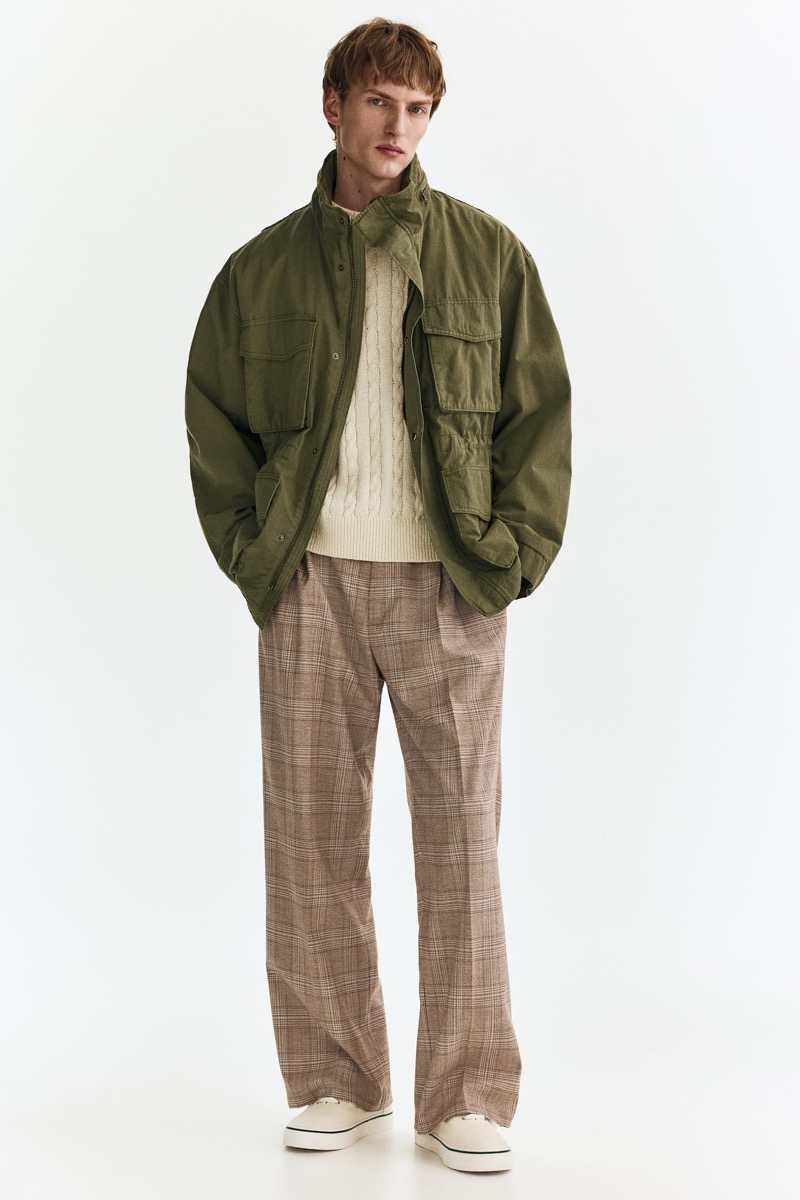
Flared trousers are the most demanding item in this group because the failure mode is theatrical. A wide-leg trouser that goes wrong looks oversized. A flare that goes wrong looks like a costume. The difference is the hem, and the degree of flare.
The flare to look for originates from around the knee, widens gradually, and finishes with a hem that is visibly wider than a straight trouser but not aggressively so. The bell-bottom is a different garment. A contemporary flared trouser is a wide-leg with a slight outward sweep at the hem, and it works as a tailoring choice when the rest of the outfit is understated.
The styling principle is the same as with wide-legs: fitted on top. With a flare, the shoe becomes critical in a way it is not with other silhouettes. The hem needs to sit over or just at the shoe. A cropped flare, showing ankle, breaks the line the flare is trying to establish. Wear them long, with a leather boot or a clean derby that the hem can sit over, and the silhouette holds together. Wear them cropped and the whole thing collapses.
How to Start
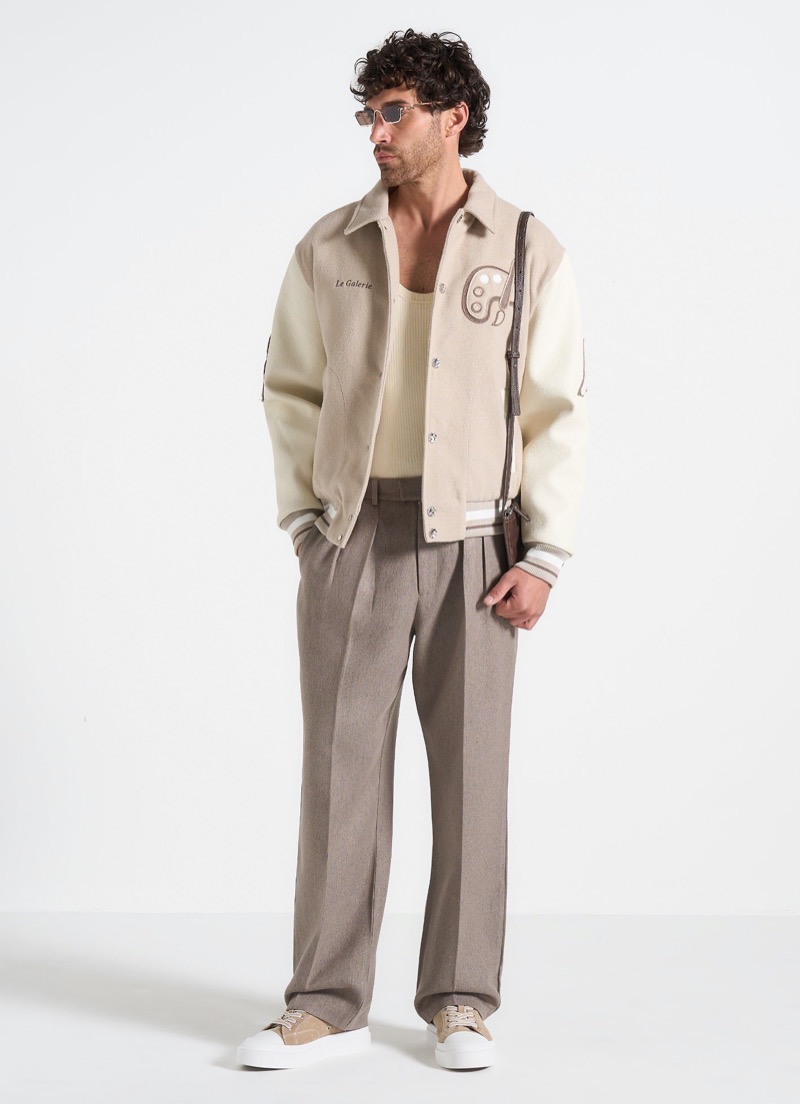
The case for these silhouettes is clear enough. The question most men have at this point is not whether they work but where to start, one piece at a time, instead of rebuilding the wardrobe around them.
The single best entry point is a pleated wide-leg trouser in a neutral: charcoal, navy, stone, camel. A color that pairs with what is already there. Wear it with a fitted knit or a plain tee and a loafer. One item, familiar styling, a silhouette that does the work. Nothing around it needs to change.
From there the logic follows. A high-waisted trouser in a relaxed cut. A single-pleat pant in a heavier fabric for cooler months. The flare only comes when you are comfortable with the proportions on a basic wide-leg first. None of these silhouettes require an immediate overhaul. They require one good trouser at a time.
Frequently Asked Questions
What are wide-leg trousers for men? Wide-leg trousers for men are trousers cut with a full, open leg from the hip down, producing a silhouette that drapes along its length. Unlike slim or straight-cut trousers, the leg width stays broad from thigh to hem. The style has roots in 1940s tailoring and 1970s Italian and American sportswear and is currently one of the dominant silhouettes in menswear.
How should men style wide-leg trousers? The proportion principle for wide-leg trousers is fitted on top, full on the bottom. A slim knit, a plain tee, or a fitted shirt tucked in all work. Footwear should sit under or just at the hem rather than cropping the leg short. Loafers and leather derbies are the most reliable choices.
What is the difference between wide-leg and flared trousers? Wide-leg trousers maintain a consistent, full leg width from hip to hem. Flared trousers taper slightly through the thigh and knee before widening toward the hem. The flare is a directional shape with a specific hem sweep; the wide-leg is a fuller, uniform volume throughout the leg.
Are pleated trousers flattering for men? Pleated trousers suit a wider range of body types than flat-front trousers because the forward pleat adds volume in the upper thigh and hip. For men with larger thighs, the fit is comfortable and the drape is clean. Single pleats are the versatile option; double pleats work best in heavier fabrics with the weight to hang correctly.
Why do high-waisted trousers look good on men? High-waisted trousers sit at or above the natural waist, which extends the visual leg line and adds length to the torso. A trouser sitting low cuts the body at an unflattering point and shortens both the leg and the overall silhouette. The high rise, combined with a shirt tuck, produces a cleaner, taller result.
Are retro trouser silhouettes a trend or a lasting shift? Wide-leg, pleated, and high-waisted trousers dominated men’s dressing for most of the twentieth century. The decade-plus of slim fits was the departure from that norm. What is happening now is a correction back toward proportions that were standard for most of tailoring history, which is a stronger foundation than a trend.