
Most men own a dozen shirts and wear three of them. That isn’t a storage problem. It’s a knowledge problem. Understanding what each shirt is actually made for makes it easier to choose the right one, buy less of the wrong ones, and put together outfits that hold together.
The types of shirts for men cover a wider range than most wardrobe guides admit. From the plain cotton T-shirt to a formal tuxedo shirt, each style has a specific construction logic, a natural context, and a set of pairings that make it work, including how to tuck in a shirt when the occasion calls for it. This guide covers all of them.
Different Types of Shirts for Men
What are the different types of shirts for men? The main types of shirts for men are T-shirts, polo shirts, Oxford shirts, dress shirts, linen shirts, denim shirts, flannel shirts, overshirts, Henley shirts, camp collar shirts, Hawaiian shirts, tuxedo shirts, and a range of utility, sport, and specialty styles covered in full below.
Everyday Shirts
The shirts most men reach for first. Low-maintenance, broadly versatile, and effective across a wide range of casual settings.
The T-Shirt
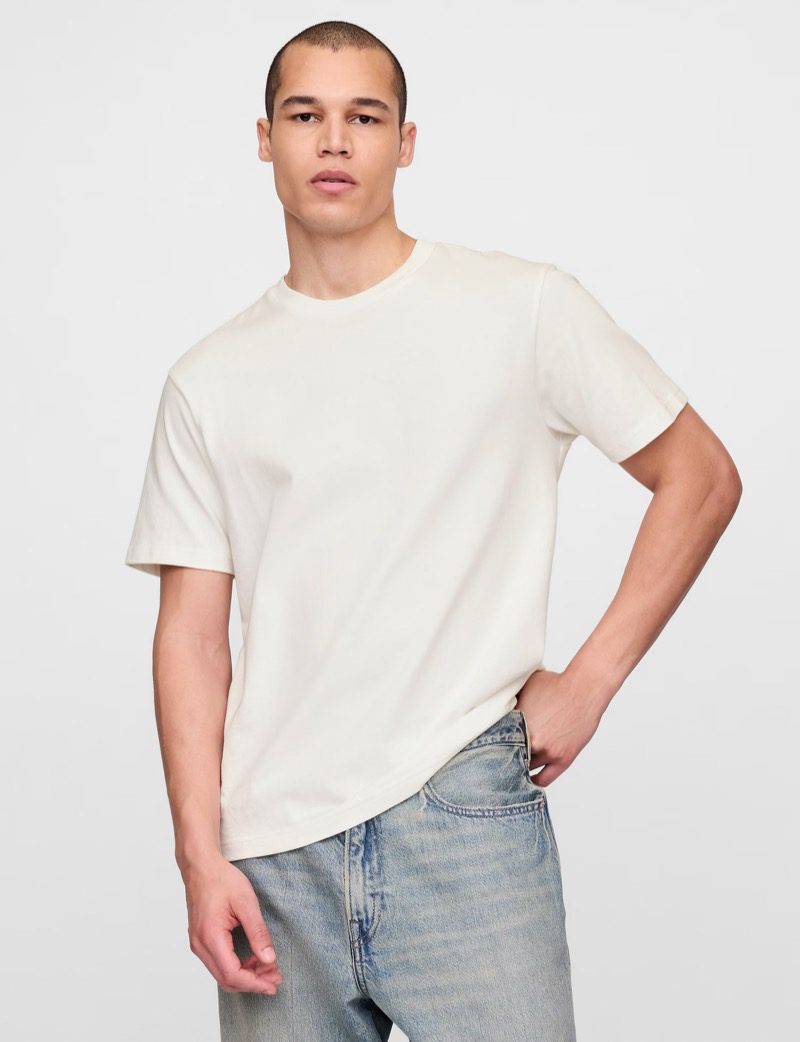
The T-shirt is a short-sleeved, crew neck or V-neck top cut from jersey cotton, with no collar, no buttons, and no fastening of any kind. It is the foundation of casual dressing for a reason: a well-fitting T-shirt in a neutral color works with jeans, chinos, shorts, or under an open overshirt without requiring any additional thought. The variables that matter are weight (150gsm sits closer to the body; 220gsm holds its shape better over time), fabric (combed cotton has a tighter surface than standard cotton), and fit (the shoulder seam should sit at the edge of the shoulder, full stop).
Best for everyday casual wear, layering, warm-weather dressing, most outfits from jeans to chinos.
The Pocket Tee
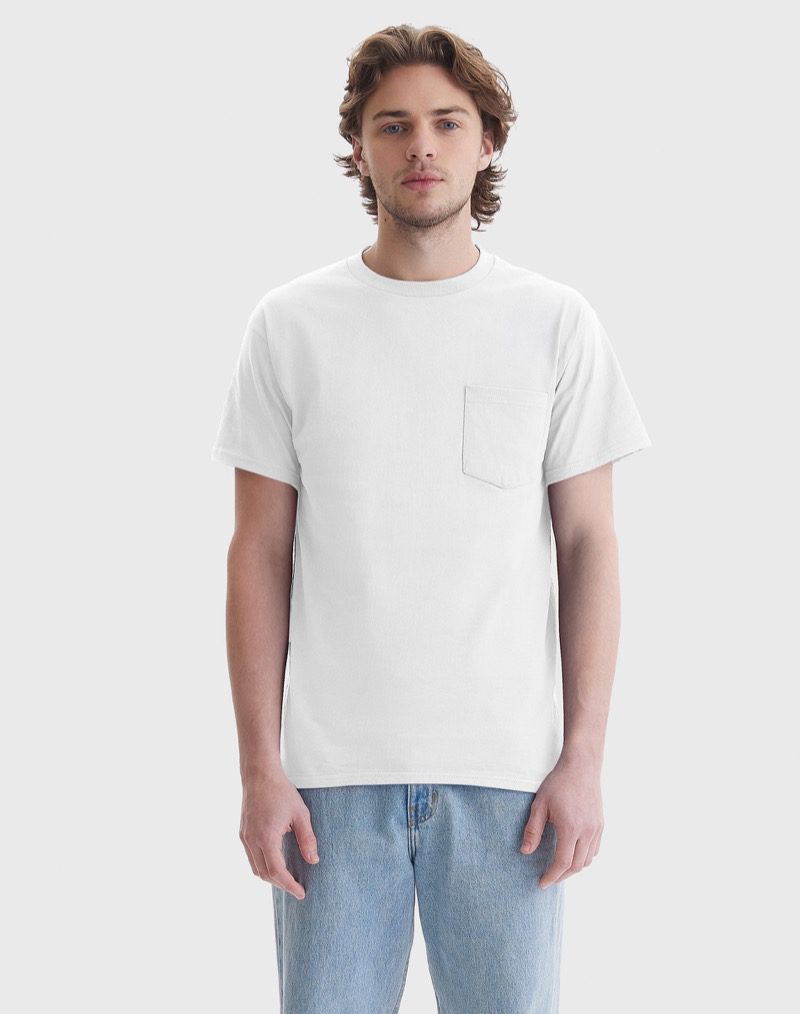
A pocket tee is a T-shirt with a single patch pocket stitched at the left chest. The pocket adds one detail to an otherwise plain garment, which is enough to shift the feel slightly. Paired with denim or chinos, it suggests a certain off-duty ease. In heavier cotton, it has a workwear reference. In lighter weights, it reads as a summer staple. Either way, it earns its place as an alternative to the plain T-shirt when you want the same utility with a small point of difference.
Best for casual daily wear, weekend dressing, pairs well with denim and chinos.
The Long-Sleeve Tee
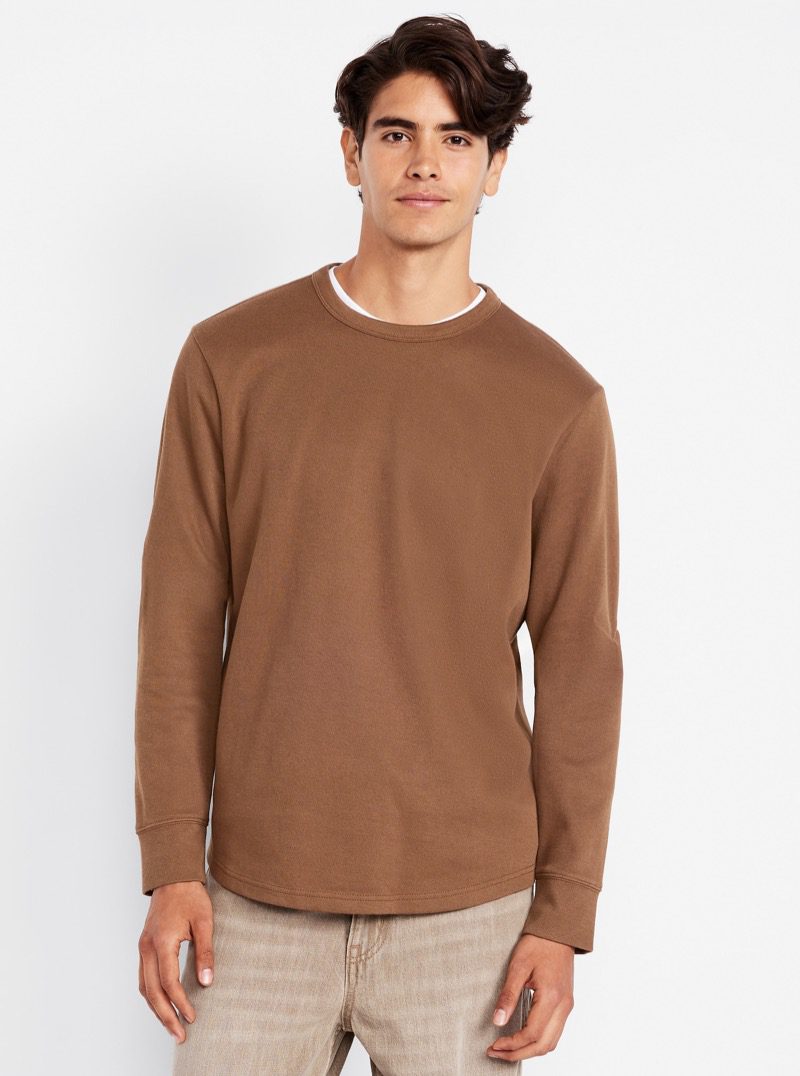
A long-sleeve tee is the T-shirt extended to full sleeve length, with the same crew or V-neck construction and no collar. It covers the gap between a short-sleeve T-shirt and a sweatshirt, making it a natural transitional piece in spring and fall, and a base layer in winter. The best long-sleeve tees are slightly slimmer in the body than their short-sleeve equivalents to prevent bunching under other layers.
Best for transitional weather, layering under overshirts and jackets, cooler evenings.
The Polo Shirt
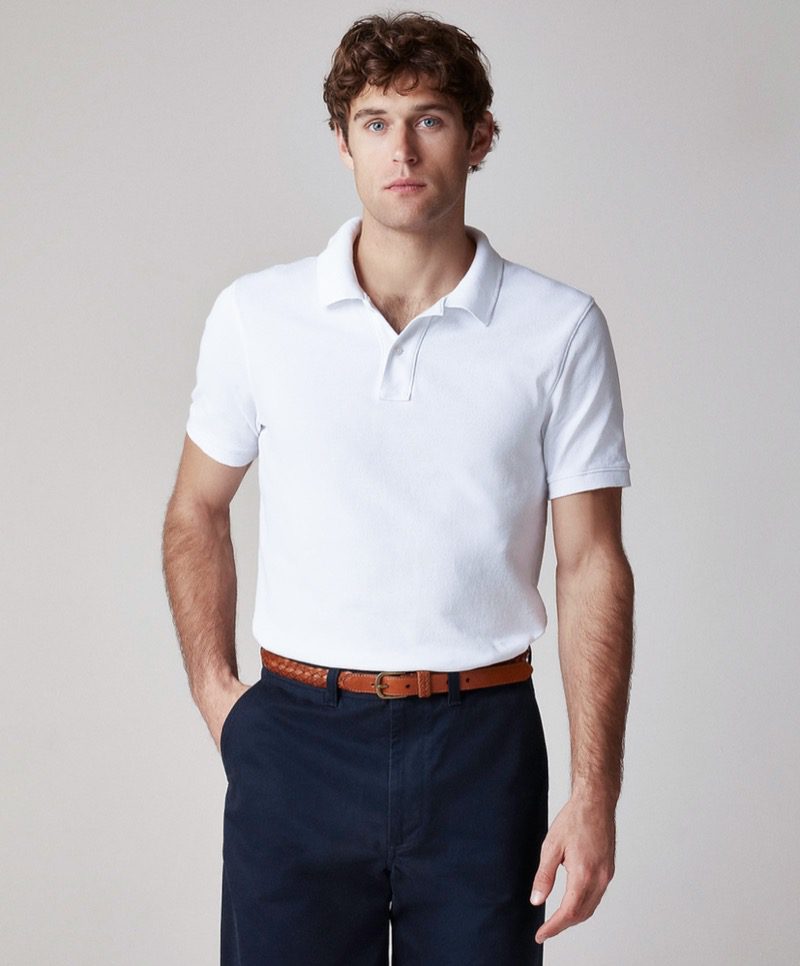
A polo shirt is a short-sleeved knit top with a ribbed collar and a two- or three-button placket at the chest. The collar is what separates it from a T-shirt and makes it work in contexts where a plain crew neck won’t. In pique cotton, it holds its shape across a long day. In finer merino or jersey, it sits closer to the skin and reads slightly smarter. Pair it with chinos for a casual-smart result, or with shorts for a cleaner take on warm-weather dressing than a T-shirt provides.
Best for smart-casual occasions, warm-weather dressing, works with chinos, shorts, and casual trousers.
The Henley Shirt
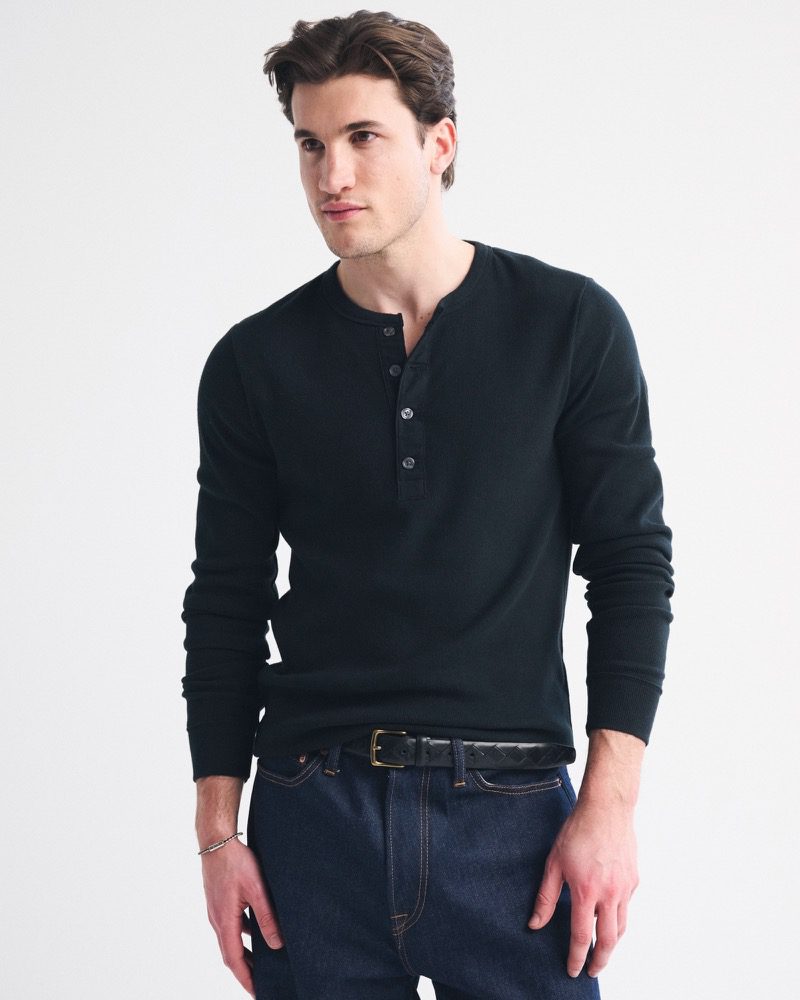
A Henley shirt is a collarless top with a short buttoned placket at the chest, typically cut in jersey or waffle-knit cotton. It sits between a T-shirt and a polo in terms of formality: it has more visual interest than a plain tee but none of the structure a collar provides. The waffle-knit version has a texture that photographs well and works layered under a denim jacket or flannel shirt through colder months.
Best for casual wear, layering, a step up from a plain T-shirt without adding a collar.
Casual Button-Ups
Shirts with collars and buttons, made for everyday use. They range from the crisp OCBD to the soft flannel, but the logic is the same: more structure than a T-shirt, more flexibility than a dress shirt.
The Oxford Shirt
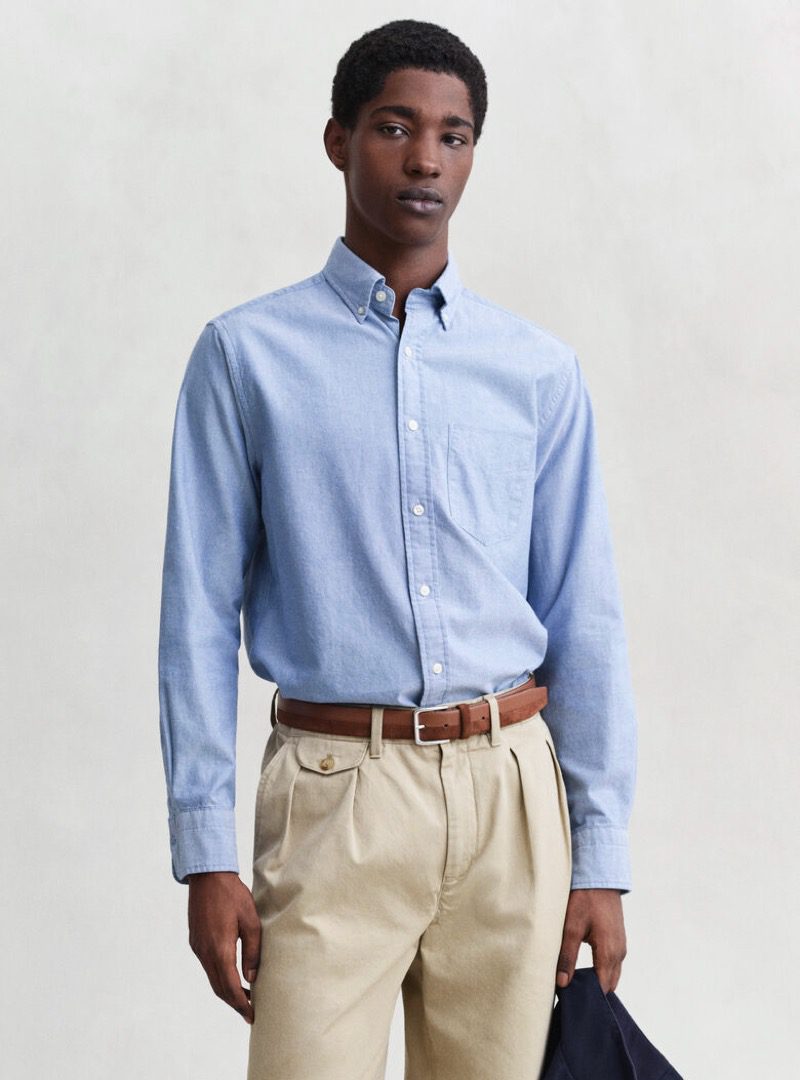
An Oxford shirt is a button-up cut from Oxford cloth, a basket-weave cotton fabric with a slightly textured surface and a softer hand than poplin or broadcloth. The button-down collar, where the collar points fasten to the shirt with small buttons, is the defining detail of the most common version, the OCBD (Oxford cloth button-down). It works with denim, chinos, or under a blazer, which makes it one of the most adaptable shirts in a wardrobe. The collar roll matters: a good OCBD has a soft, natural roll at the collar band, not a flattened press.
Best for smart-casual settings, layering under blazers, pairs with almost anything.
The Chambray Shirt
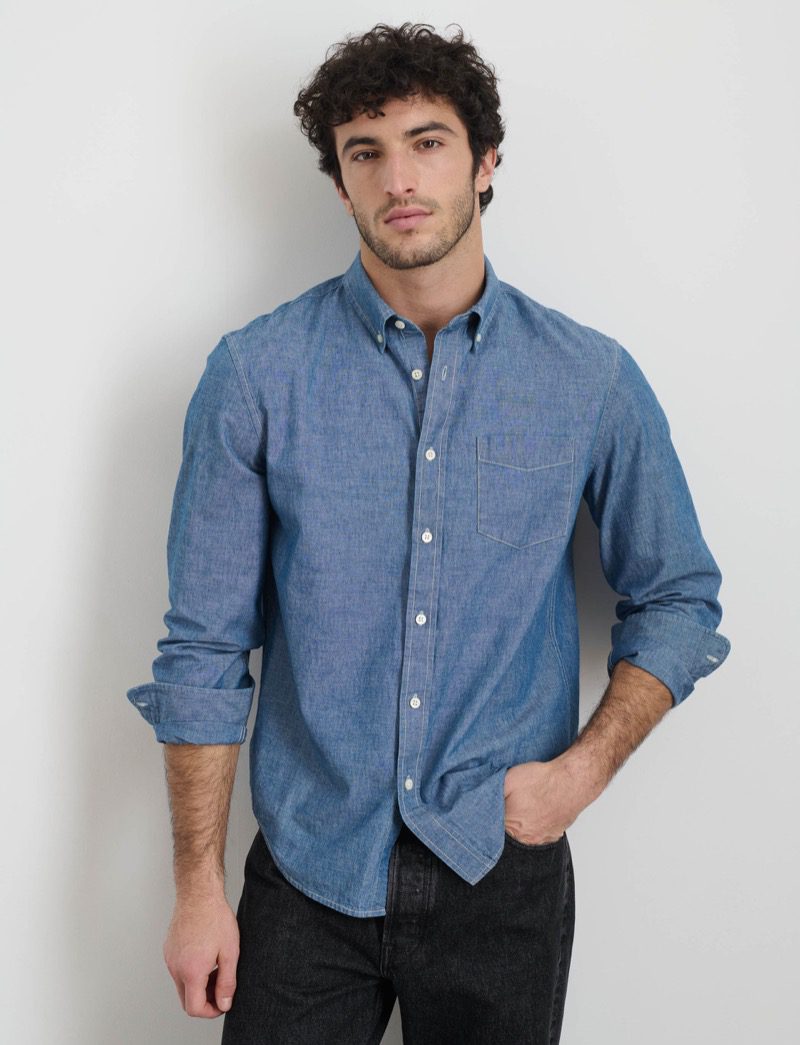
A chambray shirt is a button-up woven in a plain weave from indigo-dyed warp threads and white weft threads, giving it a lighter, softer appearance than denim while sharing some of its color profile. It works with chinos or khakis where denim would create a clash, and it sits better in warmer weather than a heavier denim shirt. The plain weave also means it presses smoothly, making it a low-effort option for occasions that require a collared shirt.
Best for warm weather, pairs well with chinos and neutral trousers, an alternative to denim for double-fabric situations.
The Flannel Shirt
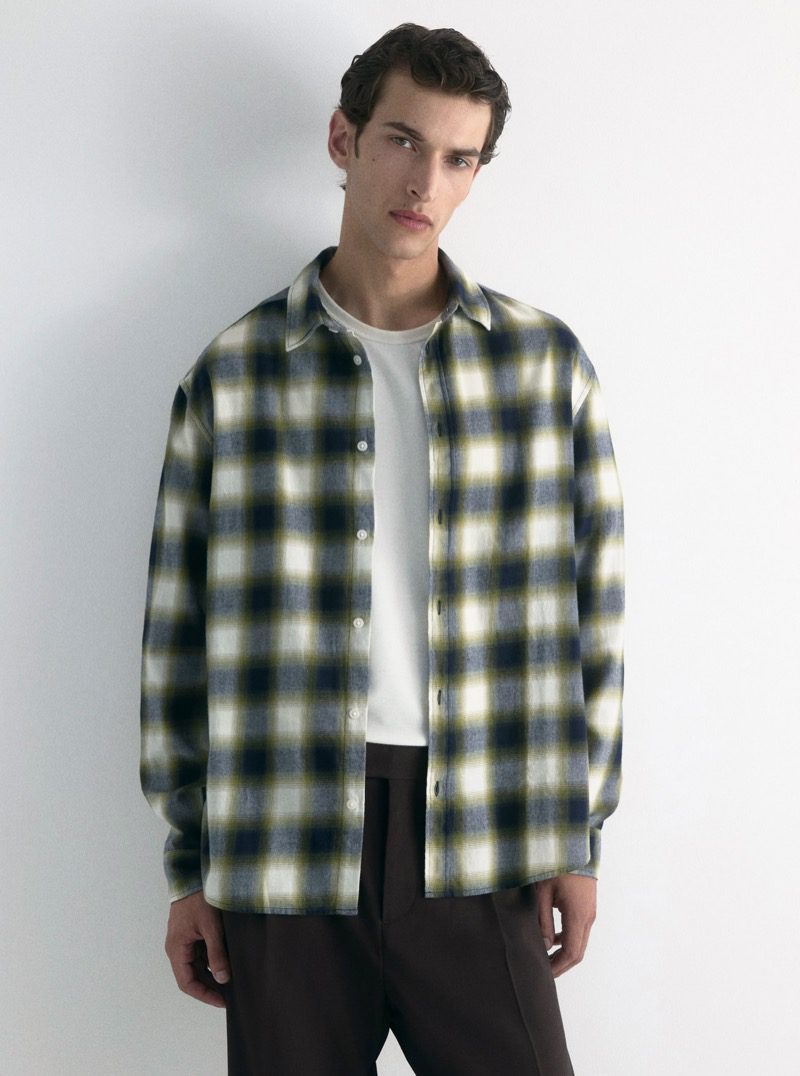
A flannel shirt is a button-up woven from a brushed wool or cotton fabric, which raises the fibers slightly to create a soft, warm surface. It is a cold-weather shirt, designed to work as a midlayer over a T-shirt or under a heavier jacket. Plaid patterns are common, but solid flannels work just as well and read as slightly more current. The key fit consideration is the chest: a flannel that pulls across the chest on the second button will bunch and lose its shape through the day.
Best for fall and winter, casual settings, works over a T-shirt or under an overshirt or jacket.
The Short-Sleeve Shirt
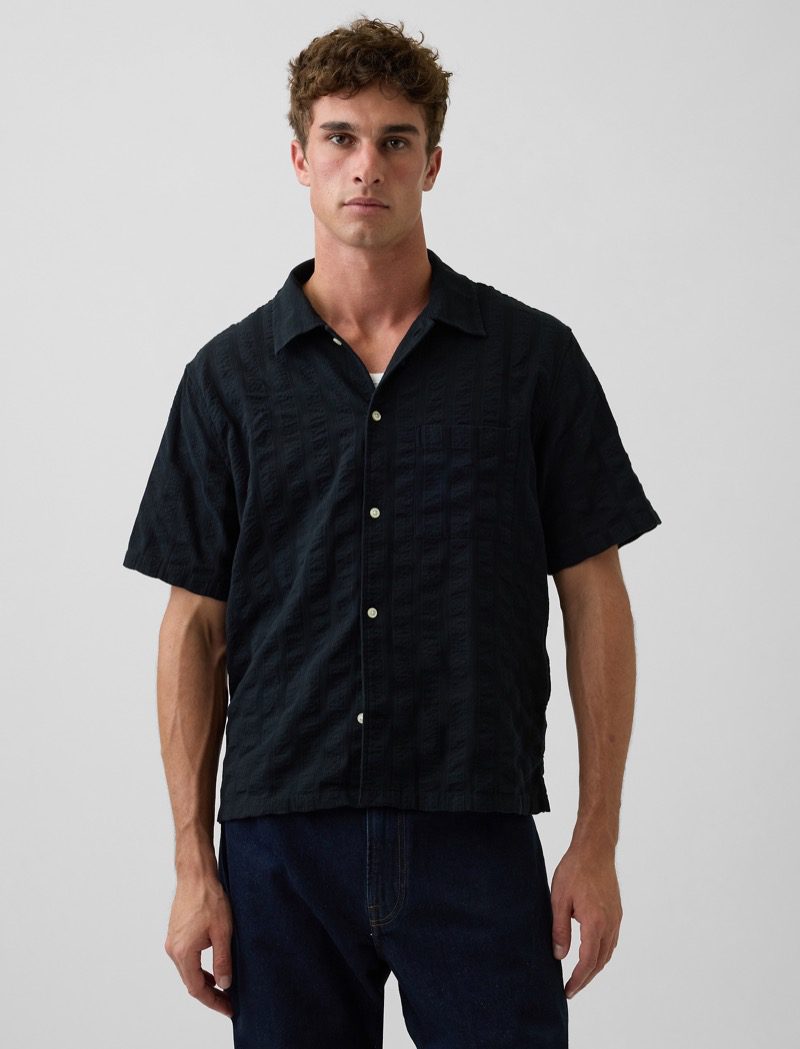
A short-sleeve shirt is a collared button-up cut to sleeve lengths that end at or above the elbow. In linen or cotton, it handles warm weather with a structure that a T-shirt can’t match. The fit matters more on short sleeves than long: the sleeve hem should sit mid-bicep, and the body should taper enough to avoid looking like it belongs to a larger man. Worn with tailored shorts or lightweight trousers, it covers a range of warm-weather situations where a T-shirt reads as underdressed.
Best for warm weather, casual and smart-casual occasions, pairs with shorts or lightweight trousers.
The Western Shirt
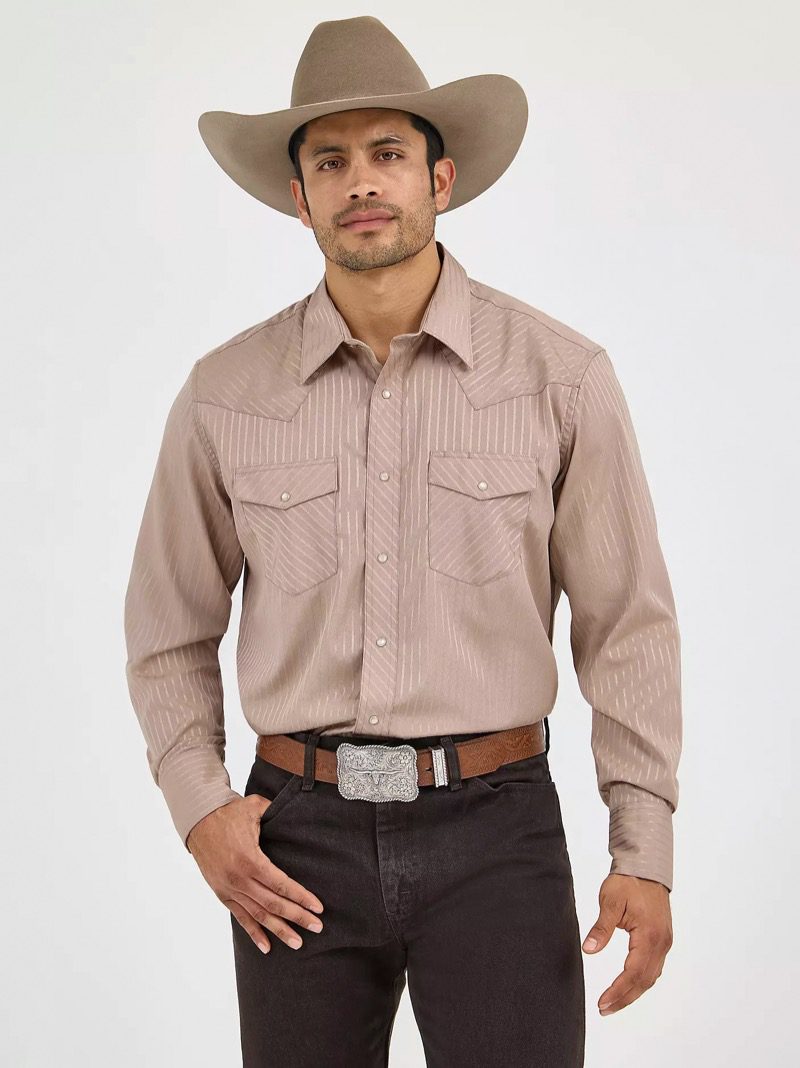
A western shirt is a button-up defined by its pointed yoke at the chest and back, snap fastenings in place of buttons, and decorative stitching across the chest panels. The construction comes from American ranchwear but has moved through vintage fashion and into current wardrobes as a shirt with genuine character. Pair it open over a white T-shirt, or wear it buttoned with slim trousers for a look that has a specific point of view without trying hard.
Best for casual wear, works open as an overshirt or buttoned as a statement shirt.
Utility and Work Shirts
Shirts built with function in mind. They have heavier construction, practical details, and a workwear reference that has become a stable part of casual menswear.
The Denim Shirt
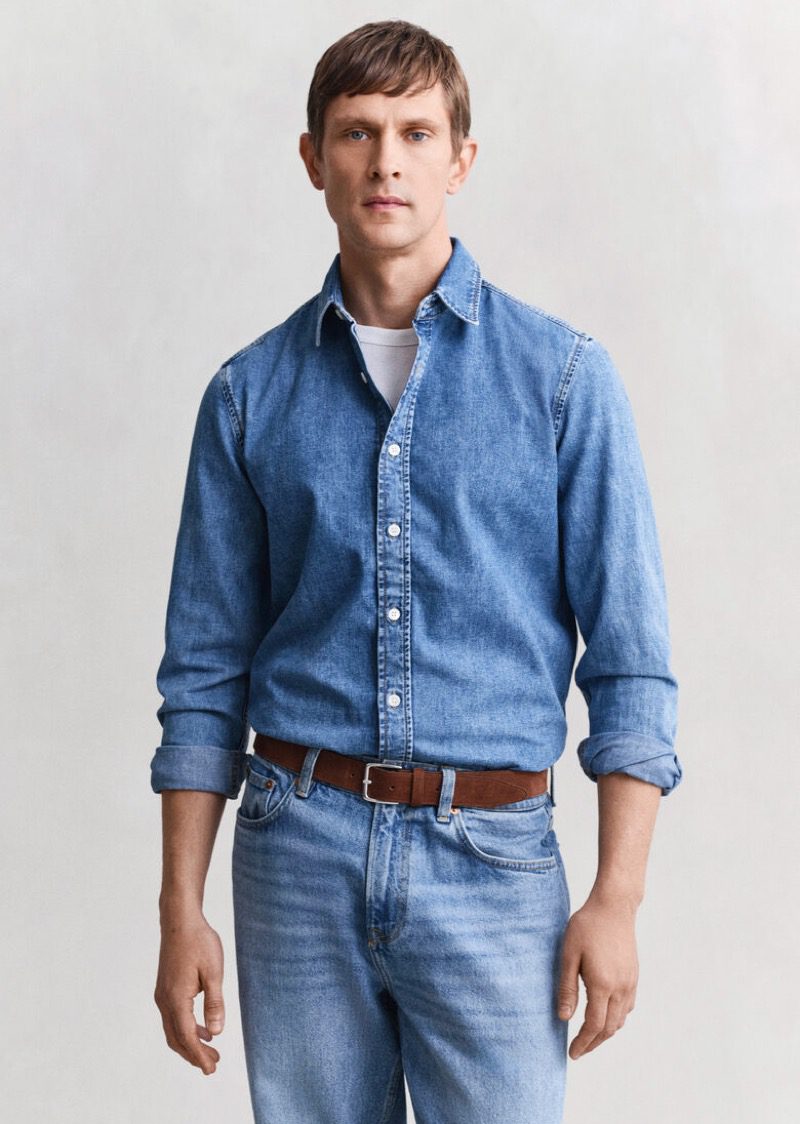
A denim shirt is a button-up cut from denim fabric, typically 6-8oz for a shirt-weight version that drapes rather than holds a shape. It has a workwear origin and a utility feel, but it sits comfortably in casual wardrobes worn with chinos, corduroy, or as a layer over a white T-shirt. The one denim shirt outfit pairing to approach carefully is indigo jeans. Unless the wash contrast between shirt and jeans is significant, the result heads toward full denim territory, which requires commitment to work.
Best for casual wear, layering, pairs with chinos, cords, and light trousers.
The Overshirt
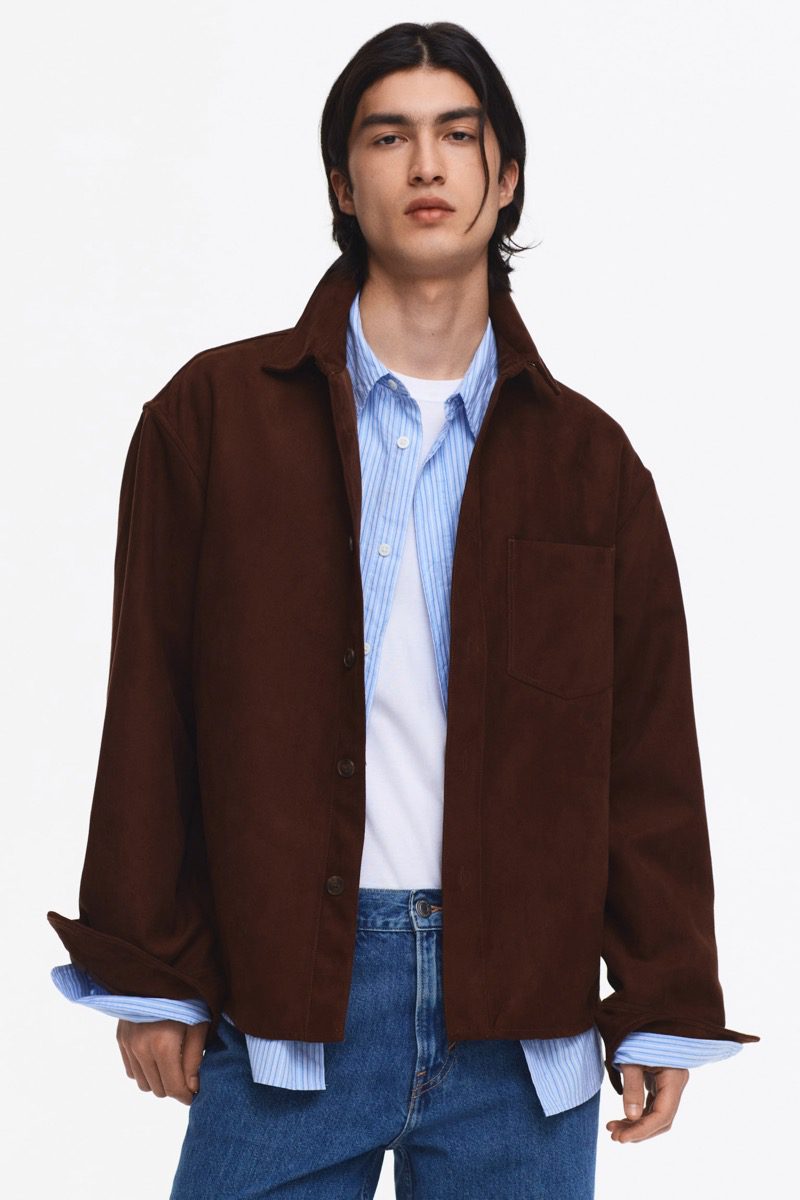
An overshirt is a shirt cut at jacket weight, designed to be worn open or partially buttoned over a T-shirt or lighter shirt. Common fabrics include heavy brushed cotton, wool blends, and canvas, all at weights heavy enough to function as a light layer in transitional weather. It is neither a shirt nor a jacket but sits comfortably between them, which is its entire purpose. In early spring or late fall, it replaces the need for a full jacket in temperatures that don’t require serious insulation.
Best for transitional weather, layering over T-shirts, casual settings.
The Utility Shirt
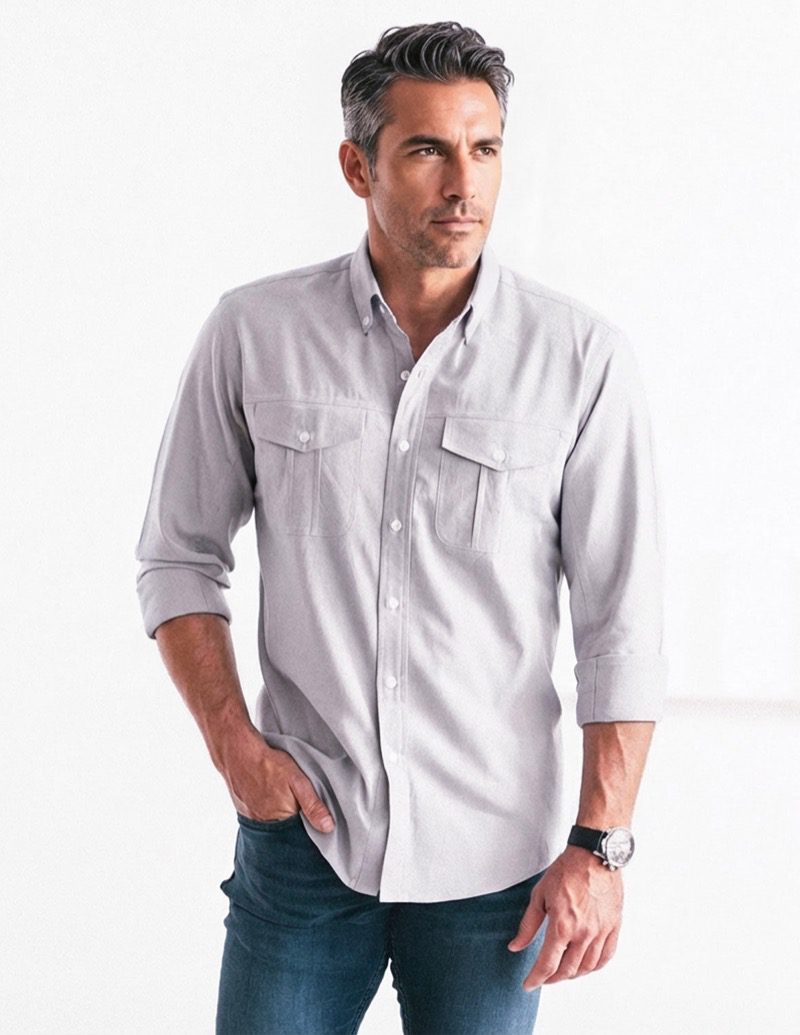
A utility shirt is a work shirt built with reinforced construction: sturdy cotton or cotton-canvas fabric, chest pockets with flap closures, and seaming designed to hold up under repeated use. The detail comes from the practical details, the seam placement, the pocket configuration, the gussets, rather than from decoration. Worn with denim or cargos, it has a workwear grounding. In solid tones and fitted cuts, it works in casual settings where you want texture and weight without anything that reads as fashion.
Best for casual wear, works with denim, chinos, and cargo trousers.
The Flap Pocket Shirt
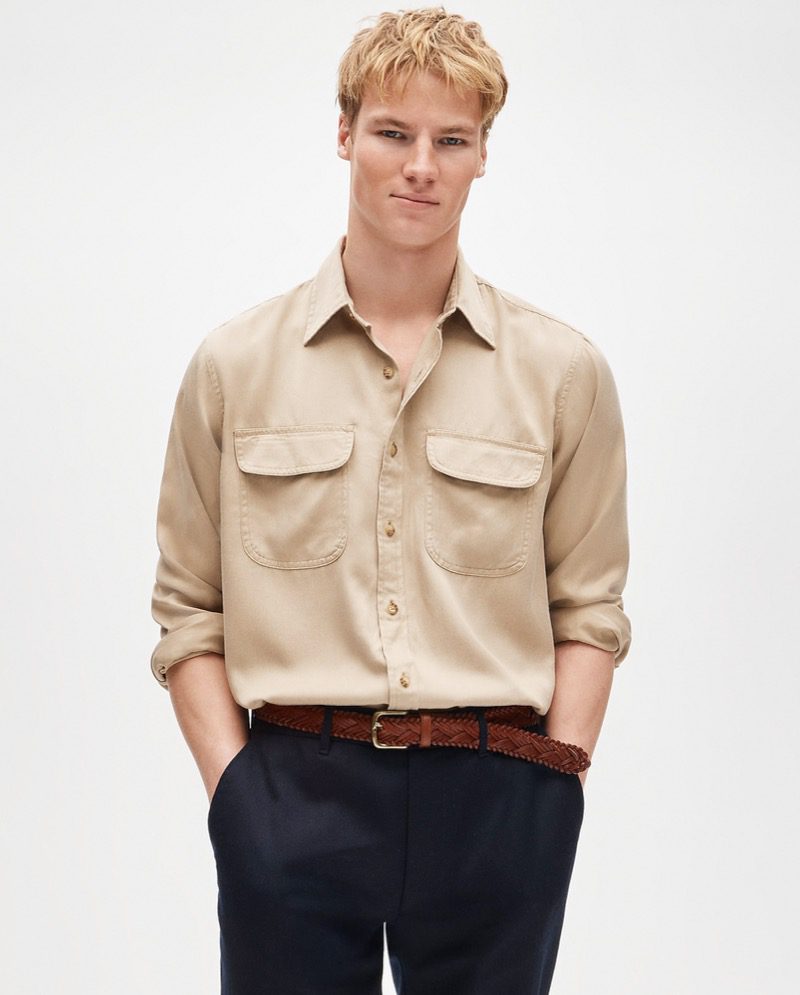
A flap pocket shirt is a utility-style button-up with covered patch pockets on the chest, usually featuring a buttoned flap over each opening. The covered pocket detail is borrowed from military and field clothing, giving these shirts a specific functional reference. In cotton twill or ripstop, they lean rugged. In lighter fabrics or clean colors, the same pocket construction reads as a detail rather than a heritage reference.
Best for casual and utility-inspired outfits, pairs with denim and cargos.
Summer Shirts
Shirts designed for heat. The construction logic is consistent across this category: lightweight fabrics, open collars, and cuts that allow air to move.
The Linen Shirt
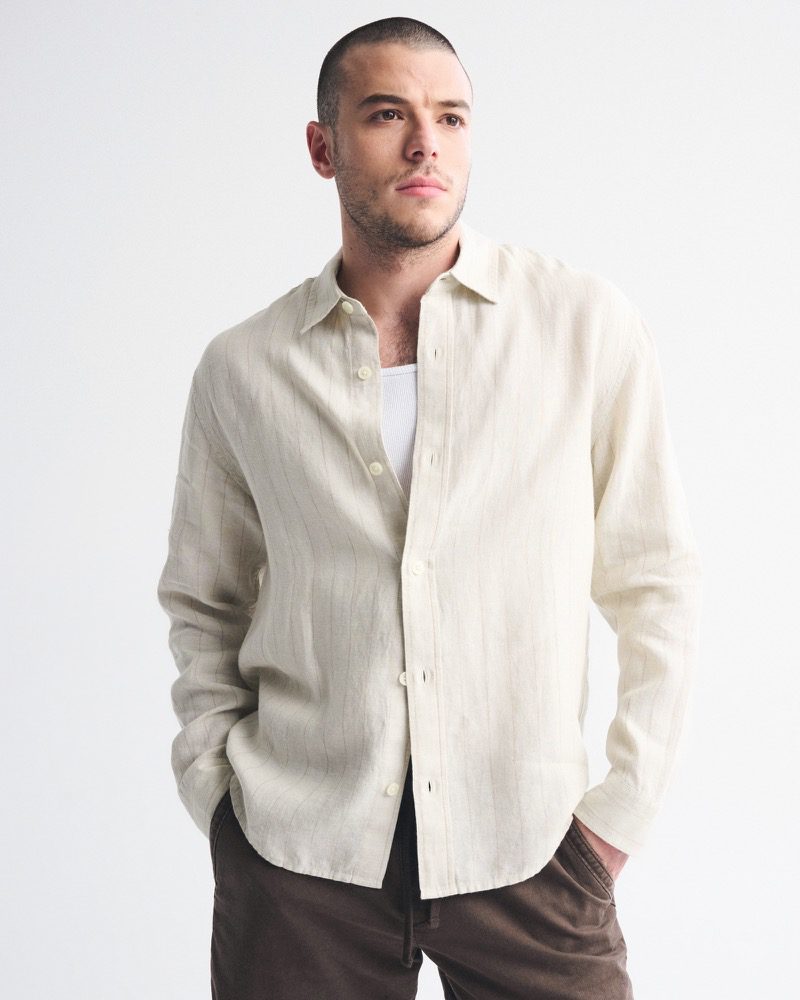
A linen shirt is a button-up woven from linen fiber, which has a looser, more open weave than cotton and a natural texture that becomes more pronounced as the garment ages. Linen releases heat quickly, which makes it comfortable in high temperatures where cotton traps warmth against the skin. The trade-off is that linen wrinkles easily, though on a casual shirt in a relaxed cut this reads as texture rather than neglect. White and pale blue remain the most versatile options for linen shirt outfits, but earthy tones and washed midtones work well in summer palettes.
Best for warm weather, casual and smart-casual settings, pairs with shorts, chinos, and tailored trousers.
The Camp Collar Shirt
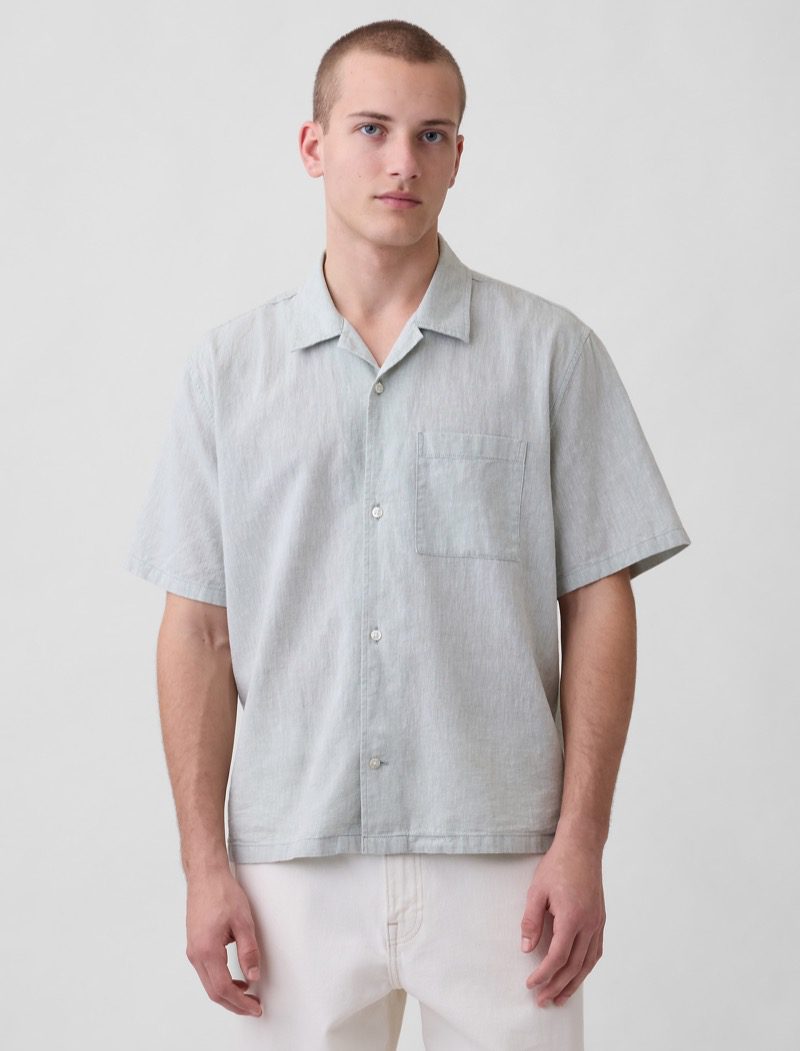
A camp collar shirt (also called a Cuban collar shirt) is a short-sleeve button-up with an open, revere-style collar that lies flat against the chest without folding. The construction means it is worn open at the neck by design, making it cooler than a standard collar shirt and suited to warm weather. In a plain cotton or linen, it works with tailored shorts or lightweight trousers. In a bold print, it carries a retro reference that works well in summer settings where more formal shirts would be overdressed.
Best for warm weather, casual settings, pairs with tailored shorts, chinos, and light trousers.
The Hawaiian Shirt
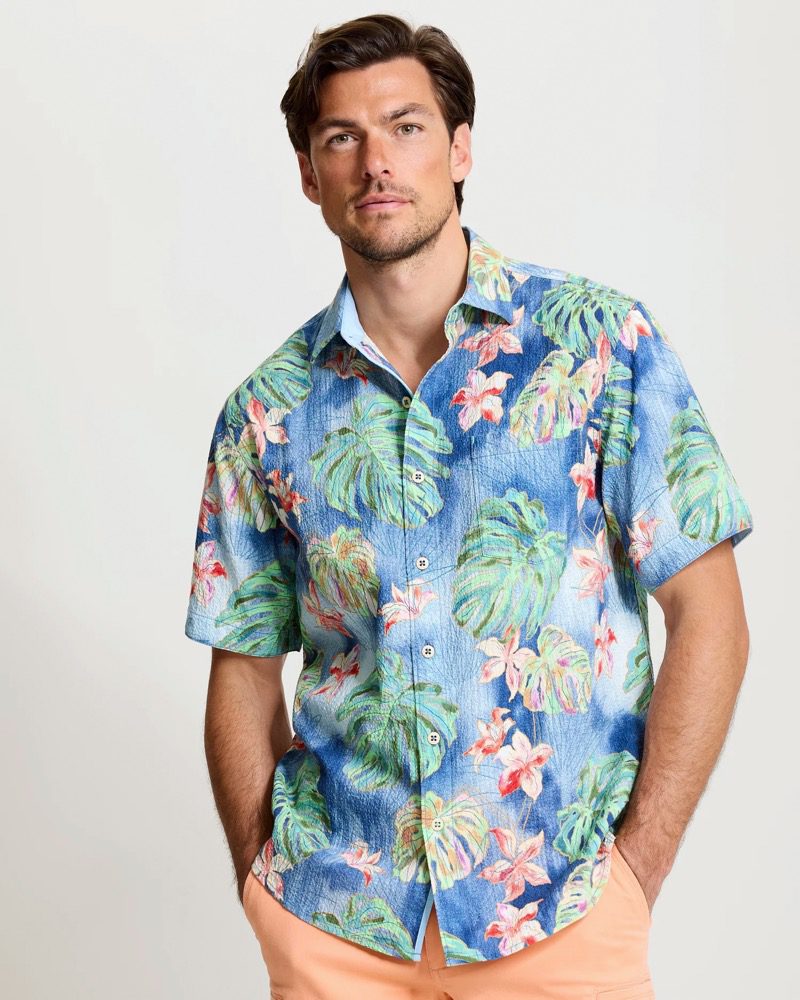
A Hawaiian shirt (also called an Aloha shirt) is a short-sleeve camp-collar shirt printed with bold tropical or graphic patterns, typically in rayon or lightweight cotton. The pattern is the point: florals, palms, abstract prints, or vintage-inspired graphics across a relaxed, open-neck cut. Wearing it with plain, well-fitting trousers or shorts in a neutral tone is the move that keeps the shirt in charge of the outfit. The silhouette should be comfortable but not oversized, the fabric should drape rather than cling.
Best for beach, vacation, summer occasions, casual warm-weather dressing.
The Tank Top
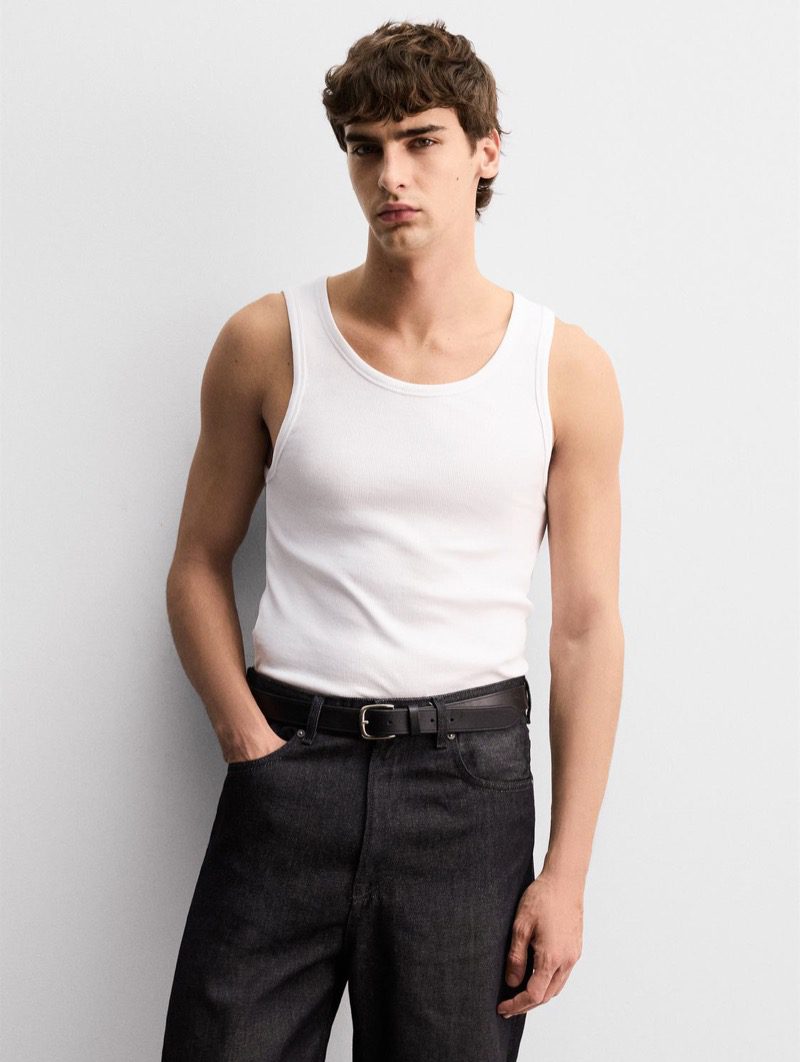
A tank top is a sleeveless shirt cut from jersey cotton or a technical fabric, with shoulder straps and either a crew or scoop neck opening. It is the most minimal warm-weather option in the shirt category, useful for beach days, workouts, or underneath a shirt when the temperature calls for it. In a heavyweight cotton in a neutral color, it functions as a casual garment on its own. In thinner fabrics or athletic cuts, it sits in activewear territory.
Best for warm weather, beach, sport, and as a base layer.
Dress Shirts
Shirts with formal construction, meant to be worn tucked and paired with tailoring.
The Dress Shirt
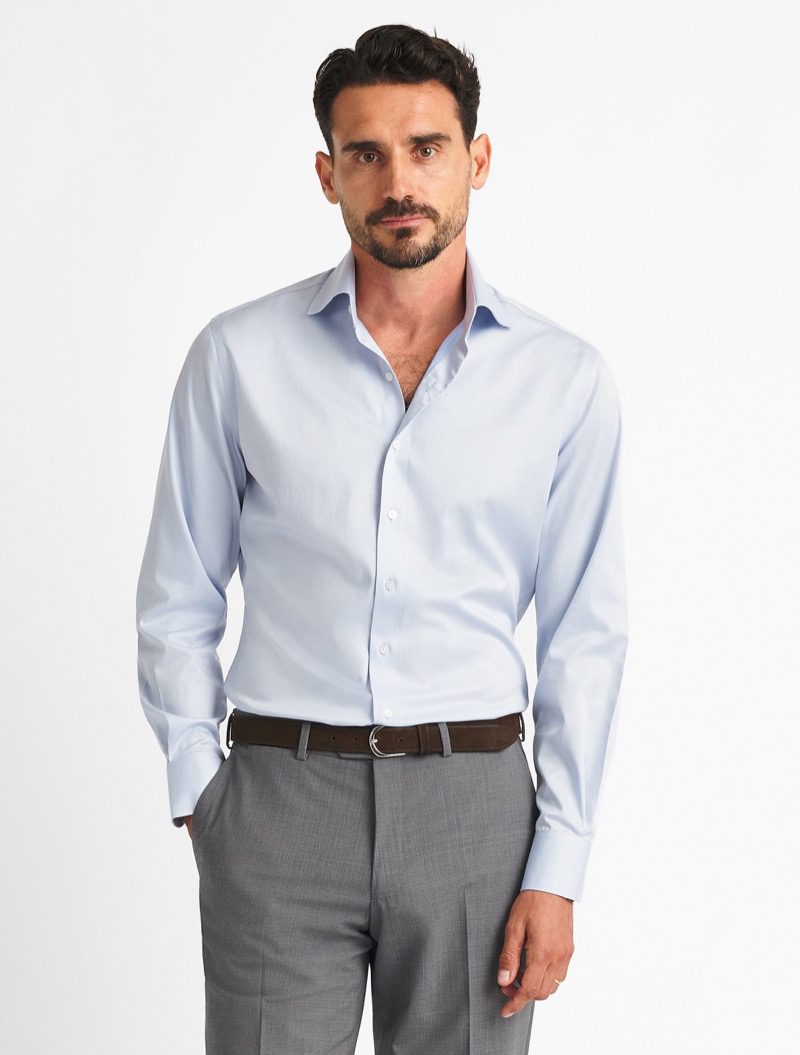
A dress shirt is a formal shirt cut from poplin, broadcloth, or fine cotton twill, with a long shirt tail designed to stay tucked, barrel or French cuffs, and a spread or point collar sized to work with a tie. The construction prioritizes a clean, flat front over comfort or texture. White and light blue are the defaults for good reason: they work under any suit in any color. For a shirt to function well as a dress shirt, the collar needs to hold its shape through the day, which means either a fused collar or a quality unfused version with enough body in the fabric.
Best for business formal, suits, weddings, events requiring a tie.
The Tuxedo Shirt
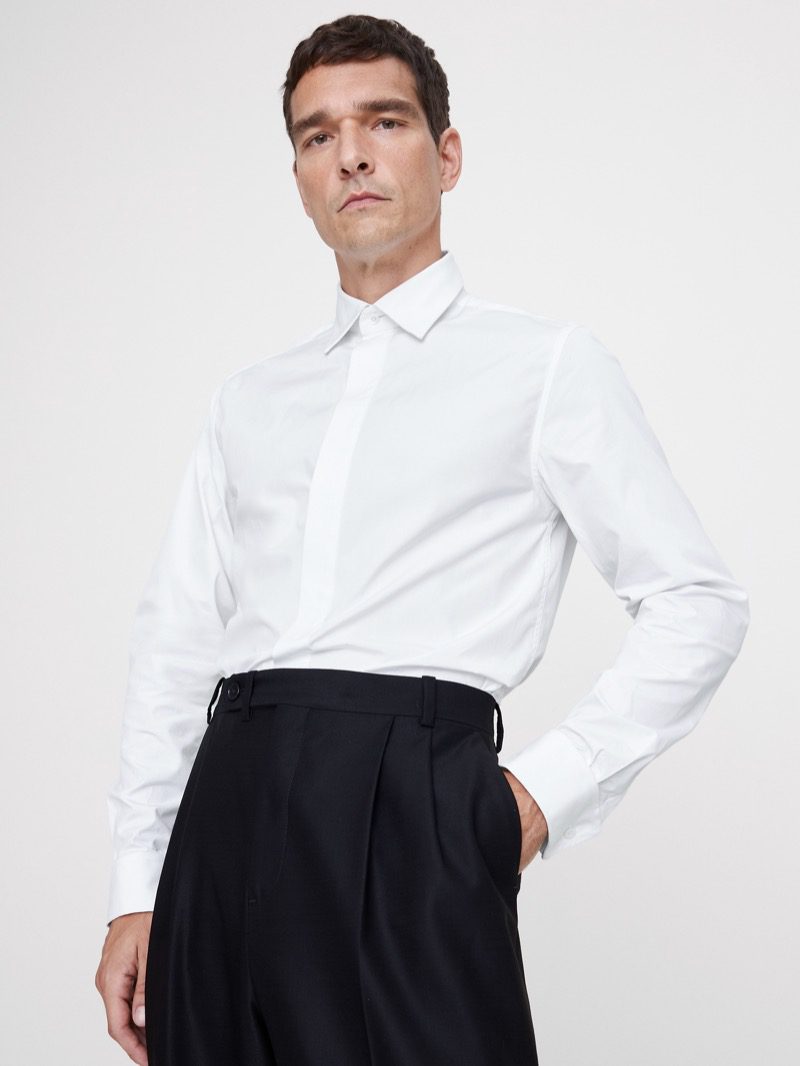
A tuxedo shirt is a formal dress shirt designed specifically for black-tie occasions, featuring a pleated or plain bib front, French cuffs for cufflinks, and a wing or spread collar. It is worn exclusively with a tuxedo, bow tie, and dress trousers, and has no function in any other context. The pleated bib is the traditional option; the plain bib reads as more contemporary. Either way, the shirt should fit precisely through the chest and collar, where a poor fit is most visible in a formal context.
Best for black-tie events, worn exclusively with a tuxedo and bow tie.
Specialty and Sport Shirts
Shirts that serve specific functions or contexts, from athletic roots to heritage references.
The Rugby Shirt
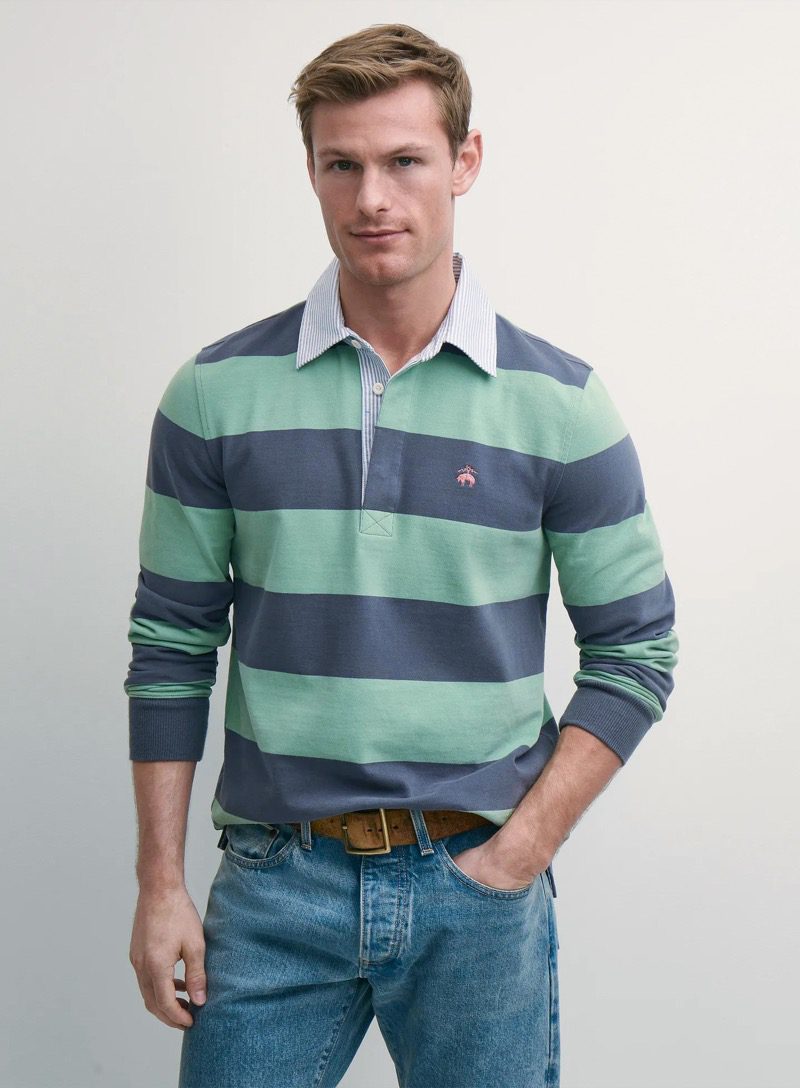
A rugby shirt is a heavy, long-sleeve collared shirt cut from thick cotton jersey, with a reinforced collar and chest placket built to hold up under contact. Bold horizontal stripes and a clean, wide-body silhouette are the defining visual elements. It has moved from the pitch to the wardrobe as a casual shirt with athletic weight and preppy associations, worn with denim or chinos.
Best for casual wear, pairs with denim and chinos, works as a statement layer in fall and winter.
The Baseball Tee
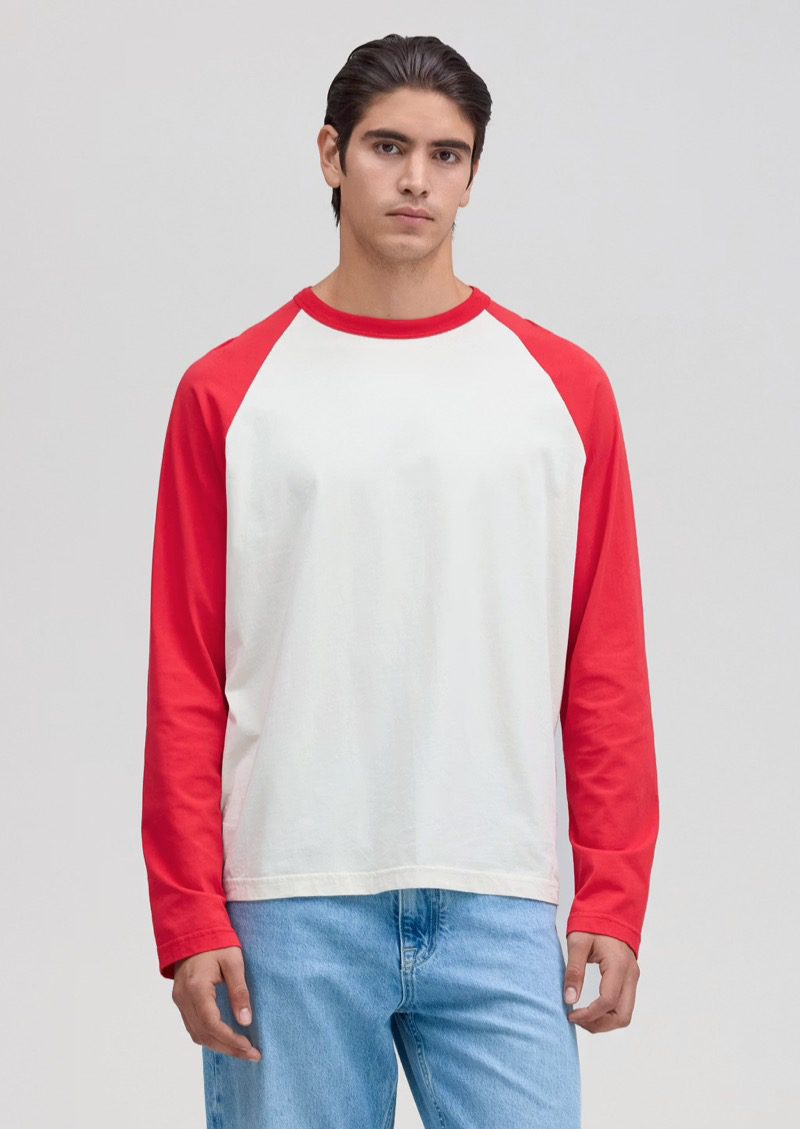
A baseball tee (or raglan tee) is a T-shirt with three-quarter or full-length contrast-color sleeves attached via a diagonal raglan seam rather than a standard shoulder seam. The contrast-sleeve construction comes directly from baseball uniforms, and the raglan seam gives the arms slightly more room to move. As casual wear, it has a specific sporty reference that works with jeans or athletic-cut trousers.
Best for casual weekend wear, pairs with denim, has a sporty reference.
The Knit Shirt
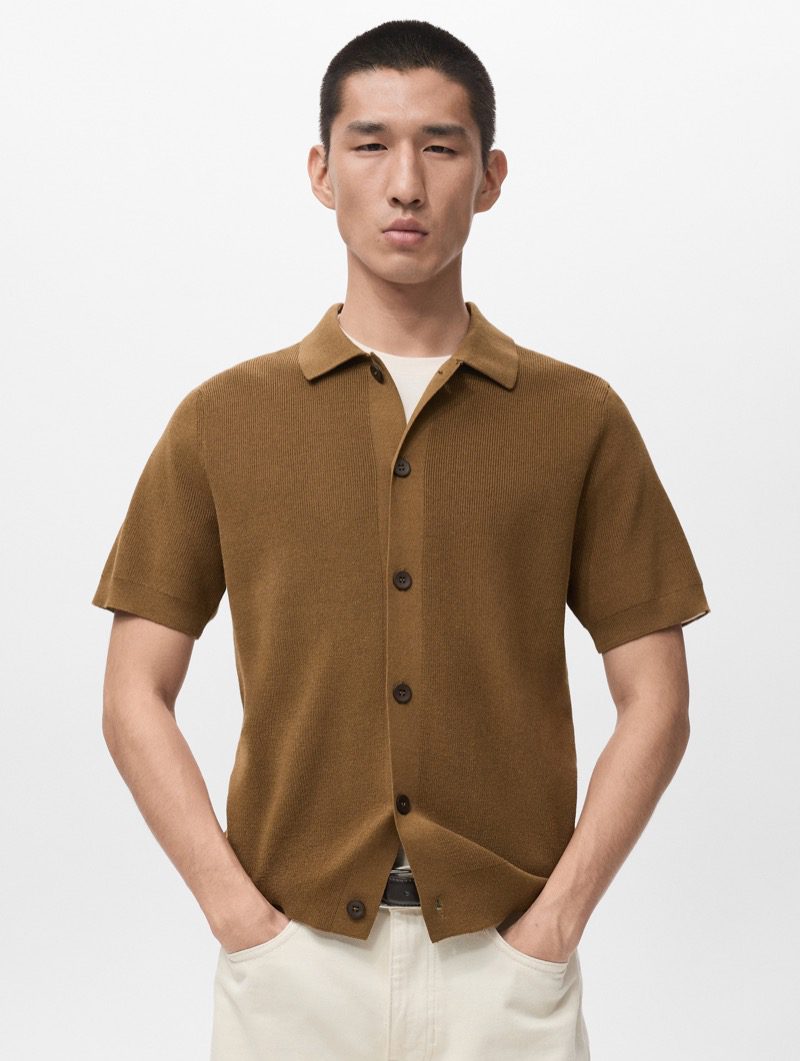
A knit shirt is a button-up shirt constructed from jersey, pique, or textured knit fabric in place of a woven textile. The knit construction gives it a softer, more relaxed surface while retaining the collar and placket of a conventional shirt. It functions as an alternative to a woven casual shirt in settings where you want the structure of a collar but the comfort of a T-shirt fabric.
Best for relaxed smart-casual settings, pairs with chinos and casual trousers.
The Mandarin Collar Shirt
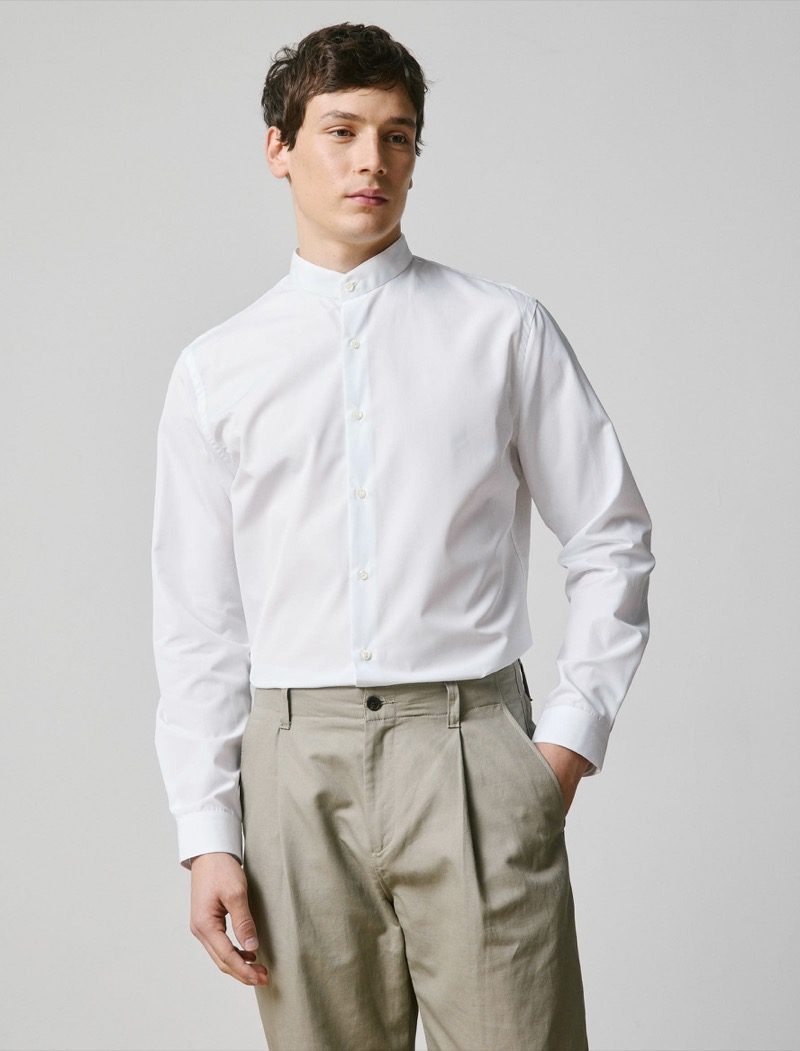
A mandarin collar shirt (also called a band collar or grandad collar shirt) is a shirt with a short, upright collar that does not fold or turn over. The band sits close to the neck without framing it the way a standard collar would, giving the shirt a cleaner neckline when worn open. It works in warm weather as an alternative to a camp collar, and in a lightweight linen or fine cotton, it carries a quiet elegance that works with both casual and smart-casual outfits.
Best for warm weather, smart-casual settings, works without a tie as a collar alternative.
The Guayabera Shirt
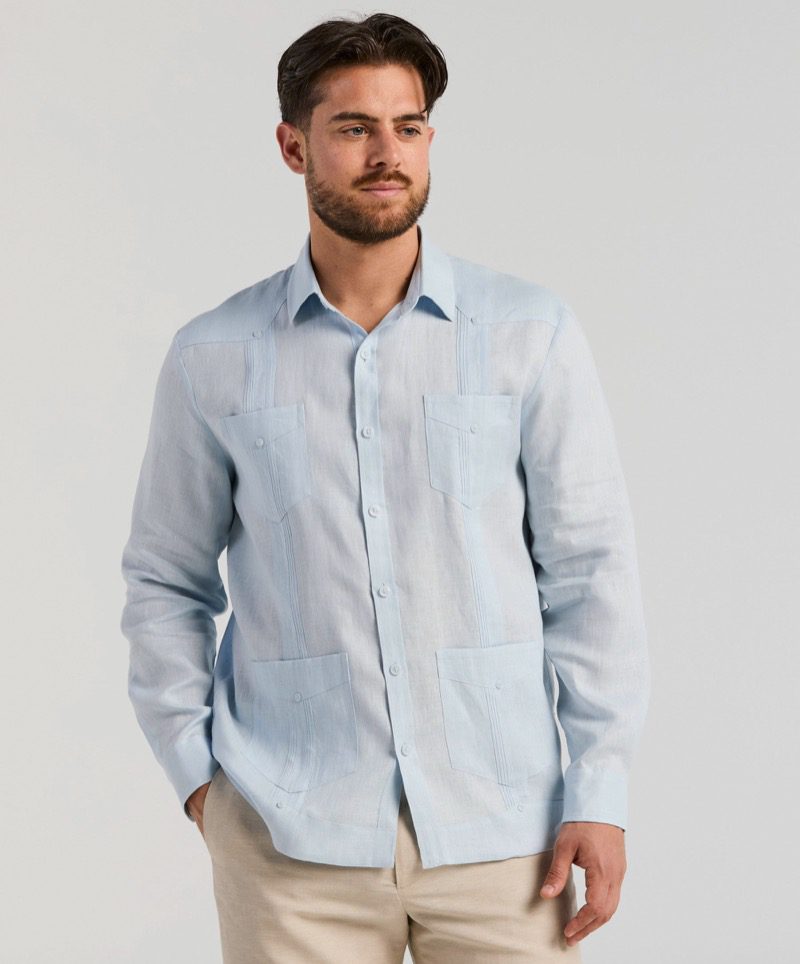
A guayabera shirt is a lightweight short-sleeve or long-sleeve shirt originating in Latin America and the Caribbean, defined by two vertical rows of pleats or embroidery down the front, four pockets, and a straight hem designed to be worn untucked. The construction makes it suitable for warm climates where a collared shirt is expected but a dress shirt would be excessive. In white or pale linen, it works as smart-casual warm-weather dressing.
Best for warm weather, smart-casual and semi-formal occasions in tropical climates.
The Mock Neck Tee
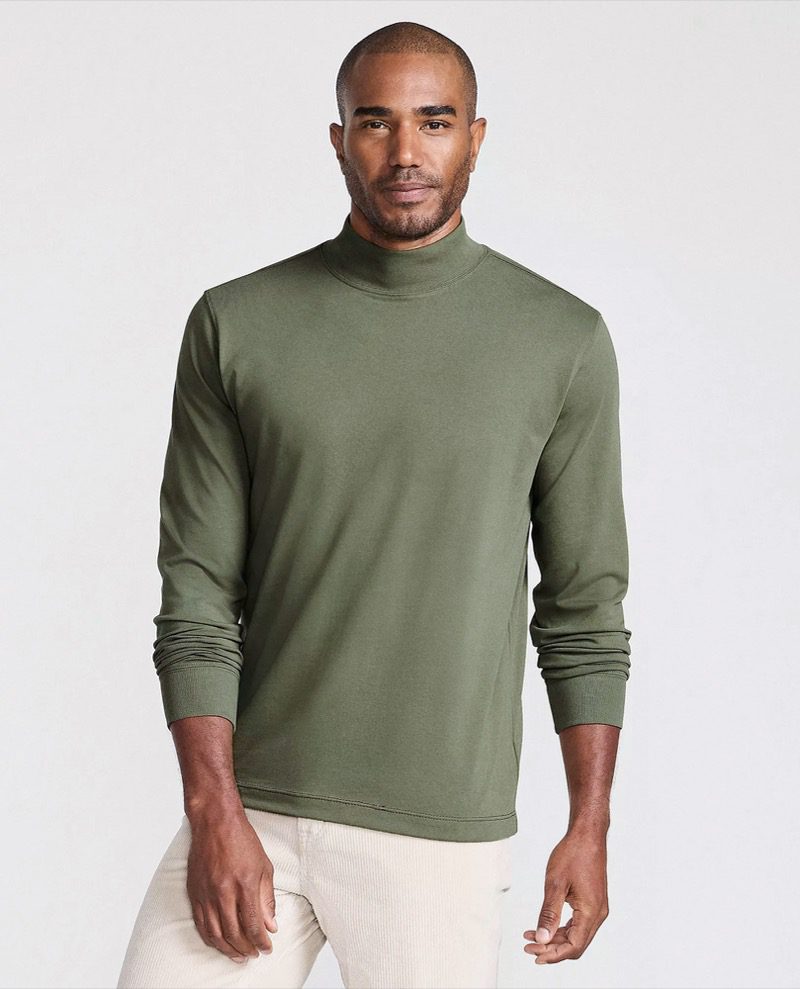
A mock neck tee is a T-shirt with a short, non-folding tubular collar that sits above the standard crew neck height. It gives the neckline a slightly more refined silhouette without the full height of a turtleneck. In fine merino or lightweight cotton, it works as a base layer under a jacket or as a standalone shirt in fall and winter.
Best for transitional weather, layering under jackets and coats, minimalist wardrobes.
The Turtleneck
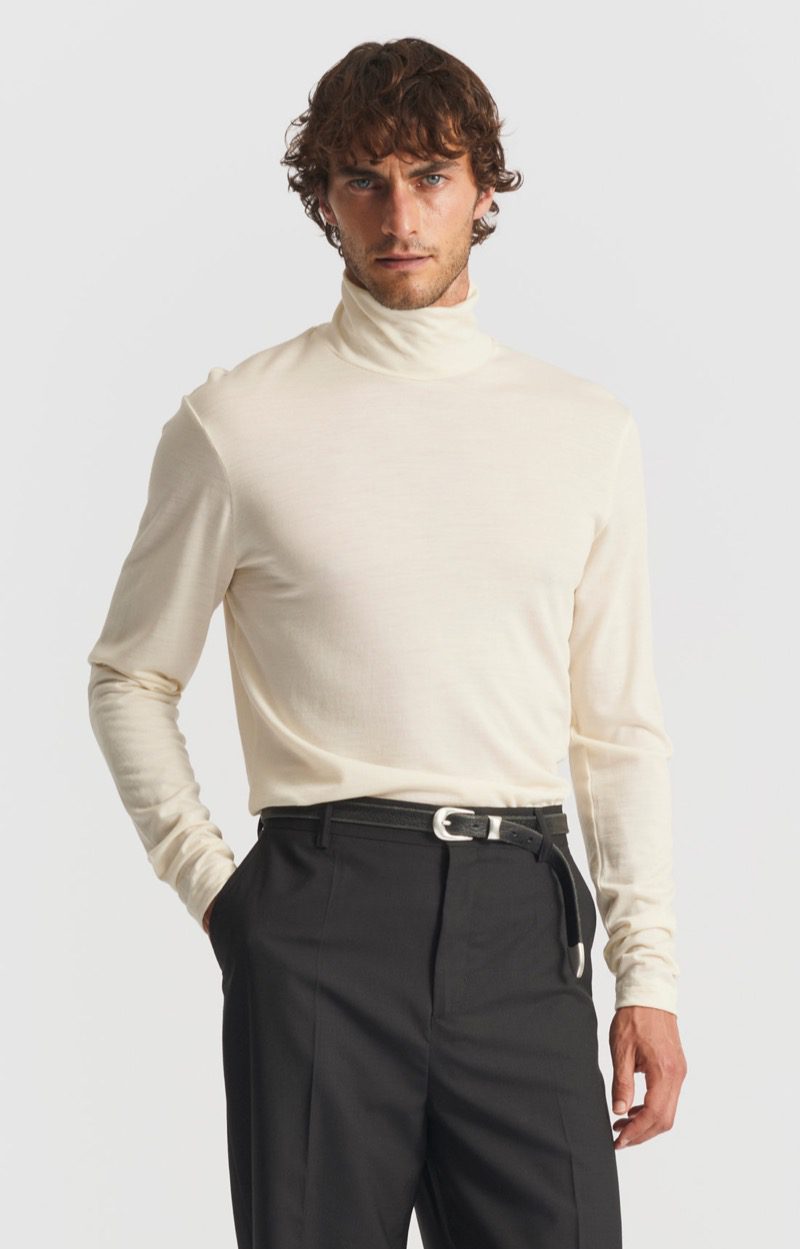
A turtleneck is a long-sleeve knit top with a tall, foldable collar that covers the neck. The collar folds down on itself to sit at mid-neck height. In fine merino or cashmere, it functions as a smart alternative to a shirt and tie under a suit or blazer, and as a standalone shirt in colder months. The fit through the body should be close enough to tuck into trousers when required.
Best for cold weather, under blazers and coats, pairs with tailored trousers and denim.
The Thermal Shirt
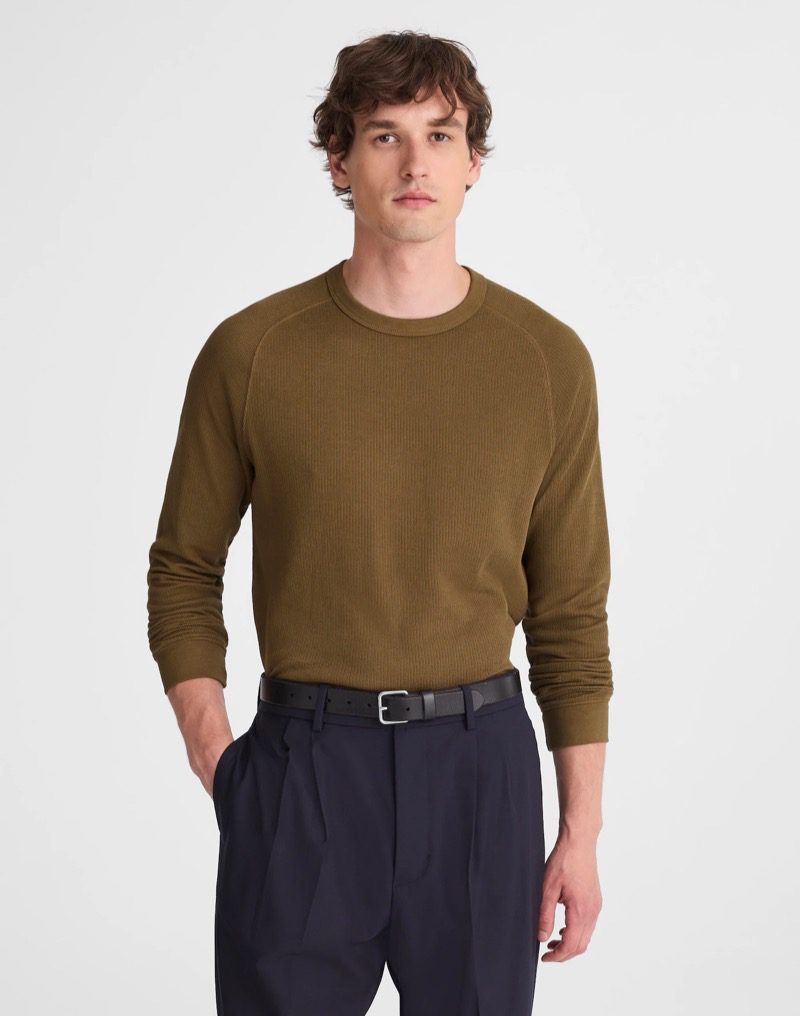
A thermal shirt is a long-sleeve base layer cut from a waffle-knit fabric that traps air in its grid-like surface structure to provide insulation. It is a functional garment worn under other layers in cold weather rather than as a visible outer shirt, though in heavier weights and neutral tones it works as a casual shirt in its own right during winter.
Best for cold weather, as a base layer, works under heavier shirts and jackets.
Types of Shirt Collars for Men
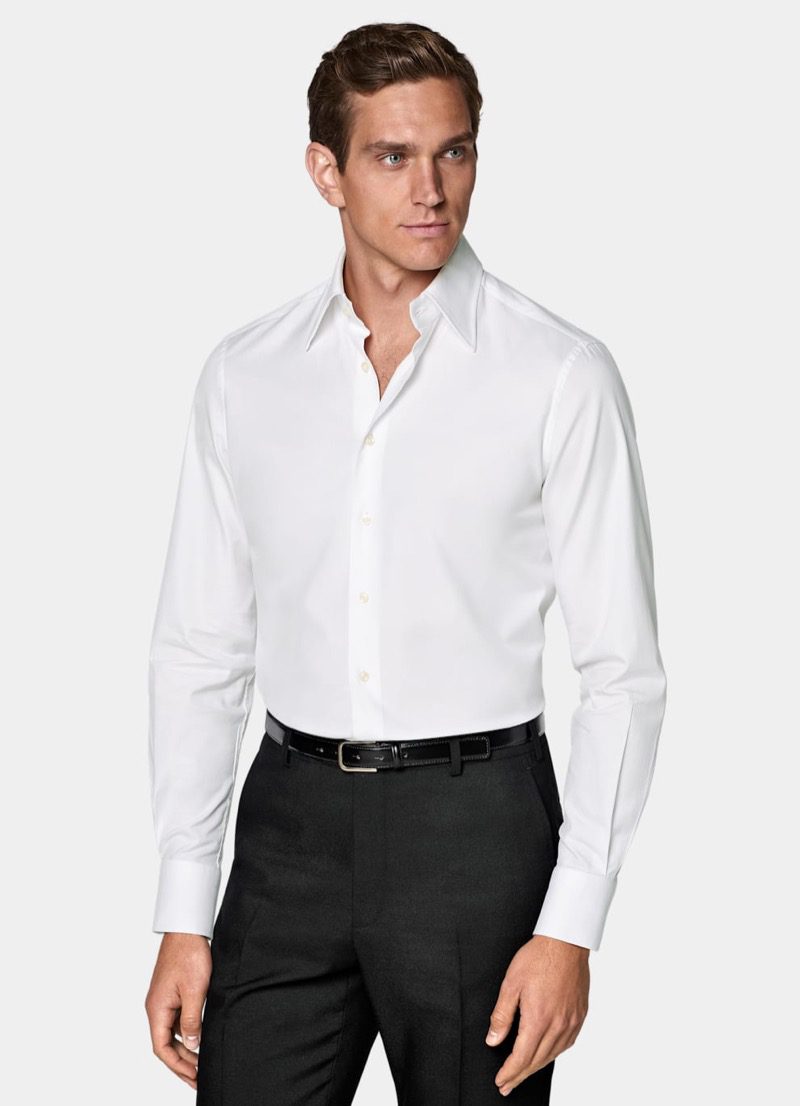
The collar is the part of the shirt that most affects how the shirt reads in a given context. Getting the collar right matters as much as getting the fabric right.
The point collar is the most common dress shirt collar, with narrow collar points that sit close together. It works with or without a tie and suits most face shapes.
The spread collar has wider points that angle outward, creating more space for a tie knot. A spread collar worn open-neck reads as slightly more relaxed than a point collar, and it suits wider faces better than a narrow point collar.
The button-down collar has collar points fastened to the shirt body with small buttons. It originated on the OCBD and is a casual collar construction, not suited to formal settings or ties with large knots.
The camp collar (or Cuban collar) lies flat against the chest with no folding. It is always worn open at the neck and has no function in formal settings. It belongs to warm-weather casual shirts.
The band collar (mandarin or grandad) is an upright collar without any fold. It suits a shirt worn open-neck and works in both casual and smart-casual contexts.
The wing collar is a stiff, upright collar with small pointed tips folded forward. It appears only on tuxedo shirts for black-tie occasions and has no casual application.
How to Build a Shirt Wardrobe
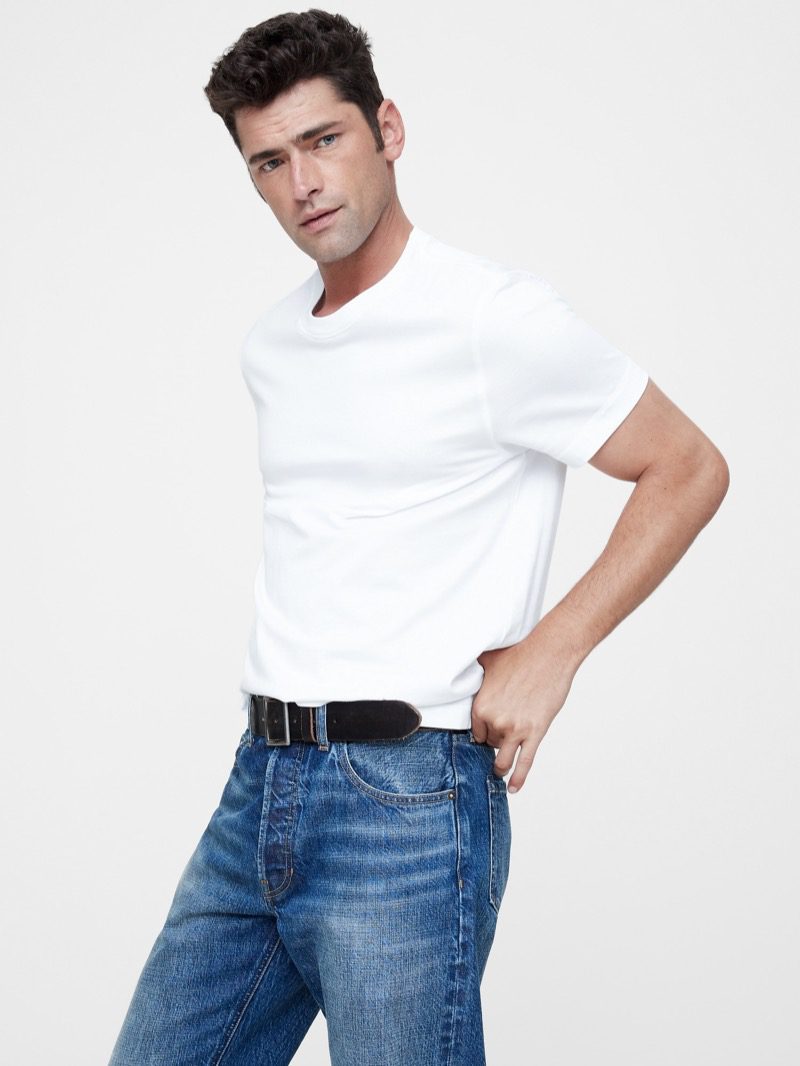
A shirt wardrobe does not need thirty pieces. It needs the right spread across contexts and a few shirts in each that actually fit.
Start with a white T-shirt and an OCBD. These two shirts cover the widest range of contexts in the everyday wardrobe and form the base from which everything else extends.
Add a linen shirt for warm weather. A lightweight linen shirt in white or a neutral tone covers beach settings, summer evenings, and any warm-weather occasion where a T-shirt would be underdressed.
Get one dress shirt. White poplin, spread or point collar, sized to wear with a suit. You need it rarely but you need it properly fitted when you do.
Fill in with seasonal pieces. A flannel for winter. A camp collar for summer. A rugby shirt or overshirt for fall. These are the shirts that give a wardrobe range across seasons rather than the same three pieces year-round.
Buy quality in the basics and spend selectively on the rest. A well-made OCBD in a heavyweight Oxford cloth will outlast three budget equivalents. A Hawaiian shirt or a seasonal flannel can come from anywhere that gets the fit right.
Frequently Asked Questions
What are the main types of shirts for men? The main types of shirts for men include T-shirts, polo shirts, Oxford shirts, dress shirts, flannel shirts, linen shirts, denim shirts, overshirts, Henley shirts, camp collar shirts, Hawaiian shirts, tuxedo shirts, and a range of utility, sport, and specialty styles. Each type has a specific construction and context where it works best.
What is the difference between an Oxford shirt and a dress shirt? An Oxford shirt is cut from textured Oxford cloth with a soft, casual construction and a button-down collar, making it a smart-casual shirt suited to denim, chinos, or under a blazer. A dress shirt is cut from smooth poplin or broadcloth with a stiff collar and long shirttail designed to stay tucked, and belongs in formal settings with a suit and tie.
What types of shirts are best for summer? Linen shirts, camp collar shirts, short-sleeve shirts in cotton or linen, and Hawaiian shirts are the best warm-weather options. Linen is the most practical: the open weave releases heat rather than trapping it against the skin, which makes a meaningful difference in high temperatures.
How many shirts should a man own? Most men function well with ten to fifteen shirts covering the main contexts: a few T-shirts, one or two Oxford shirts, a dress shirt, a linen or camp collar shirt for warm weather, a flannel or overshirt for cooler months, and a polo. Beyond that, additional shirts should fill specific gaps rather than duplicate what is already there.
What is the difference between a camp collar and a Cuban collar shirt? Camp collar and Cuban collar refer to the same shirt style. Both describe a short-sleeve shirt with a flat, open revere-style collar that lies against the chest without folding. The two terms are used interchangeably, with camp collar more common in American English and Cuban collar used across both American and British markets.
What types of shirts work without a tie? Oxford shirts, linen shirts, camp collar shirts, polos, and Henley shirts all work open-neck without a tie. The mandarin collar shirt is specifically designed for tieless wear. Dress shirts can be worn open-neck in smart-casual settings, though the collar construction of most dress shirts reads as slightly formal when the neck is exposed.
What is an overshirt? An overshirt is a shirt cut at jacket weight, designed to be worn open or partially buttoned over a lighter shirt or T-shirt. Common fabrics include heavy brushed cotton, canvas, and wool blends. It functions as a transitional layer in spring and fall, sitting between a shirt and a full jacket in terms of warmth and visual weight.