
Most men use “chinos” and “khakis” like they mean the same thing. Walk into any store and ask for either one, and the salesperson will probably lead you to the same rack. But the difference between chinos and khakis comes down to construction, weight, and context, and understanding that changes how you dress.
The confusion makes sense. Both are cotton pants. Both come in similar colors. Both sit somewhere between jeans and dress pants on the formality spectrum. But a chino is a specific style of pant defined by its weave and clean finish, while khaki refers to a color that became synonymous with a type of casual trouser over a century of military and civilian use. One is a garment. The other started as a shade of tan.
That distinction matters when you’re deciding what to wear to the office, what to pack for a trip, or what belongs in a wardrobe you actually think about.
Chinos vs Khakis at a Glance
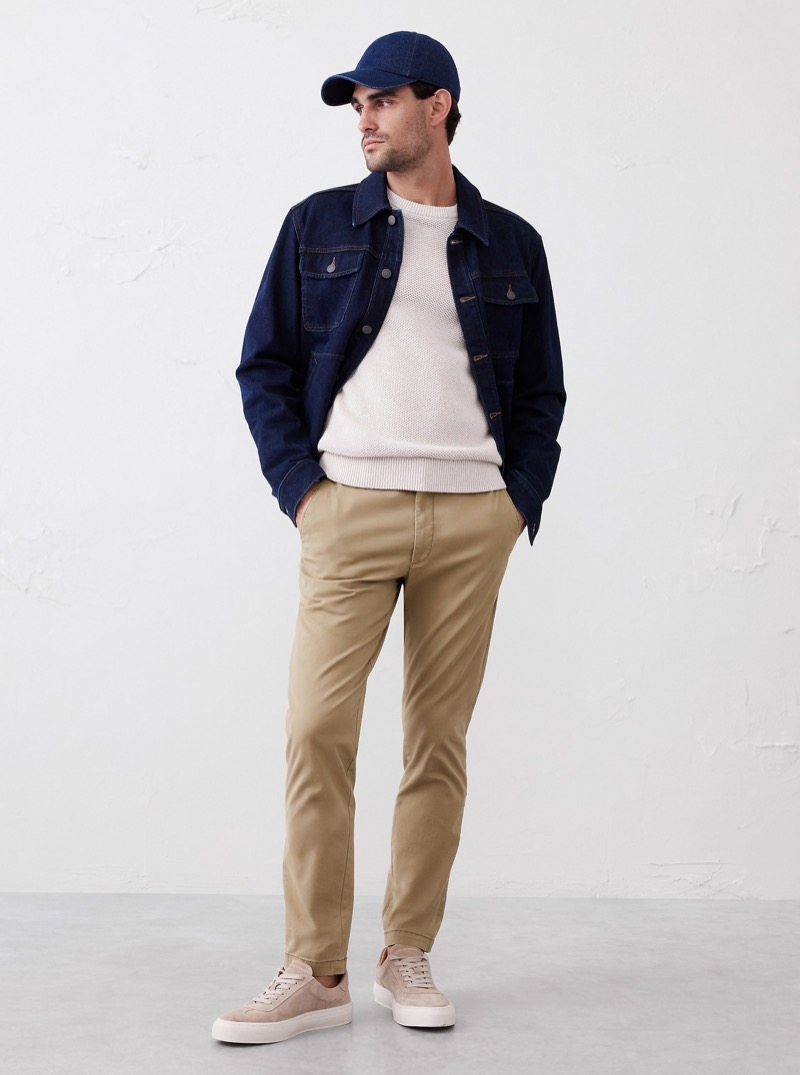
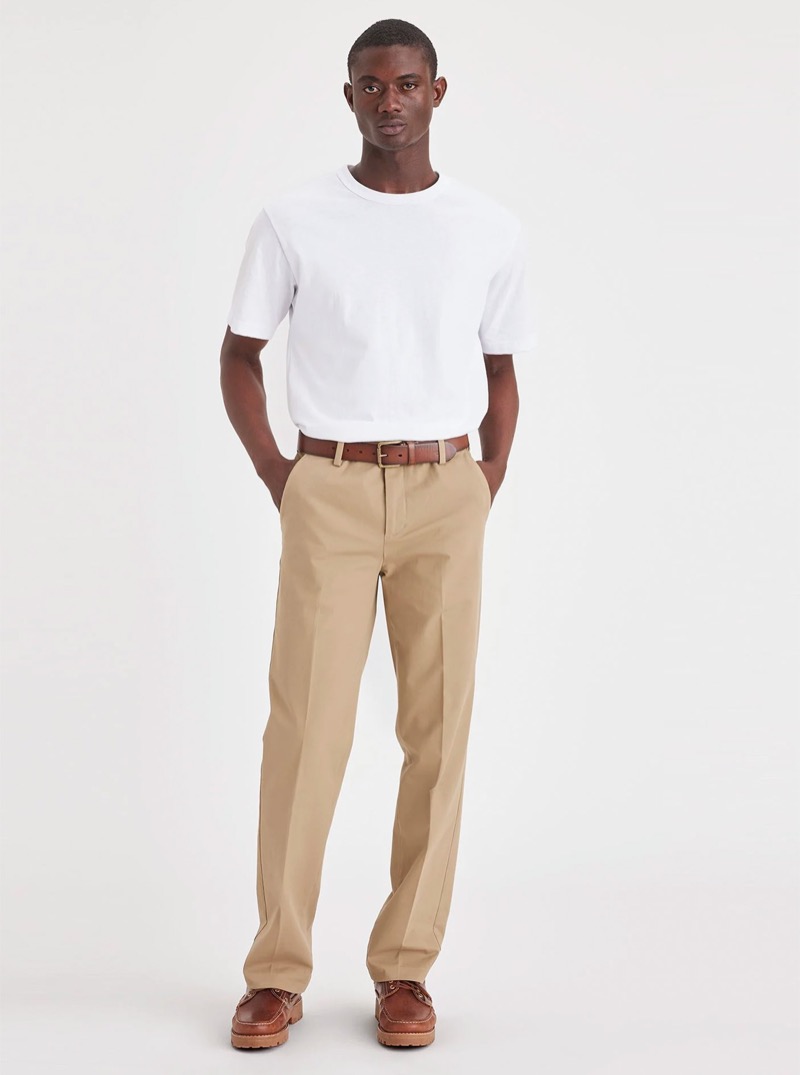
| Chinos | Khakis | |
|---|---|---|
| Fabric | Lightweight cotton twill | Heavier cotton twill or cotton blend |
| Finish | Smooth, clean seams, minimal stitching | Visible stitching, sometimes pleated |
| Fit | Typically slim or tailored | Typically relaxed or straight |
| Formality | Business casual to smart casual | Casual to business casual |
| Best seasons | Spring, summer, early fall | Year-round |
| Price range | $40 to $150+ | $30 to $100 |
What Are Chinos?
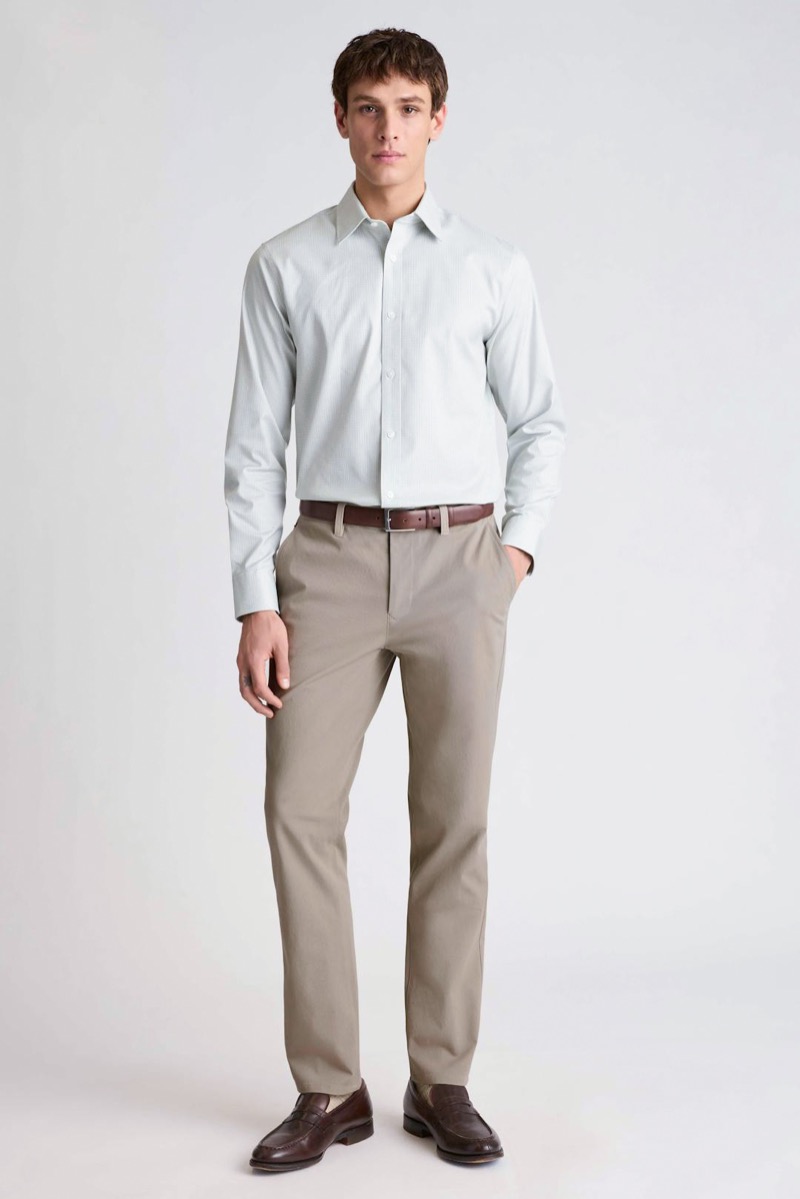
Chinos are lightweight cotton twill pants with a smooth finish and clean construction. The seams are typically hidden or flat-felled, the fabric has a slight sheen from the twill weave, and the overall look is streamlined. Chino trousers originated as military-issue pants in the mid-1800s, when British and French soldiers stationed in Asia needed something lighter than wool. The name likely comes from the Spanish word for Chinese, a reference to the fabric’s origin.
What makes chino pants distinct today is the refinement. The cotton twill weave creates a diagonal pattern that drapes well and resists wrinkles. The fabric weight is lighter than most khaki trousers, typically between 7 and 10 ounces per yard. The result is a pant that can dress up or down depending on the fit, the color, and what you put on top.
Chinos come in virtually every color, from navy and olive to burgundy and cream. The khaki-colored version is where the confusion with khakis begins. A khaki chino is a chino in a khaki color. It is not a khaki pant in the traditional sense.
Best for business casual settings, smart casual outfits, date nights, and pairing with the best summer fabrics for men.
What Are Khakis?
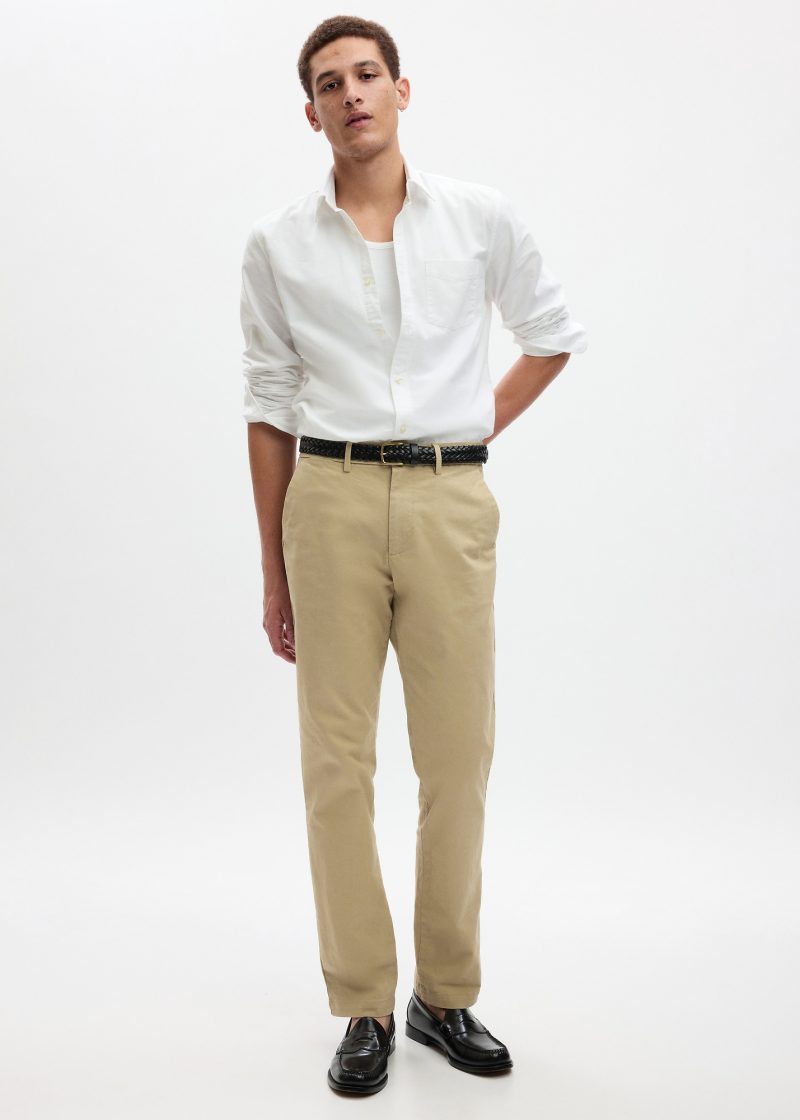
Khakis are casual cotton pants typically made from a heavier twill fabric with a relaxed fit and visible construction details like front pleats, a crease down the leg, and external stitching. The word “khaki” comes from the Hindi-Urdu word for dust or dust-colored, and it originally described the tan shade used for military uniforms in British India during the 1840s.
Over time, khaki stopped being just a color and became shorthand for a category of pant. When most people say khaki pants, they mean relaxed-fit cotton trousers in a tan or beige shade, usually with a traditional cut. Think of the pants your dad wore on weekends in the ’90s or what shows up when you search “men’s khaki pants” online. The silhouette is fuller through the leg, the fabric is heavier, and the overall feel is casual.
That said, the line has blurred. Modern khaki pants range from baggy khakis with a wide leg to slim-fit versions that look almost identical to chinos. The distinguishing factor is still the weight and construction. If the fabric feels substantial and the stitching is visible, you’re looking at a khaki. If the finish is clean and the drape is smooth, it’s a chino.
Best for casual everyday wear, relaxed weekends, travel, and laid-back office environments.
The Difference Between Chinos and Khakis
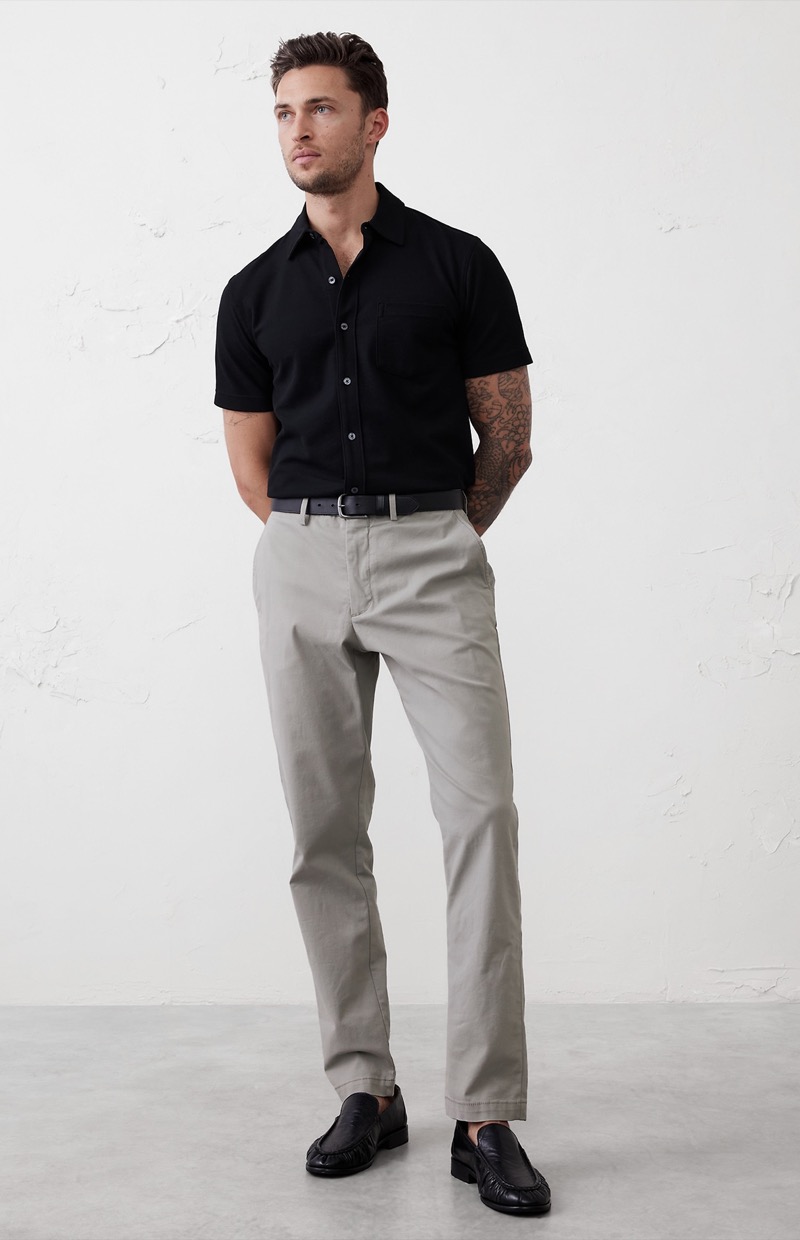
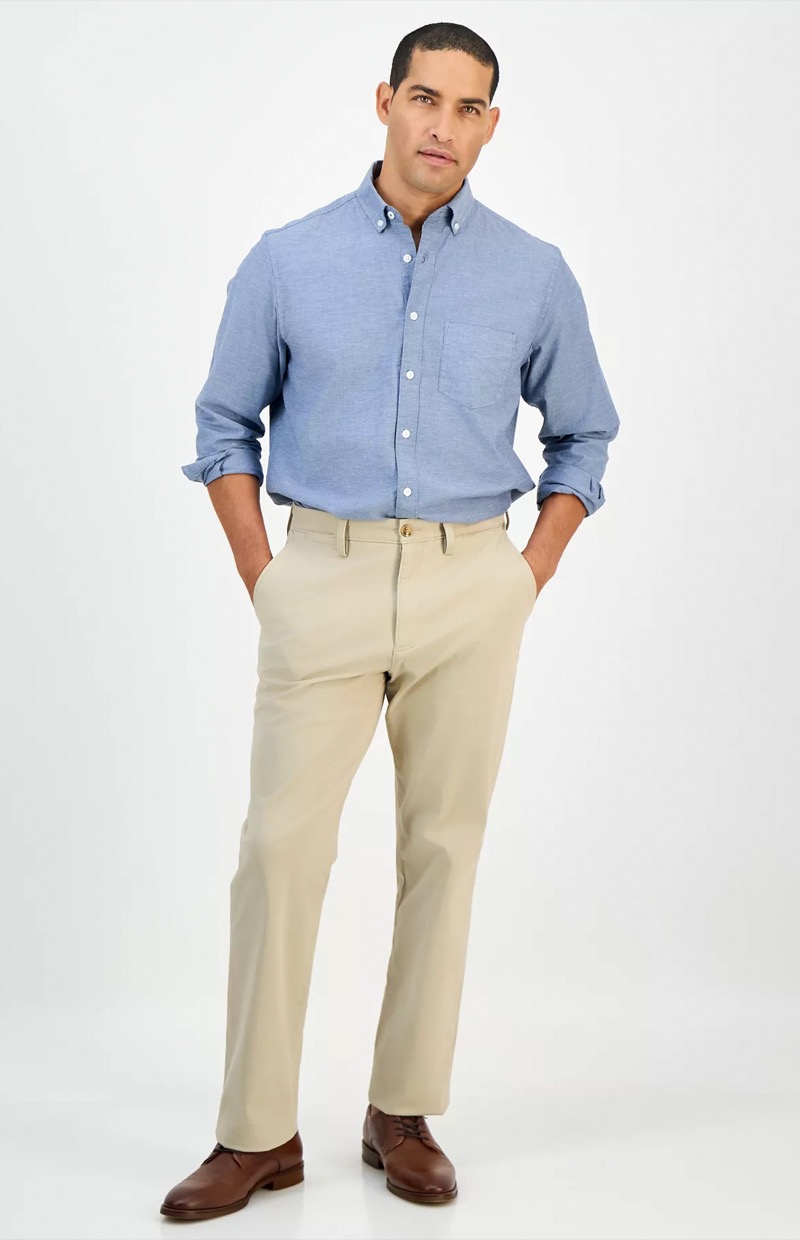
The chino vs khaki question often gets reduced to “they’re the same thing.” They are not. Here are the key differences between khakis and chinos.
Fabric weight. Chinos use a lighter cotton twill, usually 7 to 10 ounces. Khakis use a heavier cotton or cotton-blend fabric, often 10 ounces and up. You can feel the difference when you hold them. Chinos drape. Khakis hold their shape.
Construction. Chinos have hidden seams, flat-felled edges, and a minimal approach to visible stitching. Khakis often have external seams, front pleats, and a crease. The construction on khakis is utilitarian. The construction on chinos is refined.
Fit. Traditional khakis run relaxed through the seat and thigh with a straight or slightly tapered leg. Chinos tend toward a slimmer, tailored cut. Both come in modern fits now, but the default silhouette is different.
Formality. Chinos work from smart casual to business casual. Pair them with a blazer and leather shoes and they hold up in most professional settings. Khakis are casual first. They work for offices with a relaxed dress code but look out of place anywhere that expects a polished trouser.
Color range. Khakis are almost always tan, beige, or light brown, the color the name refers to. Chinos come in dozens of colors. Navy chinos, olive chinos, grey chinos, and yes, khaki-colored chinos. For a full breakdown, see our guide to types of pants for men.
Where Do Slacks Fit In?
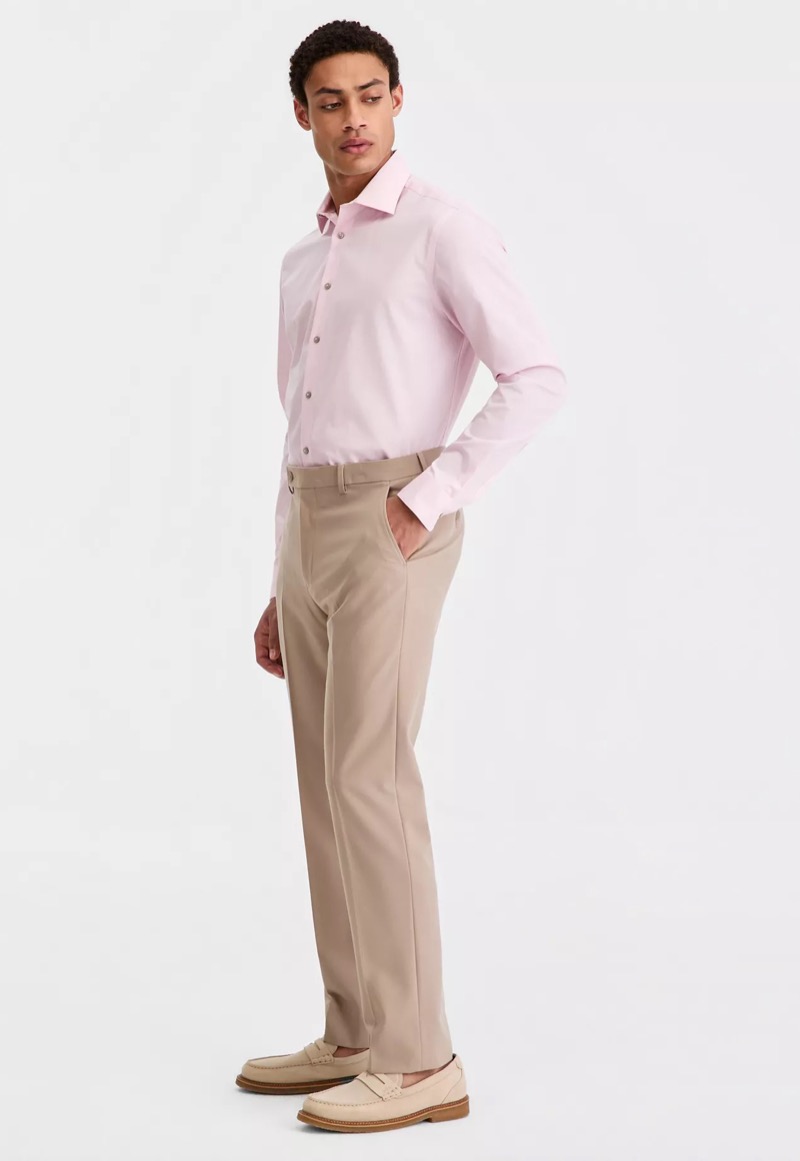
The chinos vs khakis vs slacks question comes up often, and the answer is straightforward. Slacks are dress pants. They’re made from wool, polyester blends, or tropical-weight fabrics, cut with a crease, and designed for formal and business settings. Khakis are not slacks. Chinos are not slacks. If someone asks whether khakis count as dress pants, the answer is no.
The confusion usually comes from workplaces where “slacks” gets used loosely to mean any non-jean trouser. In that context, chinos can function as slacks in a business casual environment. But in terms of actual garment construction and formality, slacks occupy a different tier entirely. They’re made for suits, sport coats, and the kind of dressing where a belt and dress shoes are assumed.
Which to Wear When
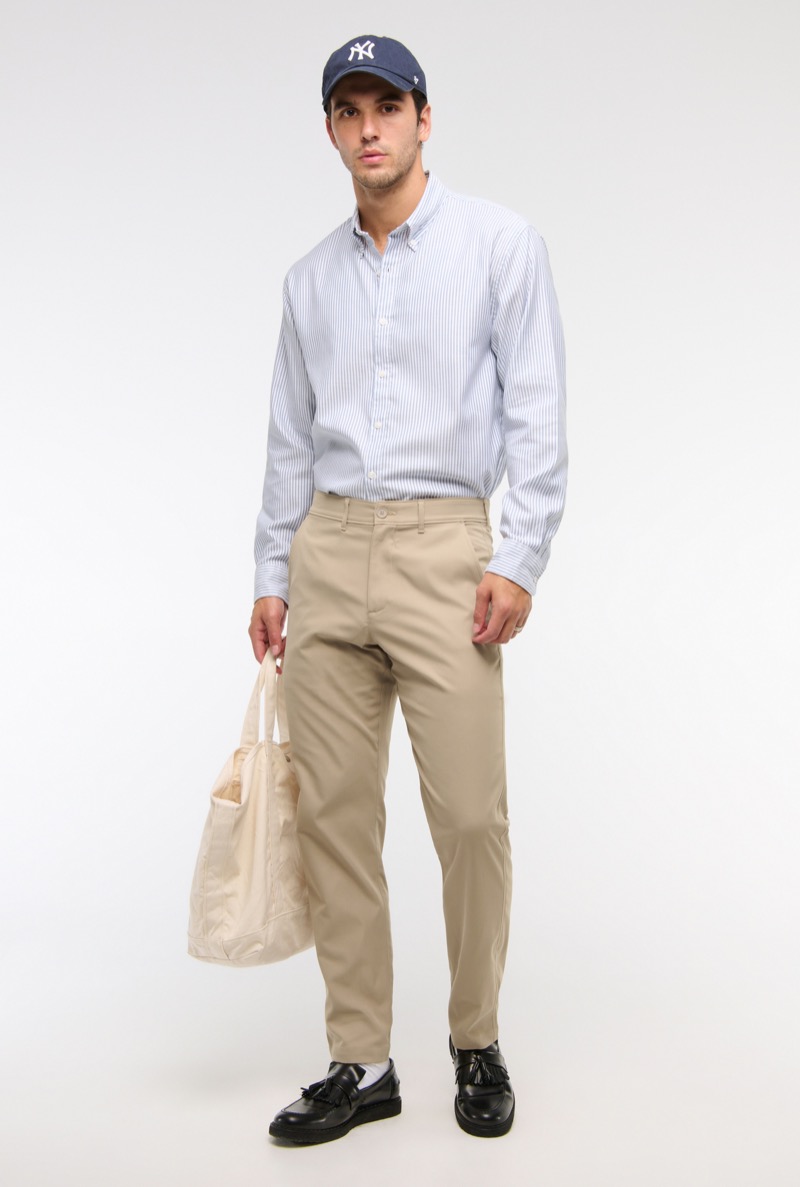
Knowing the difference between khakis and chinos only matters if you know when to reach for each one.
The office. If your workplace is business casual, chinos are the right call. A slim or tailored pair in navy, grey, or olive paired with a button-down shirt and clean leather shoes covers most professional settings. Business casual with khakis works in offices where the dress code is genuinely relaxed, the kind of place where jeans are fine and khakis feel like a step up.
A date. Chinos. A well-fitting pair in a dark color like navy or charcoal signals that you put thought into what you’re wearing. Khakis look casual no matter what you pair them with, and a first impression that says “I dressed up a little” goes further than one that says “I found clean pants.”
Travel. Both work, depending on the trip. Chinos are lighter and wrinkle-resistant, which makes them ideal for packing. Khakis in a relaxed fit are comfortable for long flights and walking-heavy days. If you’re living out of a carry-on, a pair of dark chinos will cover dinners, sightseeing, and anything in between.
A wedding or event. Chinos, and only if the dress code calls for something below a suit. A pair of chinos in navy or charcoal with a sport coat and dress shoes works for casual weddings and outdoor events. Khakis are too informal for anything with a dress code attached to it.
Weekends. Either one. This is where khakis come into their own. A pair of relaxed-fit khakis with a T-shirt and sneakers is one of the most reliable casual combinations in menswear. Chinos work here too, but they aren’t necessary. The weekend is where khakis justify their spot in a rotation.
Modern Fits for Chinos and Khakis
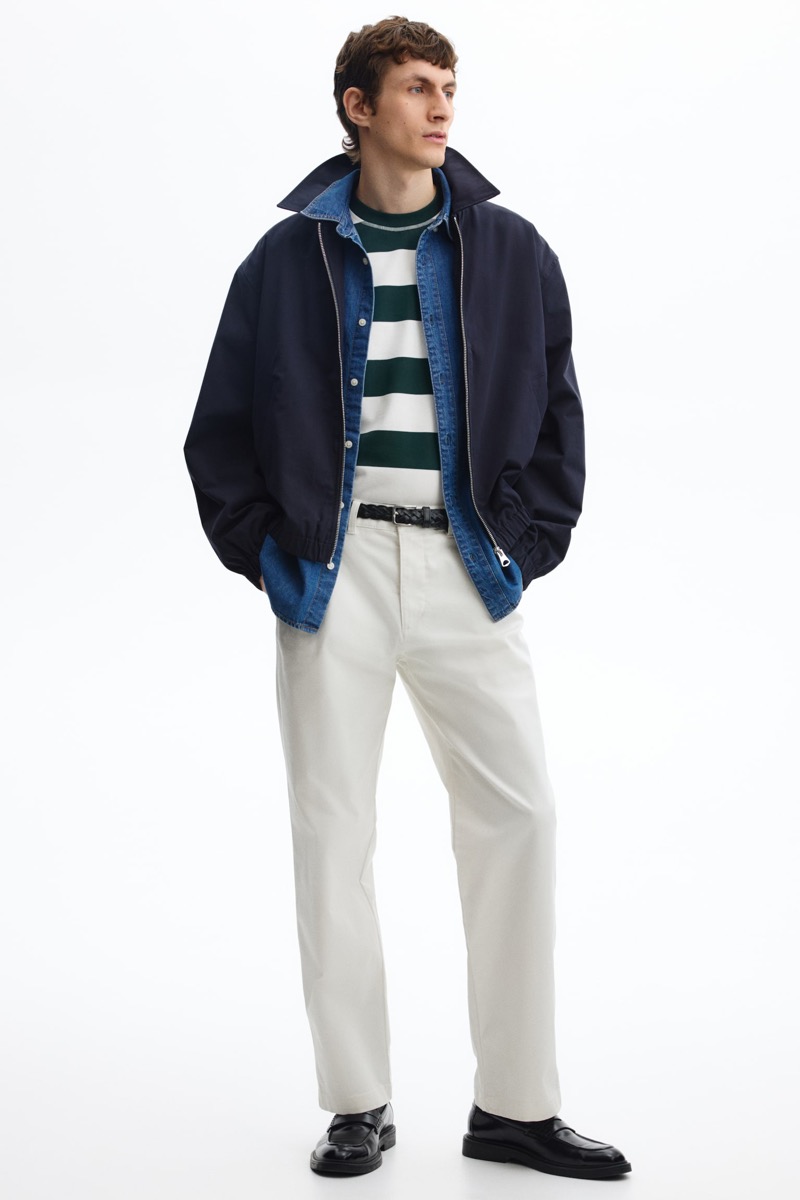
Both chinos and khakis have evolved past the two-fit binary of slim and relaxed. Here’s what’s available now.
Slim fit. Narrow through the thigh and leg, typically with a 6 to 7 inch leg opening. This is the default modern chino fit and works for most body types. Slim-fit khakis exist but are uncommon.
Tailored or straight fit. A middle ground with a comfortable seat and thigh that tapers slightly to the ankle. This is the most versatile fit for both chinos and khakis, and it flatters athletic and medium frames equally well.
Athletic taper. Cut with extra room in the seat and thigh that narrows sharply below the knee. Designed for men with larger legs who want a modern silhouette. Available in both chinos and khakis from brands that understand fit.
Relaxed fit. Full through the seat, thigh, and leg with minimal or no taper. This is the traditional khaki fit and works well for casual wear, especially with baggy khakis seeing a resurgence in streetwear and relaxed menswear.
Wide leg. A deliberately full silhouette from hip to hem. Wide-leg chino trousers have gained traction in the last few years as men’s style has shifted toward volume and drape. Wide-leg khakis follow the same direction, landing somewhere between relaxed and intentionally oversized.
How to Care for Chinos and Khakis
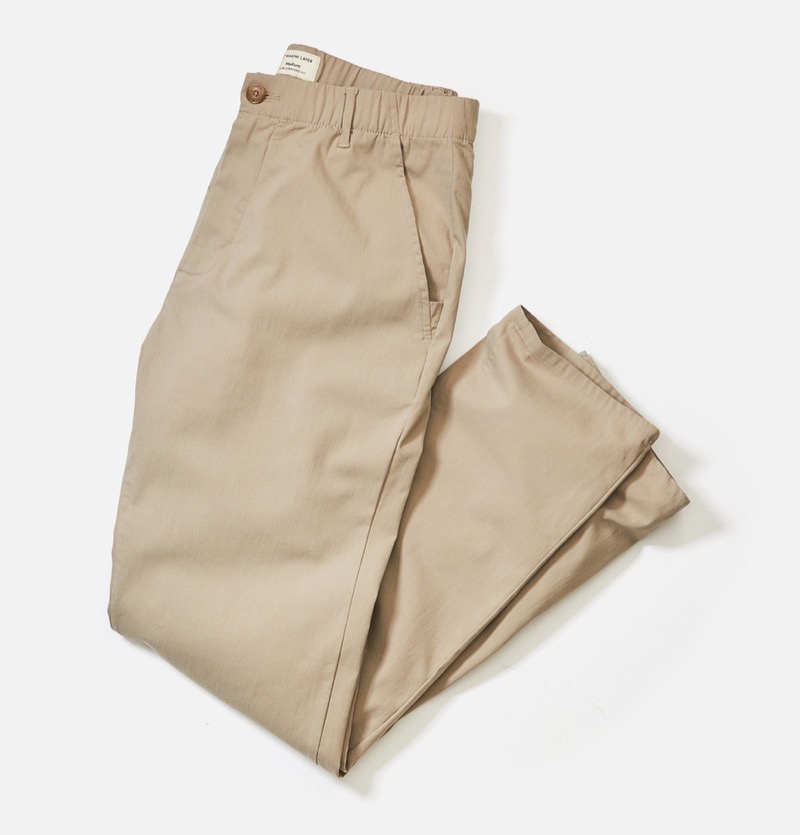
Both chinos and khakis benefit from the same basic approach: wash infrequently, handle gently, and hang to dry when possible.
Washing. Turn pants inside out before washing. Use cold water and a gentle cycle. Hot water shrinks cotton and fades color over time. For dark chinos especially, cold water preserves the shade.
Drying. Hang dry whenever you can. A tumble dryer works on low heat, but air drying extends the life of the fabric and prevents shrinkage. Remove promptly from the dryer if you use one.
Ironing and steaming. Chinos look best with a light steam or a low-heat iron. Khakis are traditionally pressed with a crease, but a no-crease approach works fine for casual wear. A garment steamer handles wrinkles on both in seconds.
Storage. Fold both on a shelf or hang by the waistband on a clip hanger. Do not hang from a trouser bar, which stretches the fabric at the knees.
Frequently Asked Questions
Are chinos and khakis the same thing?
Chinos and khakis are different pants that often get confused because they share a similar color range and cotton construction. Chinos are lighter in weight, cleaner in finish, and available in a wide range of colors. Khakis are heavier, typically tan or beige, and have a casual construction with visible stitching. A khaki-colored chino looks similar but is still a chino by construction.
Is khaki a color or a type of pants?
Khaki is both. The word originally described a dusty tan color used for military uniforms in 19th-century British India. Over time it became shorthand for casual cotton pants in that same shade. Today “khaki” can refer to the specific tan color or to the pant itself, depending on context. When someone says “khaki chinos,” they mean chinos in the khaki color.
What are chino pants?
Chino pants are cotton twill trousers with a smooth finish, hidden seams, and a lightweight drape. They originated as military-issue clothing and have since become one of the most versatile pants in menswear. Chinos work in business casual settings, on dates, and as a polished alternative to jeans. For styling ideas, see how to style chinos for men.
What are khaki pants?
Khaki pants are casual cotton trousers, typically in a tan or beige color, with a heavier fabric weight and relaxed construction. They often feature visible stitching, front pleats, and a straight or relaxed fit. Khaki pants are a staple of casual American menswear and work best in low-key everyday settings.
Can you wear khakis to the office?
It depends on the office. In a business casual environment, chinos are the safer choice because of their cleaner construction and tailored fit. Khakis work in offices where the dress code is genuinely relaxed and jeans are also acceptable. If the workplace expects polished business casual, reach for chinos instead.
Are khakis considered dress pants?
No. Khakis are casual pants. Dress pants, or slacks, are made from wool or polyester blends with a pressed crease and formal construction. Khakis lack the fabric weight and structure of dress pants. Chinos can occasionally stand in for dress pants in a business casual setting, but traditional khakis cannot.
Are khakis the same as jeans?
No. Khakis are made from cotton twill, while jeans are made from denim, a heavier cotton fabric with a distinct weave and texture. Khakis are softer, lighter, and sit higher on the formality spectrum than jeans. Khaki-colored jeans, sometimes called khaki jeans, exist as a hybrid but are still denim by construction.
What is the difference between chinos and slacks?
Chinos are cotton twill pants with a casual to business casual range. Slacks are dress pants made from wool or polyester blends, designed for formal and business settings. Chinos have a softer drape and work across a wider range of occasions. Slacks are tailored specifically for suit-level dressing and professional environments.