
Most men own a bomber, a denim jacket, and something they bought for a specific trip. Beyond that, the rack is a mystery. It is a failure of information, not a failure of taste. The jacket category is wider than any other in menswear, and nobody explains where one type ends and another begins.
One distinction to establish upfront: a jacket ends at the hip. Anything that drops to mid-thigh or below is technically a coat. The terminology has not always been consistent, which is why a peacoat has the word coat in its name despite living in the same wardrobe zone as a jacket. The distinction matters in formal contexts and in conversations about proportion. It matters little anywhere else.
What follows covers 35 types of jackets for men, organized by occasion and use case, with comparison tables where the differences actually matter, decision tools for choosing by season and occasion, and a guide to building from scratch.
Different Types of Jackets for Men
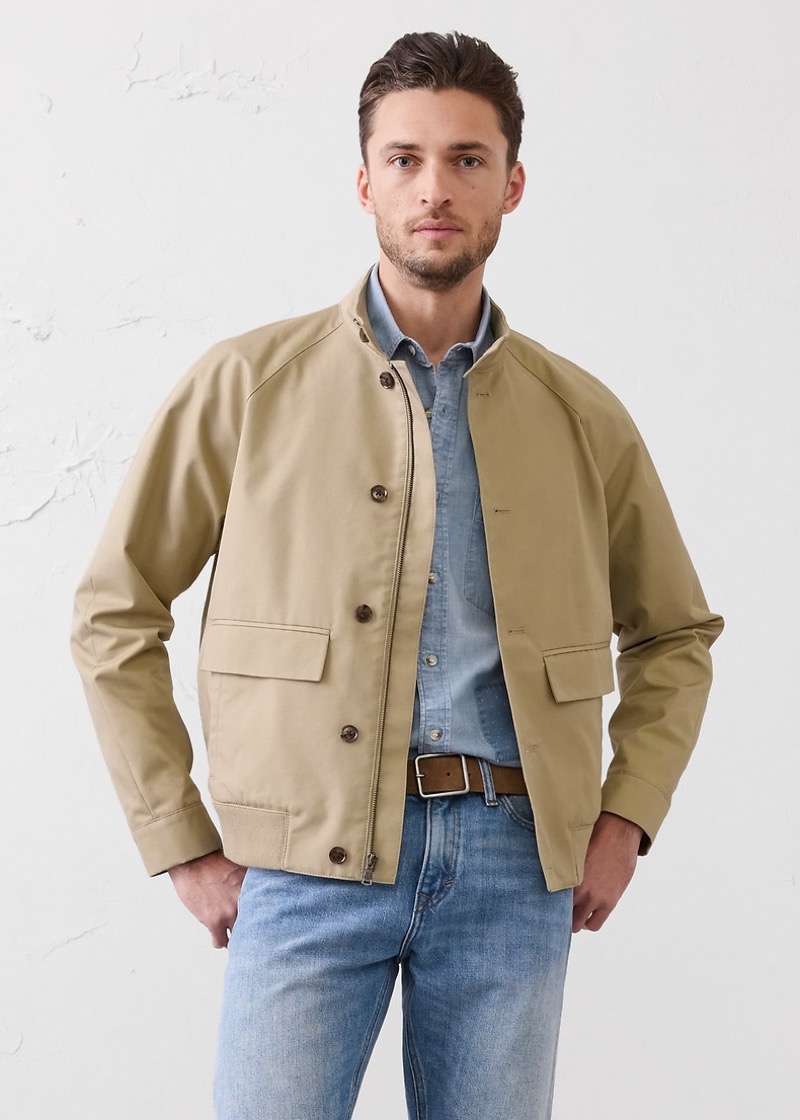
What are the different types of jackets for men? The main types of jackets for men are denim jackets, bombers, field jackets, leather jackets, blazers, sport coats, puffer jackets, peacoats, trench coats, parkas, harrington jackets, chore coats, shackets, fleece jackets, rain jackets, wax jackets, windbreakers, cafe racers, varsity jackets, overcoats, duffle coats, quilted jackets, and vests. The right jacket depends on the season, the occasion, and how much work you need it to do.
Casual and Everyday Jackets
The most-used section of any wardrobe. These are the jackets you reach for on a Tuesday morning, a Saturday afternoon, and everywhere in between. They pair with jeans, chinos, and shorts. They work with casual footwear. They require no ceremony.
Denim Jacket
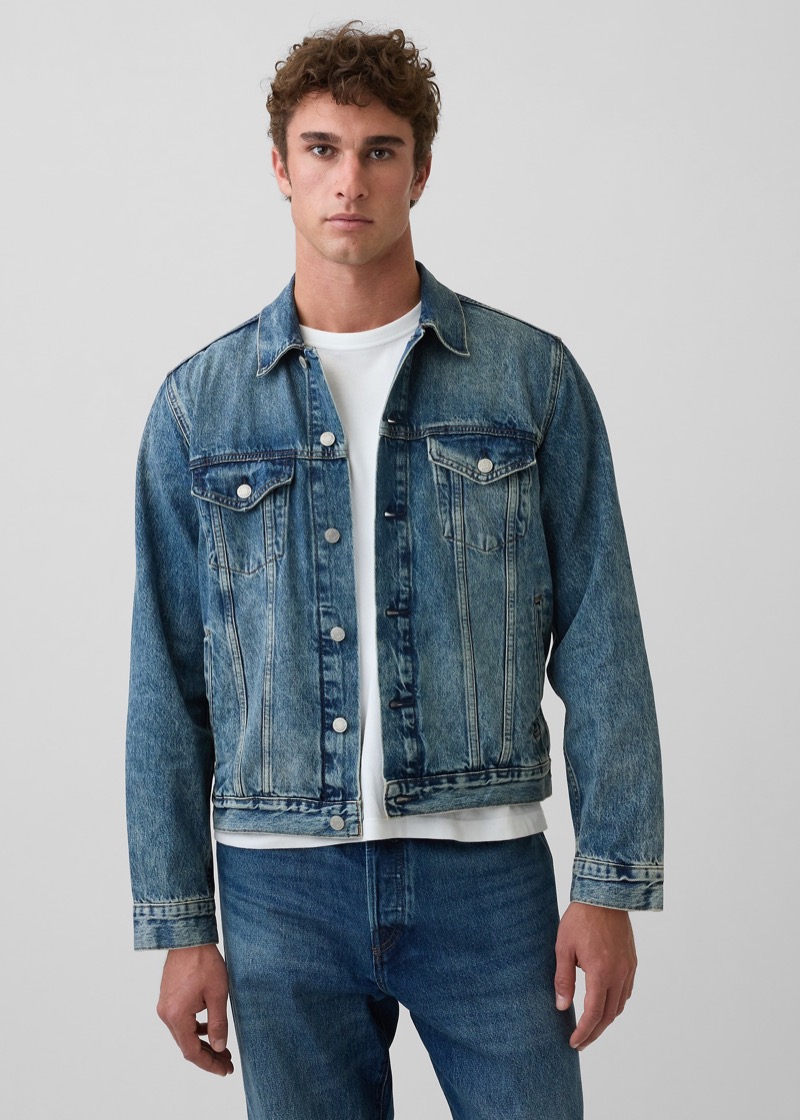
A denim jacket is a structured, hip-length jacket made from denim fabric, typically in indigo, black, or washed shades, with a button front, chest pockets, and adjustable side tabs at the hem.
Denim jackets trace to Levi Strauss in the 1880s, designed as durable outerwear for laborers. By the 1950s they had become a symbol of American youth culture, worn by everyone from James Dean to farm workers to punk bands. The weight of the fabric varies. Lighter weights work in spring and autumn. Heavier weights handle cool evenings with ease. The fit should be close enough to sit cleanly when buttoned, with room to layer a crew neck underneath.
Best for spring and autumn, casual daily wear, layering over hoodies or light knitwear.
Trucker Jacket
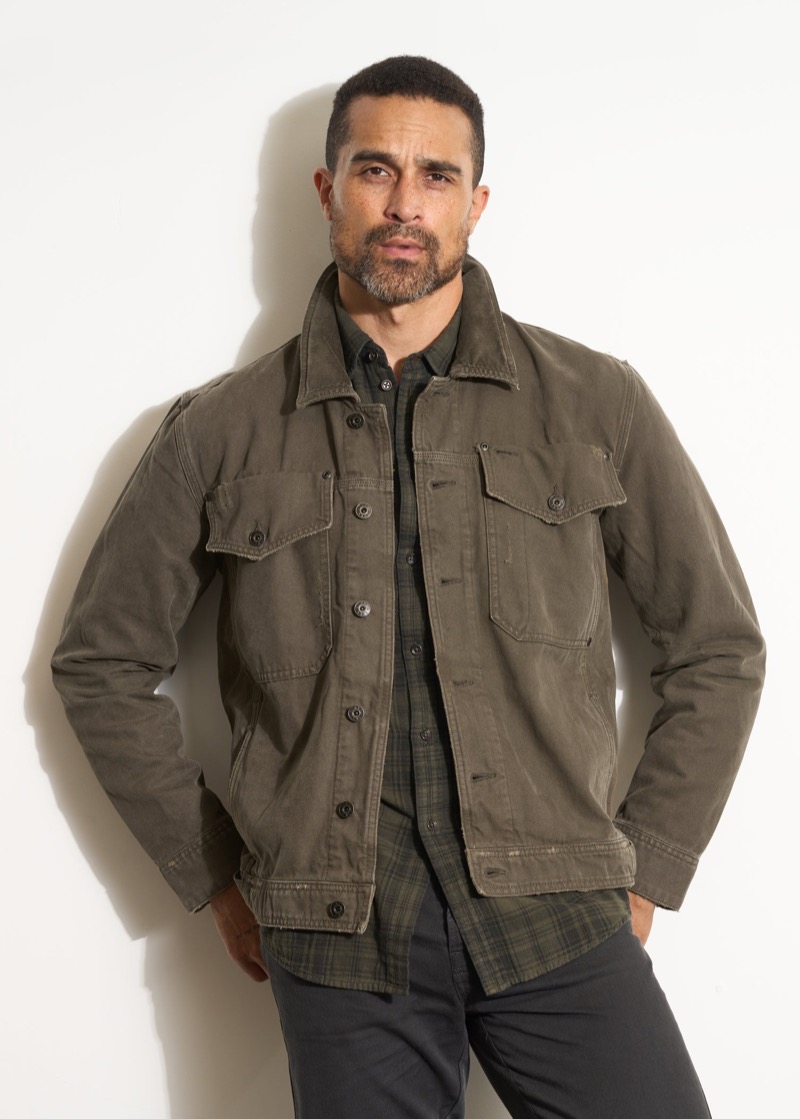
A trucker jacket is a specific denim silhouette distinguished by two chest pockets with pointed flaps, a boxy-but-fitted cut, and a chest seam that the standard denim jacket lacks.
The terms denim jacket and trucker jacket are used interchangeably, but they refer to different things. The trucker is a silhouette, not simply a material. Levi’s Type III, introduced in 1962, is the reference point every other trucker is measured against. The short, boxy cut works across most body types because it ends at the hip and avoids adding visual length below the waist.
Best for casual everyday wear, jeans and workwear outfits, autumn layering.
Chore Coat
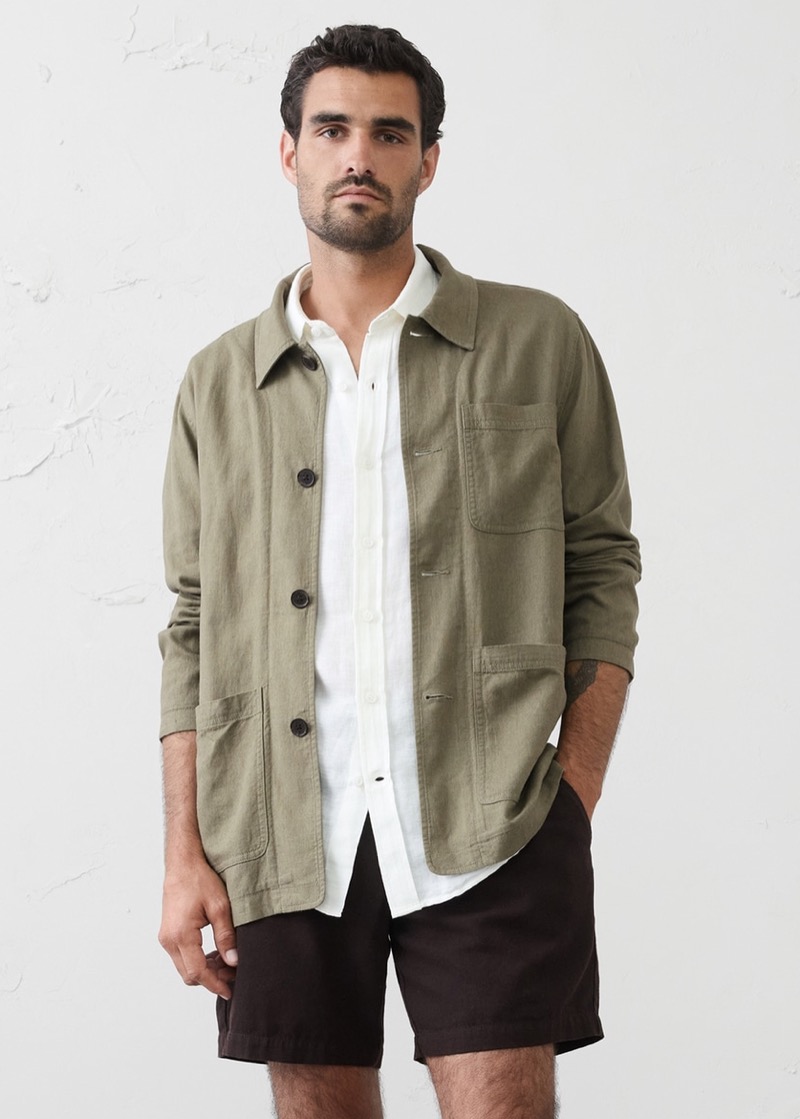
A chore coat is a loose, boxy, hip-length work jacket with large patch pockets, typically in sturdy cotton canvas, twill, or a cotton blend.
The chore coat comes from French working-class dress, specifically the bleu de travail worn by manual workers in the nineteenth century. It arrived in contemporary menswear through workwear labels and Japanese Americana brands and became a casualwear staple. The oversized cut is the point. A barn jacket occupies similar territory but tends to have a corduroy collar and quilted lining, giving it a country-British feel where the chore coat sits more urban and utilitarian.
Best for casual and smart-casual wear, autumn and spring, layering over heavy knitwear.
Shacket
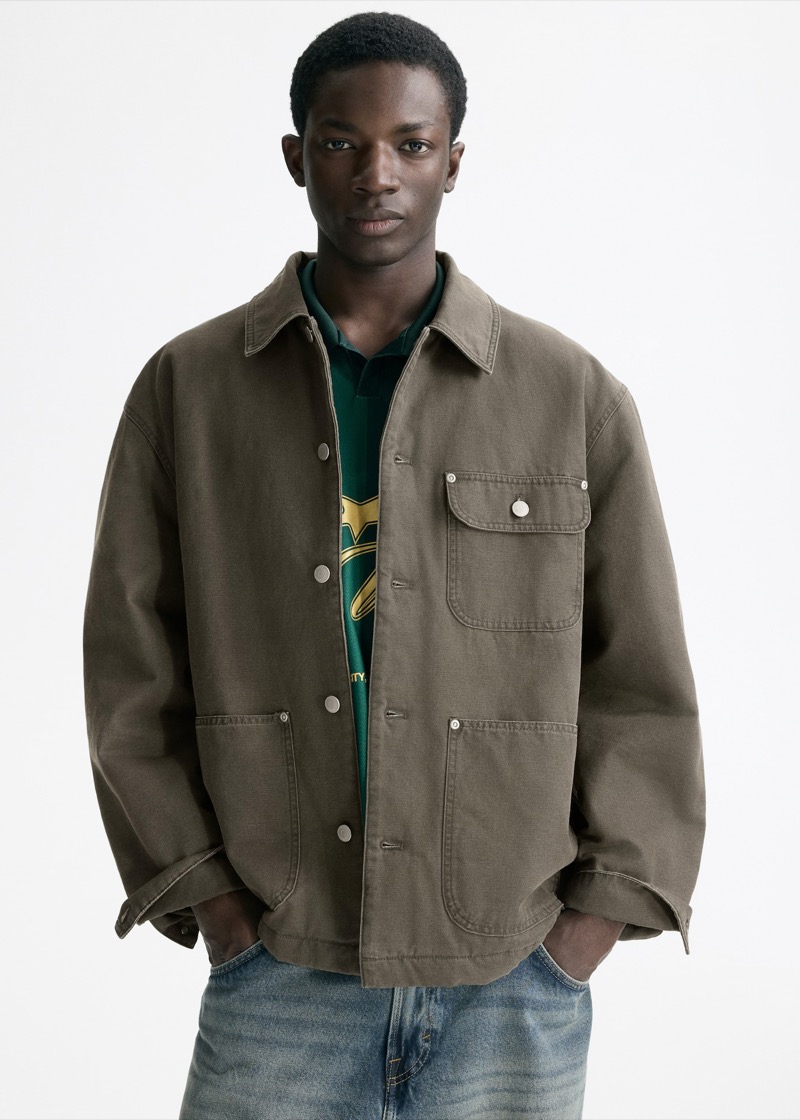
A shacket is a shirt-weight overshirt worn as a layer, sitting in weight and function between a shirt and a lightweight jacket.
The name is a portmanteau, which usually signals a gimmick. The shacket holds its own category. At its best weight, it fills the gap between a shirt and a jacket: heavy enough to add warmth, light enough to stay comfortable indoors. Common fabrics include flannel, heavy cotton, and wool blends. Wear it open over a t-shirt or buttoned up on its own.
Best for spring and autumn, casual daily wear, mild outdoor conditions.
Harrington Jacket
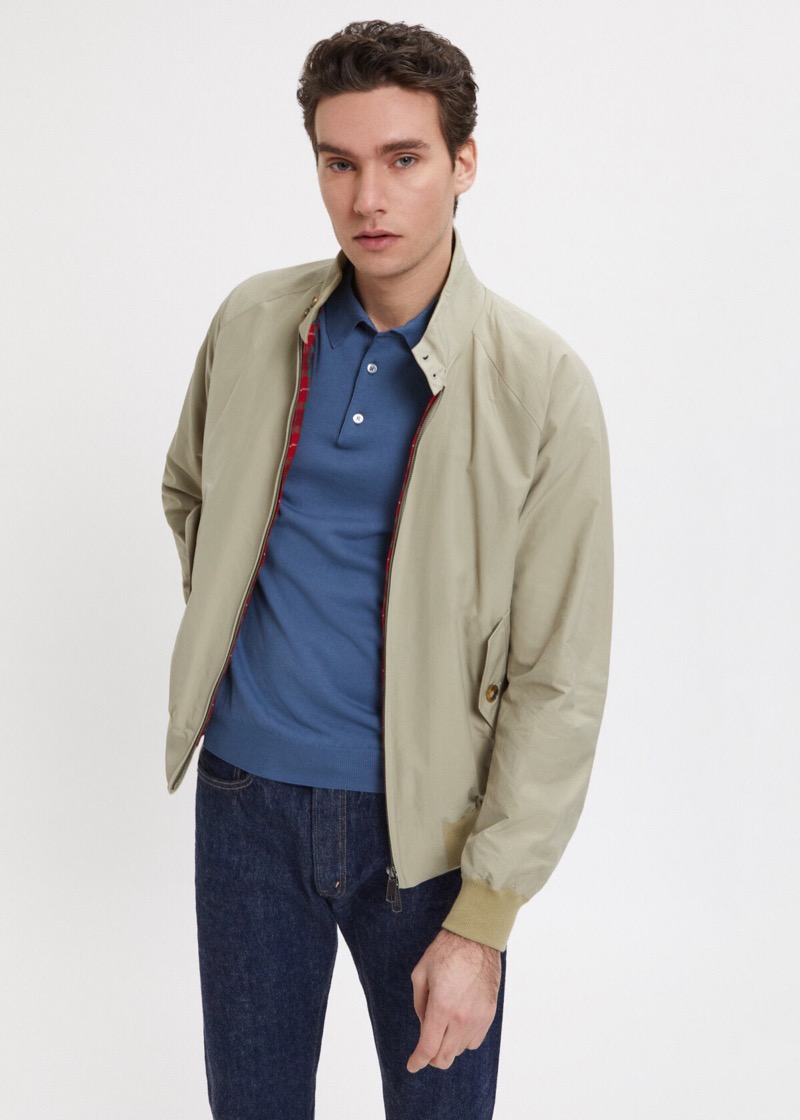
A harrington jacket is a lightweight, waist-length jacket with a stand-up collar, a zip front, two slant pockets, and a tartan-lined interior.
The Harrington dates to the 1930s, first produced by Baracuta as the G9. The name comes from Rodney Harrington, a character Ryan O’Neal played in Peyton Place in the 1960s. It became embedded in British youth culture through the mod, skinhead, and punk scenes before going fully mainstream. It is one of the most adaptable casual jackets available, light enough for summer evenings, functional enough for autumn, and sharp enough to wear over a collared shirt. A coach jacket shares the silhouette but is typically made from nylon with a satin finish, giving it a more athletic feel.
Best for spring through autumn, casual and smart-casual occasions, over shirts or lightweight knitwear.
Track Jacket
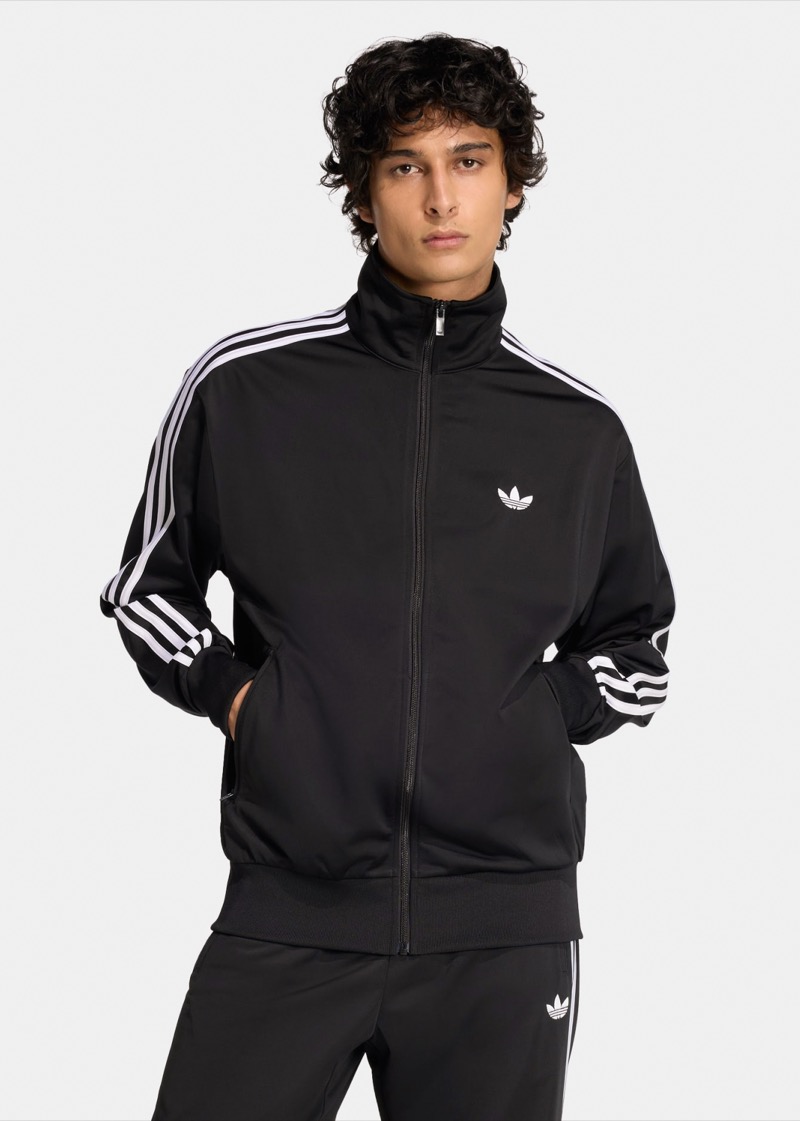
A track jacket is a lightweight, zip-front athletic jacket with a stand collar, typically made from polyester or tricot, often with contrast stripes on the sleeves.
Originally designed for athletes warming up before competition, the track jacket crossed into streetwear through hip-hop and European casual dress in the late 1980s and 1990s. Adidas, in particular, made theirs a cultural artifact. The contemporary version ranges from overtly athletic to fashion-forward, and the best examples find the clean middle ground: athletic in construction, worn with something slightly unexpected underneath.
Best for casual wear, activewear, smart-casual outfits when worn with tailored trousers.
Denim vs Trucker vs Chore at a glance: A denim jacket is any jacket made from denim. A trucker is the specific boxy Levi’s-derived silhouette in denim. A chore coat is a different garment entirely, looser and in workwear origins, typically in canvas or twill.
Military-Inspired Jackets
Most jacket guides say “bomber” and stop there. The military outerwear category is one of the richest in menswear, with specific garments tied to specific conflicts, units, and eras. The distinctions are worth knowing.
Bomber Jacket
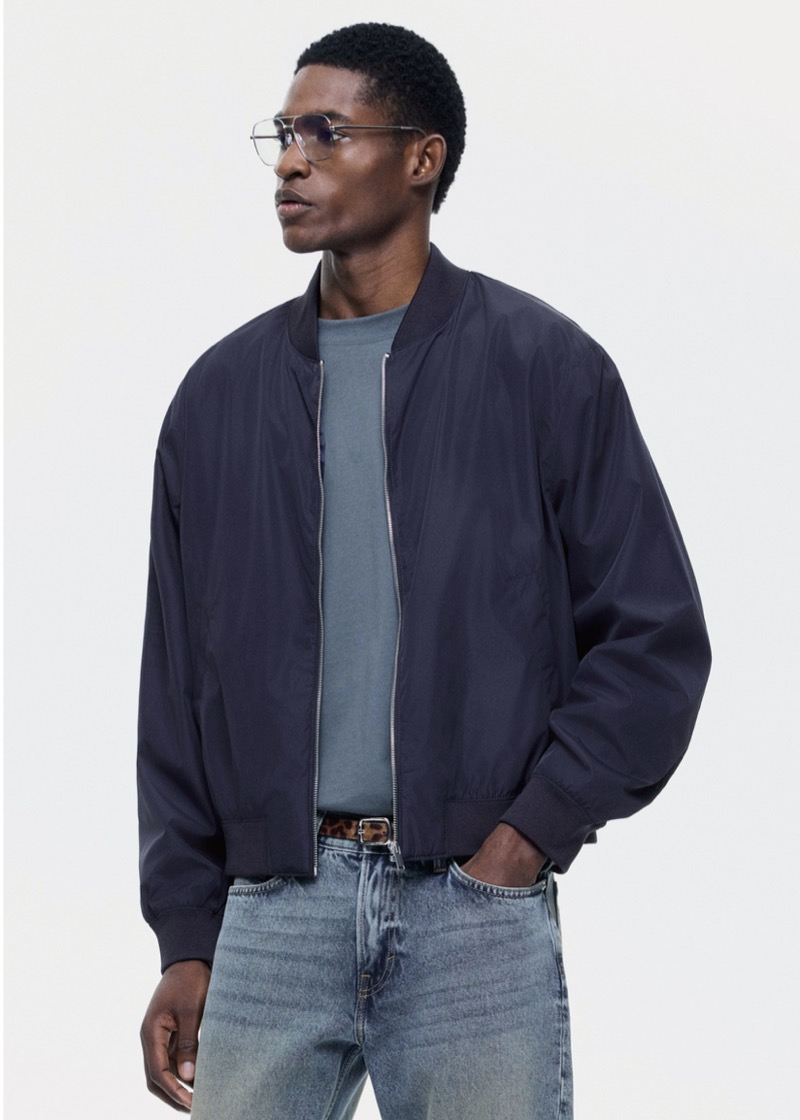
A bomber jacket is a short, waist-length flight jacket with a zippered front, ribbed cuffs and hem, and a rounded silhouette developed for military aviators.
Bomber is a category, not a single garment. The most iconic version is the MA-1, introduced by the United States Air Force in the 1950s. It is made from nylon, typically in sage green or black, with an orange lining and a left-arm chest pocket. The MA-1 became a civilian staple through British mod culture and American streetwear. The B-15, which preceded it, was made from cotton and leather with a fur-trimmed collar. The L-2B is a lightweight summer-issue variant in the same silhouette. All three are bombers. Most bomber jackets sold today are variations on the MA-1.
Variants to know:
- MA-1: the nylon military bomber, the most widely referenced version, in sage or black with orange lining
- B-15: the cotton and leather predecessor to the MA-1, with a fur-trimmed collar
- L-2B: lightweight summer-issue, thinner shell, same essential silhouette
Best for casual daily wear, autumn and mild winter, jeans and trainers outfits.
Flight Jacket / Aviator Jacket
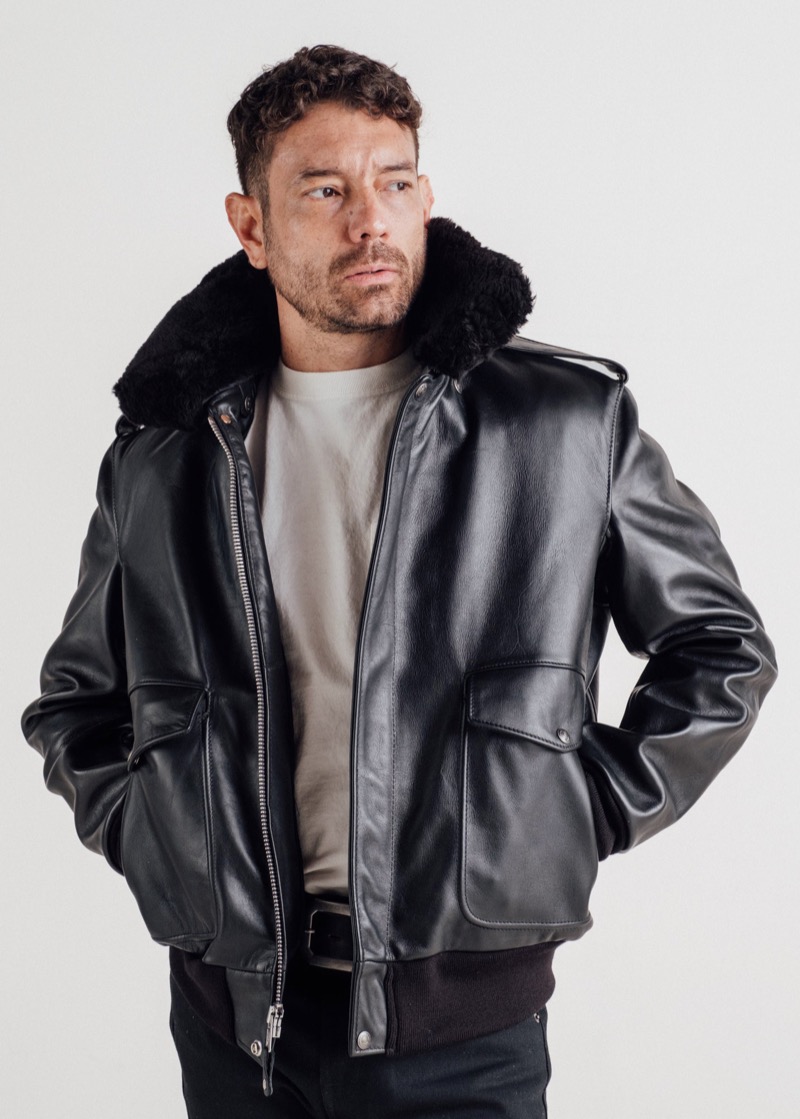
A flight jacket is a leather or shearling jacket designed for aviators, predating synthetic bombers, with an aesthetic rooted in the First and Second World Wars.
The A-2 is the definitive example. Introduced in 1931, it is made from horsehide or goatskin, with a snap-front closure, knit cuffs and waistband, and a shirt-style collar. It is slimmer and sharper than the MA-1 and sits firmly in the classic menswear space. The B-3 shearling is the other major type. A sheepskin jacket with a shearling-lined collar, it was worn by high-altitude bomber crews in World War II and sits closer in weight and warmth to a proper winter coat than to an everyday layer.
Best for autumn through early winter, casual to smart-casual, with raw denim or chinos and leather boots.
Field Jacket
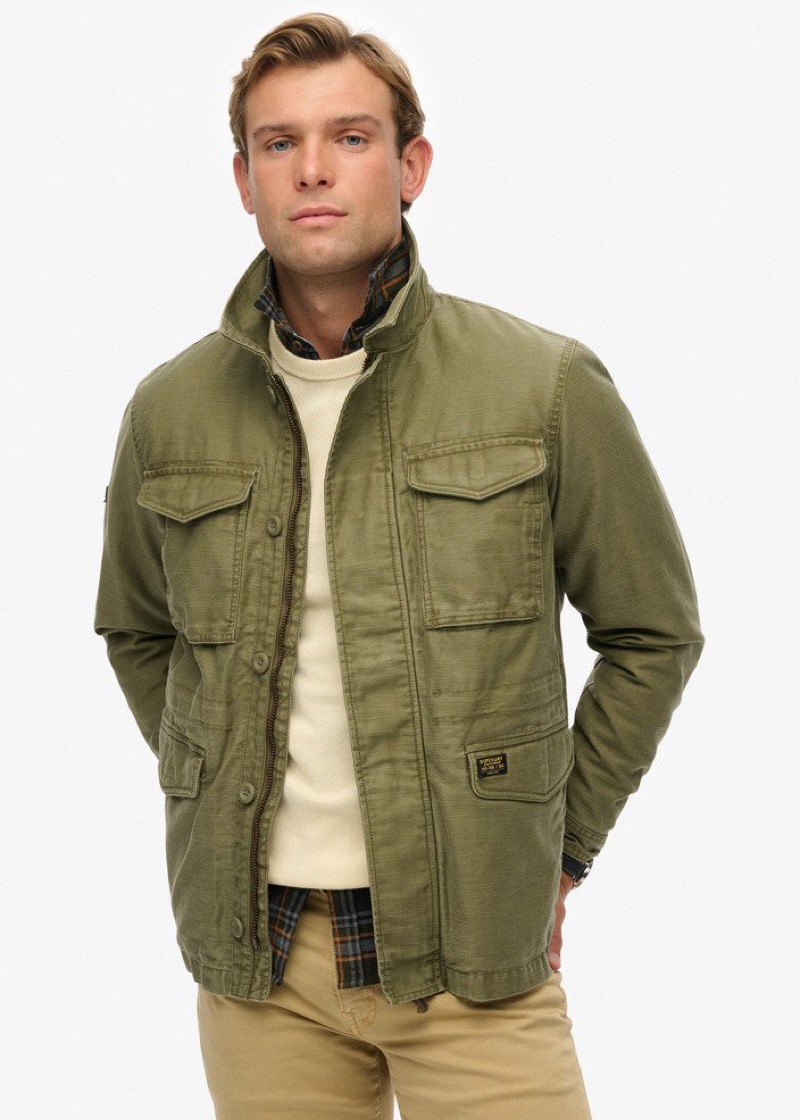
A field jacket is a loose, hip-length cotton jacket with multiple cargo pockets, developed for ground forces operating in variable conditions.
The M-65 is the benchmark. Introduced by the US Army in 1965, it has a four-pocket front, a button-and-zip closure, a hidden hood, and an adjustable waist and hem. It was worn by soldiers in Vietnam, then by protesters wearing them against the same war, and eventually by anyone who wanted something practical with historical weight. The M-51, its Korean War predecessor, is similar in construction and appearance. Both work in olive drab, black, and woodland camouflage.
Variants to know:
- M-65: standard US Army field jacket, 1965 onwards, with hidden hood
- M-51: Korean War predecessor, slightly baggier fit, hood separate
- Liner versions: some M-65s include a quilted liner that zips out for mild weather
Best for autumn and mild winter, casual daily wear, urban and outdoor environments.
Anorak
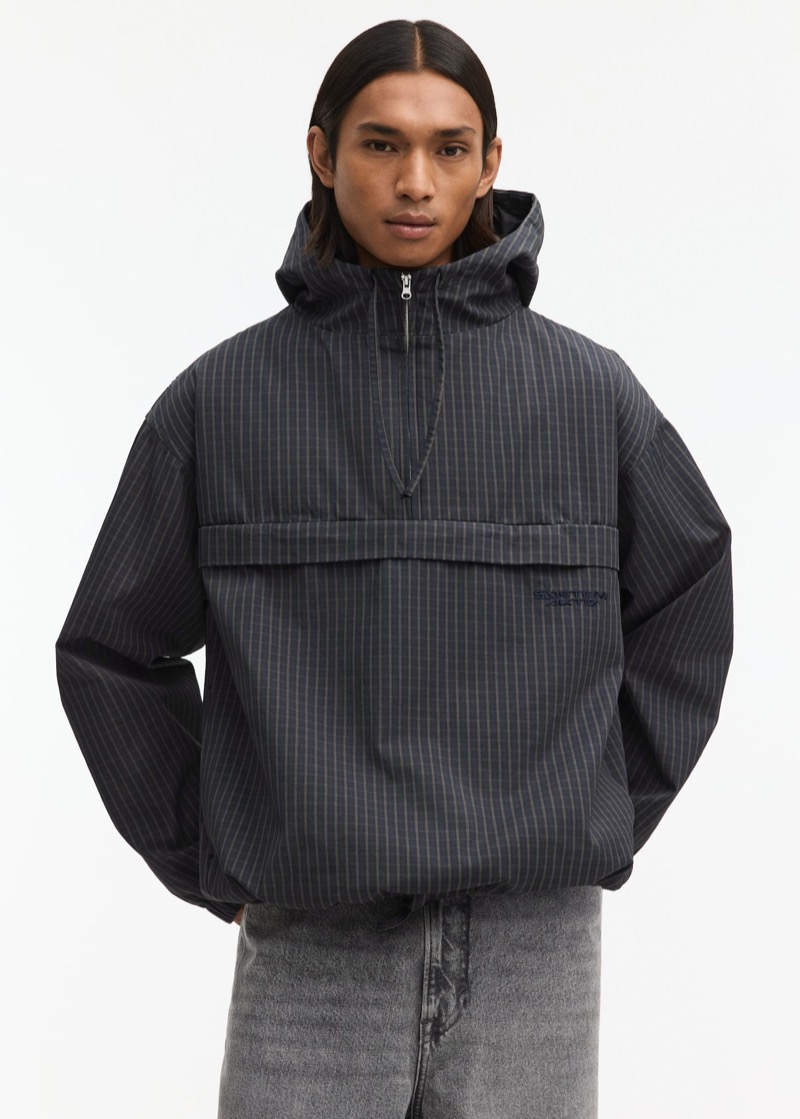
An anorak is a pullover outer layer with no front zip or button opening, typically with a half-zip or small chest opening, and often featuring a kangaroo pocket or bellows pockets.
The anorak comes from Inuit tradition, where the design made practical sense. A sealed front kept weather out entirely. The contemporary anorak follows the same logic. Some are lightweight windbreakers in pullover form. Others are heavy enough for serious outdoor use. A smock is a closely related form, typically heavier and in a more utilitarian silhouette. Both work well with wide-leg trousers and struggle alongside anything too tailored.
Best for casual and outdoor wear, autumn and spring, windy and wet conditions.
Military jackets compared: MA-1 vs A-2 vs M-65
| MA-1 | A-2 | M-65 | |
|---|---|---|---|
| Era | 1950s | 1930s | 1960s |
| Material | Nylon | Leather | Cotton |
| Fit | Loose-relaxed | Fitted | Loose |
| Modern use | Streetwear, casual | Smart-casual, heritage | Casual, outdoor |
Leather and Moto Jackets
Leather outerwear has been dressing subcultures for a century. The cut tells you everything: which scene it comes from, what it communicates, how it should be worn.
Classic Leather Jacket
A classic leather jacket is a broad category covering any outerwear made from animal hide, with the specific silhouette determining whether it sits in casual, moto, or dressy territory.
The material varies significantly. Full-grain cowhide is the most durable. Lambskin is softer and suppler but less rugged. Goatskin sits between them. Suede is napped leather, casual and vulnerable to weather. When people say “leather jacket” with no further specification, they typically mean one of the two silhouettes below: the double rider or the cafe racer.
Best for autumn through early winter, casual to smart-casual, over any weight of base layer.
Double Rider / Biker Jacket
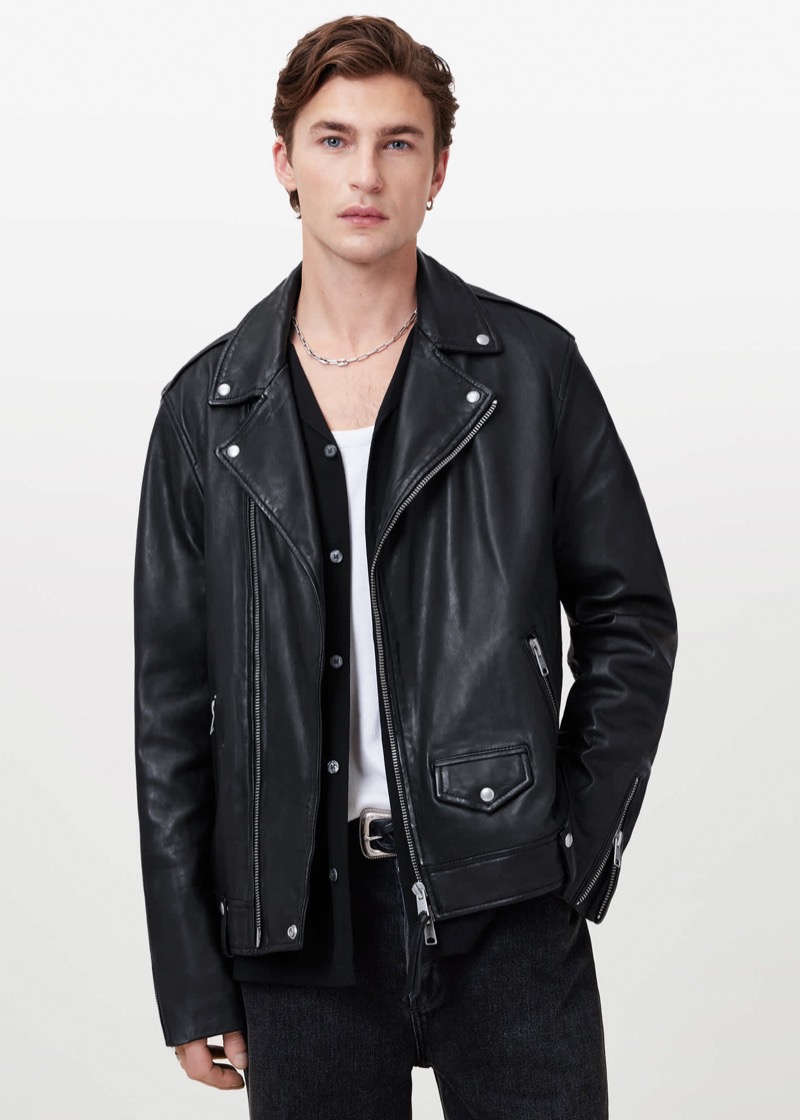
A double rider jacket is an asymmetric-zip leather jacket with a lapel collar, epaulettes, multiple zip pockets, and a belted waist, originally designed for motorcyclists.
The Schott Perfecto, designed in 1928, is the original. The asymmetric zip routes away from the centerline of the body, where a crash impact would be greatest. Marlon Brando wore a Schott in The Wild One in 1953 and spent the following decades being referenced every time someone reached for a biker jacket. The moto jacket is the same essential garment with minor variations in hardware placement. The silhouette works because it is both functional in origin and graphically strong.
Best for casual to smart-casual wear, autumn and mild winter, over t-shirts, heavy shirts, or lightweight knitwear.
Cafe Racer
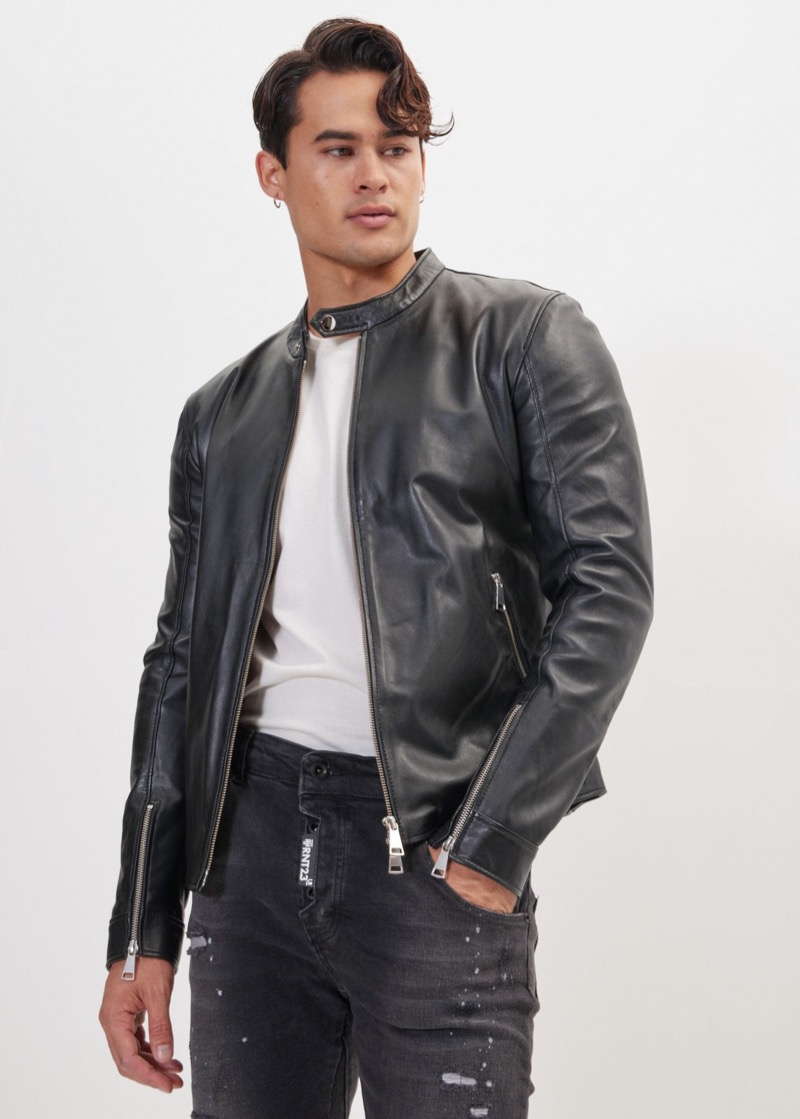
A cafe racer jacket is a minimal, slim-cut leather jacket with no collar or a short band collar, a straight zip front, and clean lines throughout.
The cafe racer jacket comes from the British motorcycle scene of the 1950s and 1960s, where riders customizing their bikes for speed wanted a jacket to match. Speed, no bulk, no excess hardware. Where the double rider announces itself through its hardware, the cafe racer announces itself through its clean face. It is the restrained option in a category that does not always value restraint. A racer jacket is effectively the same garment, sometimes with a small stand collar in place of the band collar.
Best for casual to smart-casual wear, autumn and mild winter, with slim trousers and leather shoes or Chelsea boots.
Shearling Jacket
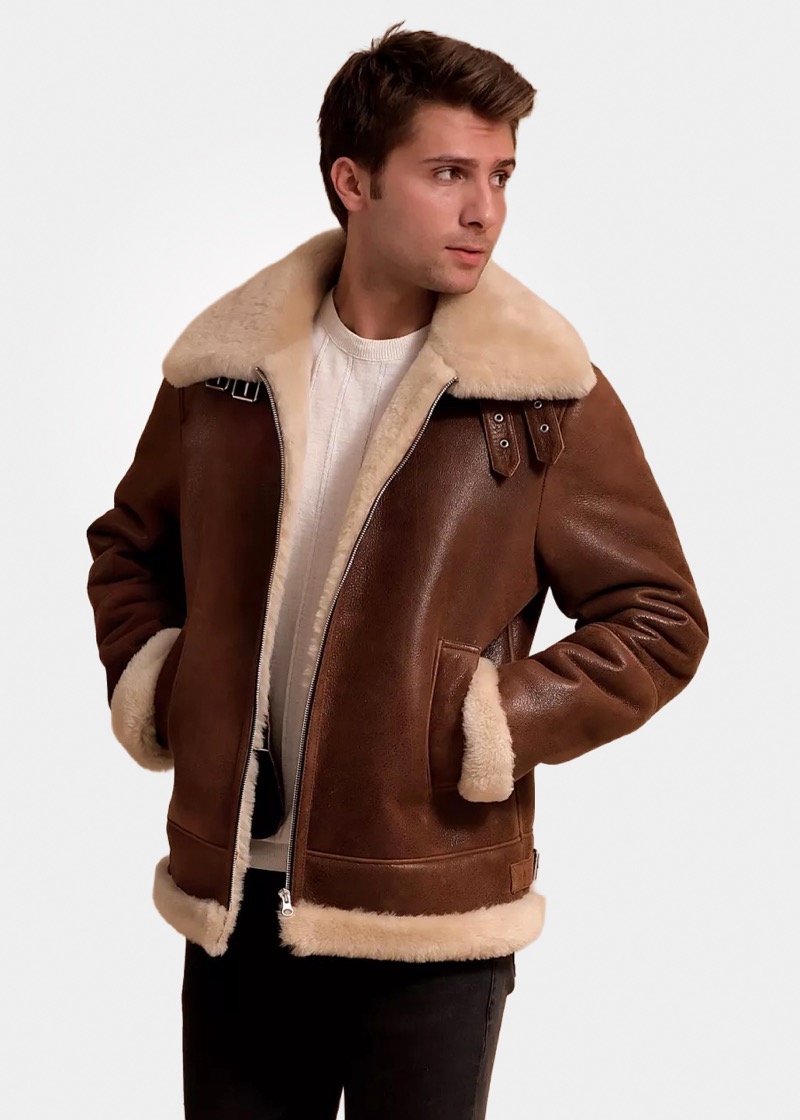
A shearling jacket is a leather outer shell with a sheepskin or sheepskin-like lining in which the wool has been left intact, creating a jacket with exceptional warmth at a relatively compact volume.
The shearling’s wartime roots are in the B-3 bomber jacket, but the civilian version has been a menswear fixture since the 1970s. The collar is usually shearling-trimmed and turns up for wind protection. It is heavier than most jackets and sits firmly in winter territory. The feel is heritage and tactile in a way that technical outerwear is not. A good one lasts decades.
Best for winter, casual to smart-casual, with heavy denim, wool trousers, or dark chinos.
Winter and Cold-Weather Coats
This section covers outerwear designed for serious cold. Most of these pieces are technically coats by length, but they function as the outerwear layer and belong here.
Puffer Jacket
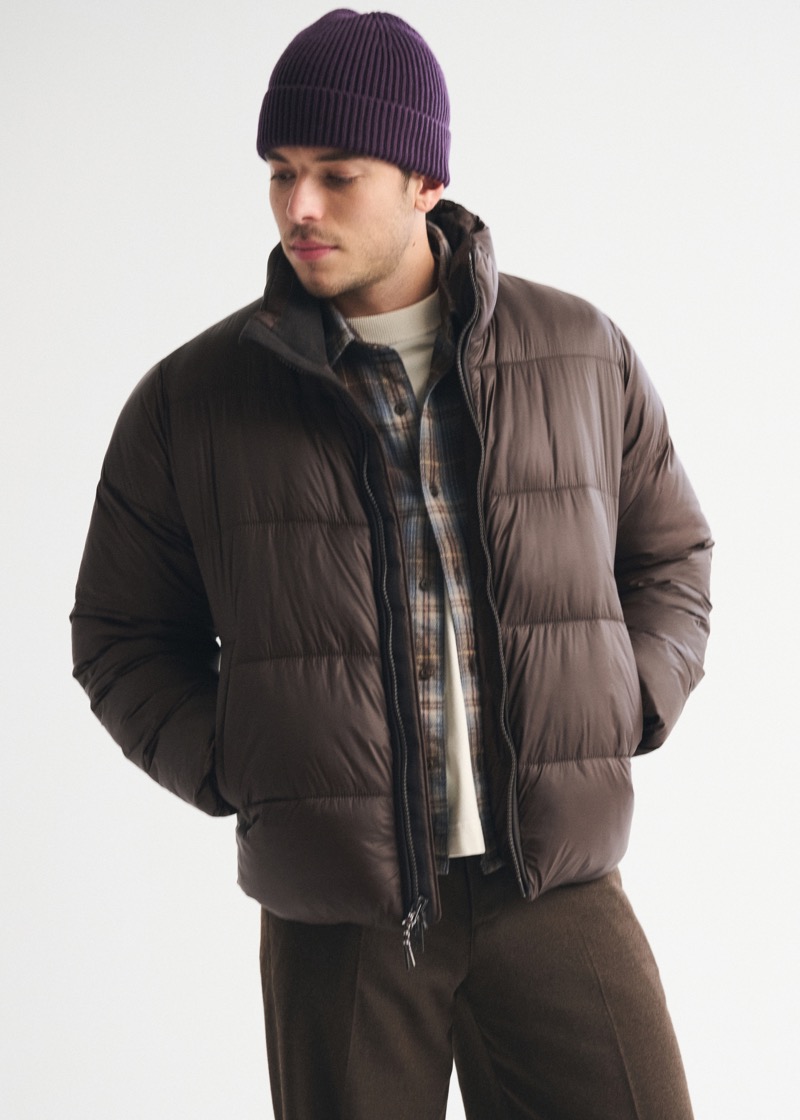
A puffer jacket is a quilted jacket or coat with a sewn-through or baffle construction filled with down or synthetic insulation, creating the segmented, inflated appearance the name describes.
Puffer is a silhouette. Down is a fill type. A puffer jacket can use down or synthetic fill, and the distinction matters. Down is warmer for its weight, compresses smaller, and lasts longer. Synthetic fill is cheaper, performs when wet, and dries faster. For most people in temperate climates, either is adequate. For serious cold or extended outdoor use, down at the highest fill power you can afford is the smarter investment.
Best for winter, casual and outdoor wear, over base layers and knitwear in cold conditions.
Parka
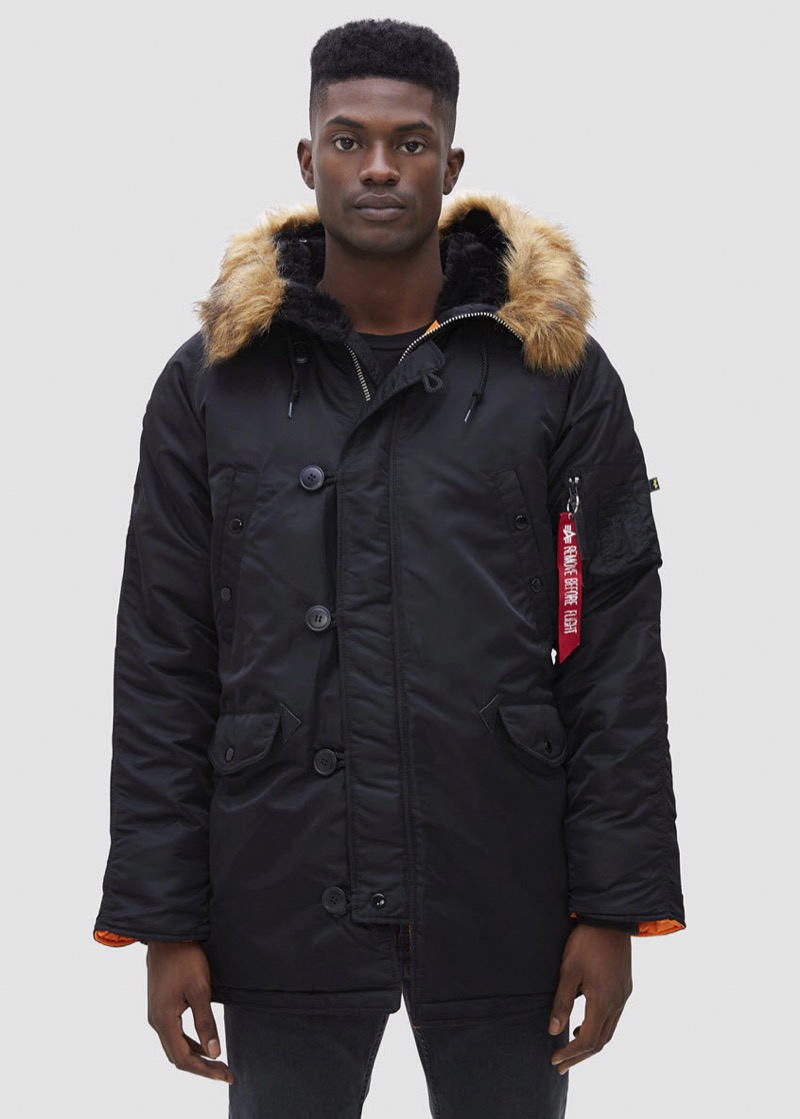
A parka is a long, hooded coat typically extending to mid-thigh or below, originally developed for sub-Arctic conditions, with substantial insulation and weather-resistant construction.
The word parka comes from the Nenets language of the Russian Arctic. Military adoption formalized the design. The N-3B snorkel parka, named for its sleeping bag-style collar that could be drawn over the face in extreme cold, became standard Air Force issue. The fishtail parka, longer at the back than the front, became central to British mod culture in the early 1960s, worn over suits on Vespa scooters. The expedition parka is the heaviest version, designed for temperatures that other jackets cannot handle.
Variants to know:
- N-3B: the snorkel parka, Air Force issue, short and extremely warm
- Fishtail: longer at the back, mod heritage, distinctive silhouette
- Expedition: maximum insulation, for temperatures below -20°C
Best for autumn through winter, casual wear, cold and wet conditions.
Peacoat
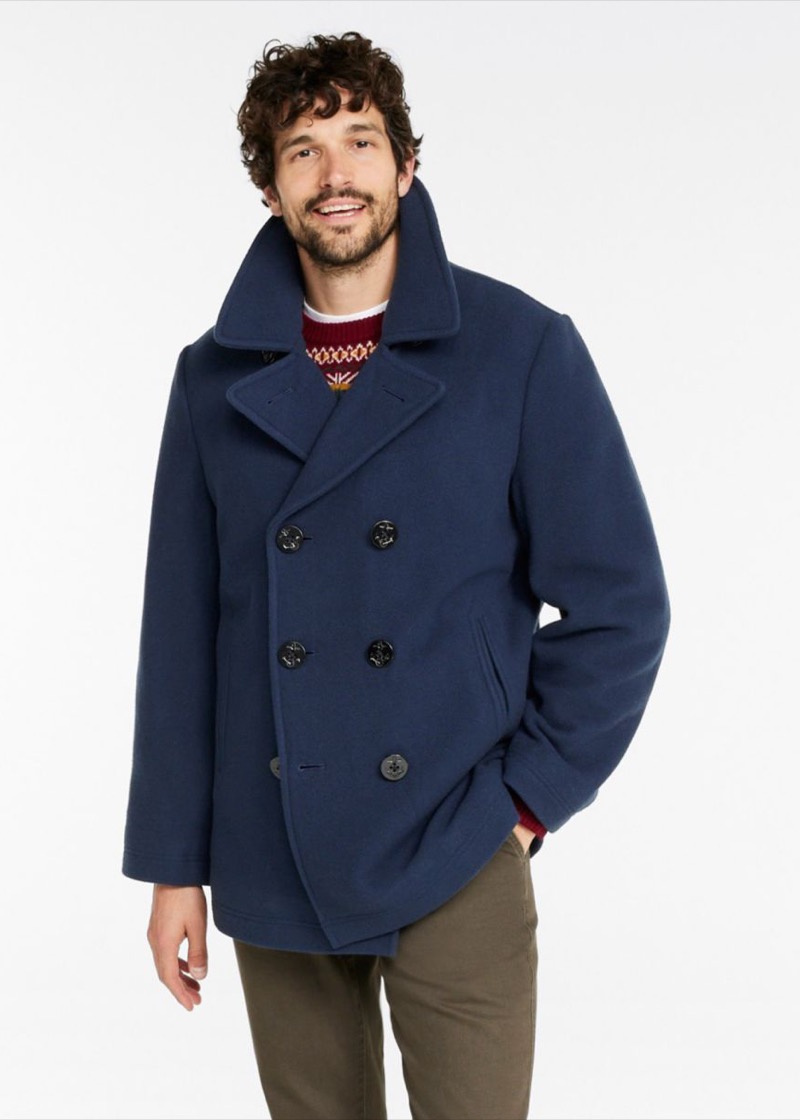
A peacoat is a double-breasted wool coat in navy reaching to the mid-thigh, with wide lapels, large anchor buttons, and a structured silhouette originally issued to sailors.
The peacoat is naval outerwear, standard issue for sailors in Western European and American fleets since the eighteenth century. The name likely derives from the Dutch pijjakker, a coarse wool coat. The double-breasted front serves a practical purpose. Either side can face outward to protect against wind depending on direction. Modern peacoats vary in weight and finishing. The best are made from melton wool, which is felted and inherently windproof. A bridge coat is the longer officer’s variant, extending to the knee.
Best for autumn and winter, smart-casual to formal occasions, with tailored trousers, jeans, or dark chinos.
Overcoat
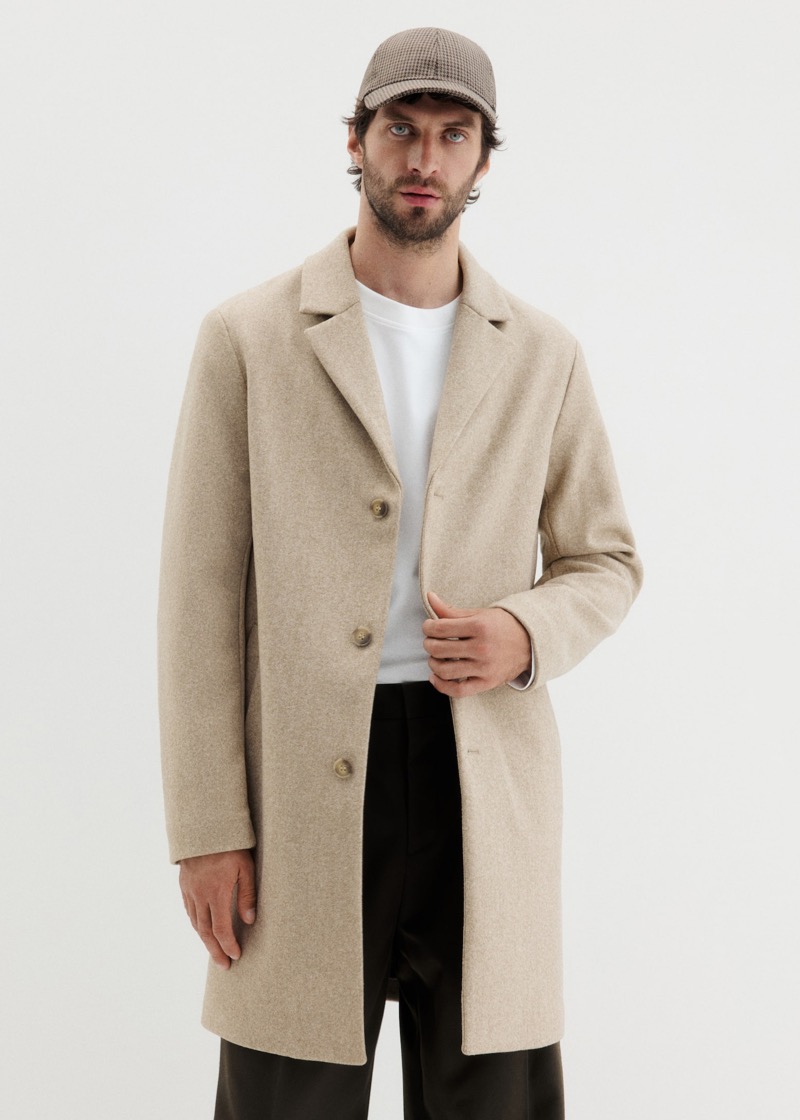
An overcoat is a formal, full-length outer coat designed to be worn over a suit or tailored clothing, typically in wool or a wool blend.
The overcoat is the most formal outerwear category, and it contains several distinct styles.
A Chesterfield coat is the most refined. Single or double-breasted with a fly front, typically in charcoal or camel, with a slight waist suppression that gives it a tailored profile. It is what a man wears over a suit when he wants the suit’s formality to remain in spirit even when covered.
A topcoat is a lighter-weight version using thinner wool or cashmere, designed for milder weather. It is one step down in formality from the Chesterfield and a clear step up from a parka.
A double-breasted overcoat adds more visual weight than the single-breasted version. The extra rows of buttons work well on taller frames.
A car coat ends above the knee, originally designed for driving. It is the most casual overcoat variant and the one that crosses into smart-casual territory most naturally.
Best for autumn and winter, formal and smart-casual occasions, over suits, tailored separates, or dressed-up casual wear.
Duffle Coat
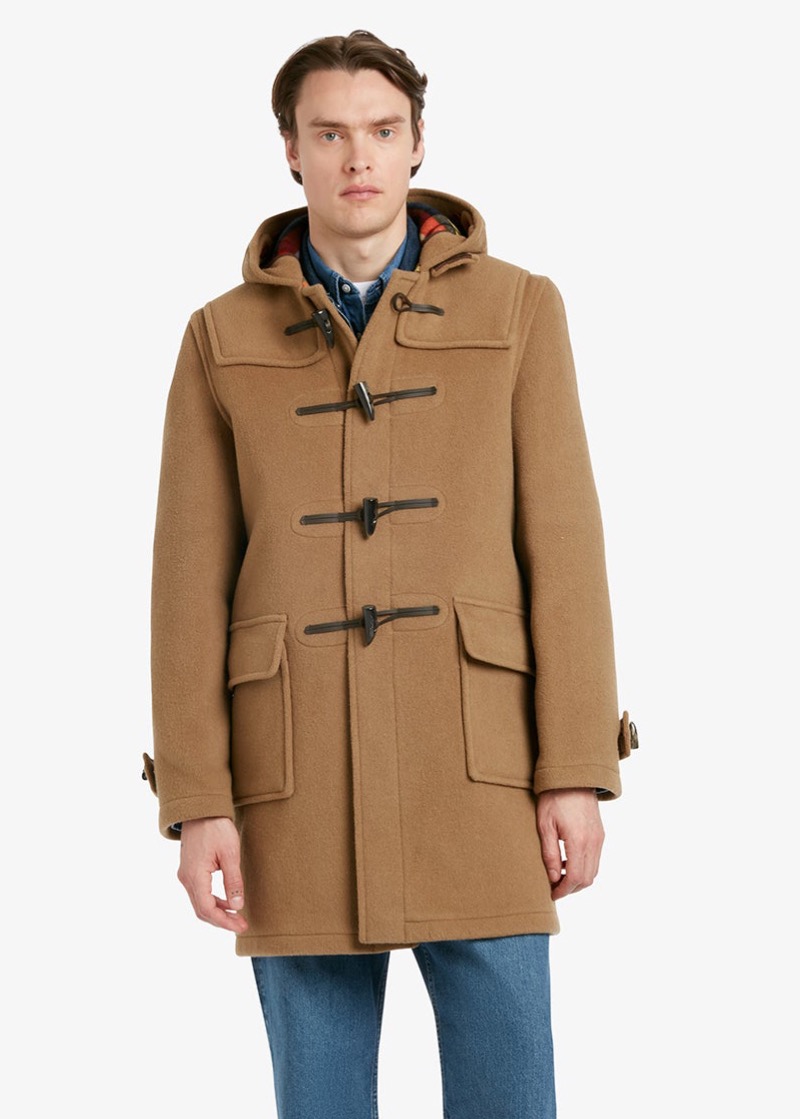
A duffle coat is a hooded toggle coat made from thick woolen cloth, named after the Belgian town of Duffel where the original fabric was produced.
Field Marshal Montgomery made it famous. He wore one during the North Africa campaign in World War II, and the duffle coat became associated with practical British cold-weather dress. It crossed into civilian life and then into student culture, becoming a staple of British dress in the 1950s and 1960s. The toggle closures are made from horn or wood attached to loops, which can be operated with gloves on. Gloverall is the heritage benchmark.
Best for autumn and winter, casual to smart-casual, over heavy knitwear and jeans.
Mackintosh / Mac Coat
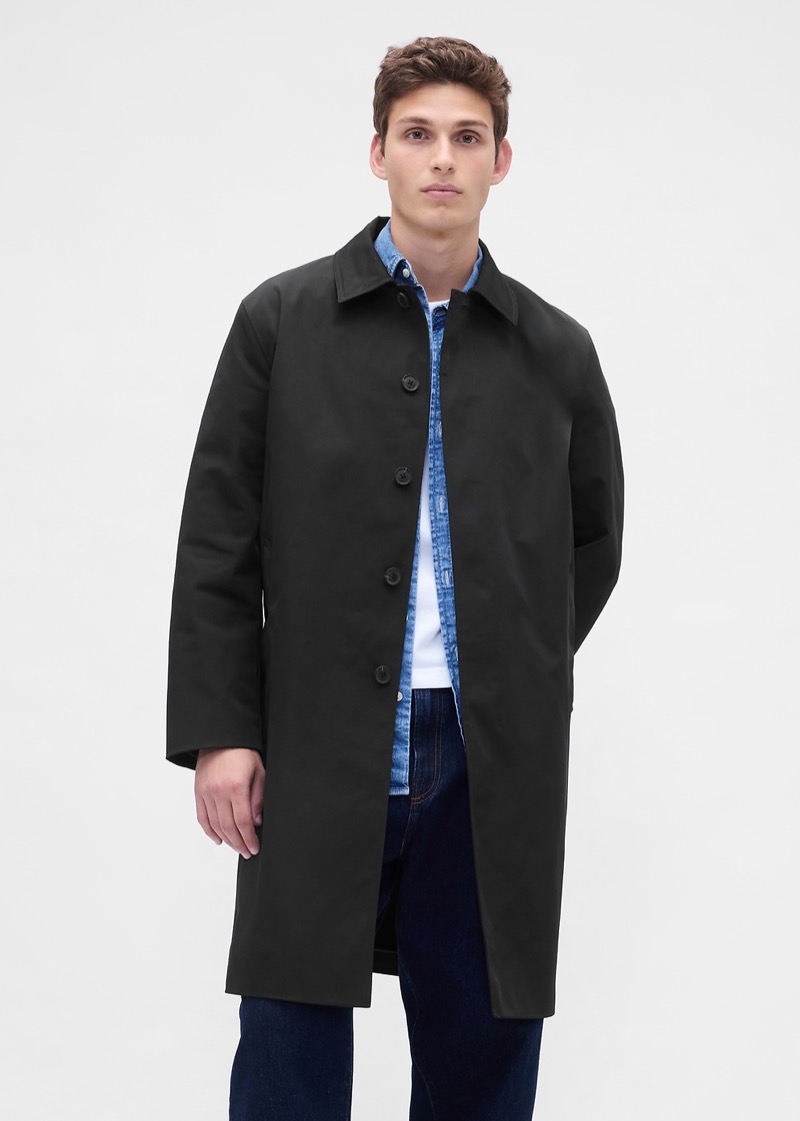
A mackintosh is a waterproof coat made by rubberizing or laminating fabric between layers, taking its name from Charles Macintosh, who patented the process in 1823.
The original mackintosh was made from two layers of fabric with dissolved rubber between them. Breathability improved as modern laminating techniques replaced the original process. Contemporary macs are typically hip-length to mid-thigh, with a cleaner profile than a full trench coat. They sit in the British practical tradition, functional and understated, distinct from the trench coat’s more dramatic silhouette.
Best for wet conditions, spring and autumn, casual to smart-casual.
Peacoat vs Overcoat vs Topcoat vs Chesterfield
| Peacoat | Overcoat | Topcoat | Chesterfield | |
|---|---|---|---|---|
| Length | Mid-thigh | Full | Mid-thigh to knee | Full |
| Formality | Smart-casual | Formal | Smart to formal | Formal |
| Weight | Heavy | Heavy | Light to medium | Medium |
| Best occasion | Casual to office | Suits and formal | Suits and smart-casual | Suits and black tie |
Performance and Outdoor Jackets
Technical outerwear comes with more terminology than any other category. Here it is in plain language.
Rain Jacket
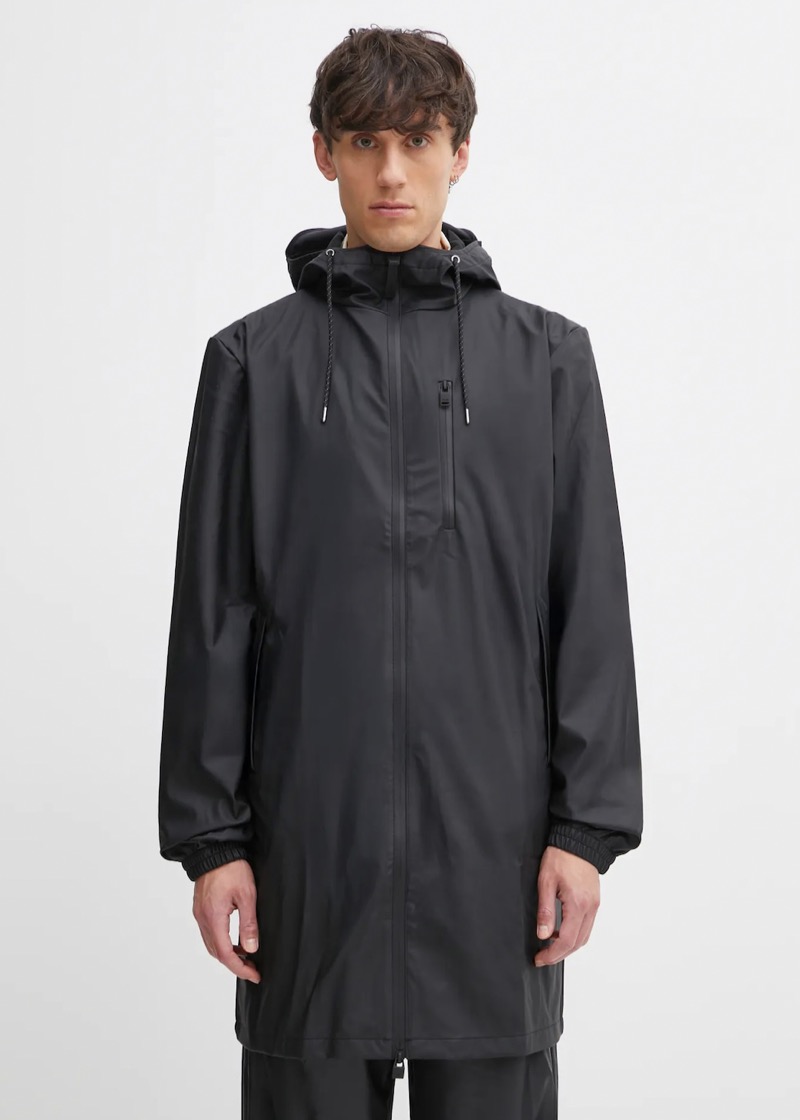
A rain jacket is a lightweight outer layer made from waterproof or water-resistant fabric, designed to protect against rain while keeping bulk and weight to a minimum.
Waterproof and water-resistant describe two different levels of protection. Water-resistant fabrics repel light rain through a DWR (durable water repellent) coating but eventually saturate. Waterproof fabrics, with sealed seams and membranes like Gore-Tex, hold out in sustained rain. For urban use in occasional showers, water-resistant is adequate. For hiking in sustained conditions, waterproof is necessary. A 3-in-1 jacket adds a zip-in fleece or insulated liner that converts the rain jacket into a cold-weather layer, useful if you want one piece to do two jobs.
Best for wet conditions year-round, hiking and outdoor activities, urban daily wear in rainy climates.
Hardshell vs Softshell
A hardshell jacket is a fully waterproof and windproof outer layer with minimal insulation, designed for high-output activities in severe conditions. A softshell jacket is a stretchy, breathable outer layer that resists light wind and water, designed for activity where breathability and freedom of movement matter as much as weather protection.
The choice comes down to conditions and activity level. Hardshell for standing in heavy rain or stopping at a summit. Softshell for high-output activity in variable conditions where a hardshell would cause overheating. Many experienced outdoor users carry both, layering as needed.
Best for outdoor activities in variable conditions; hardshell for severe weather, softshell for high-output use in milder conditions.
Fleece Jacket
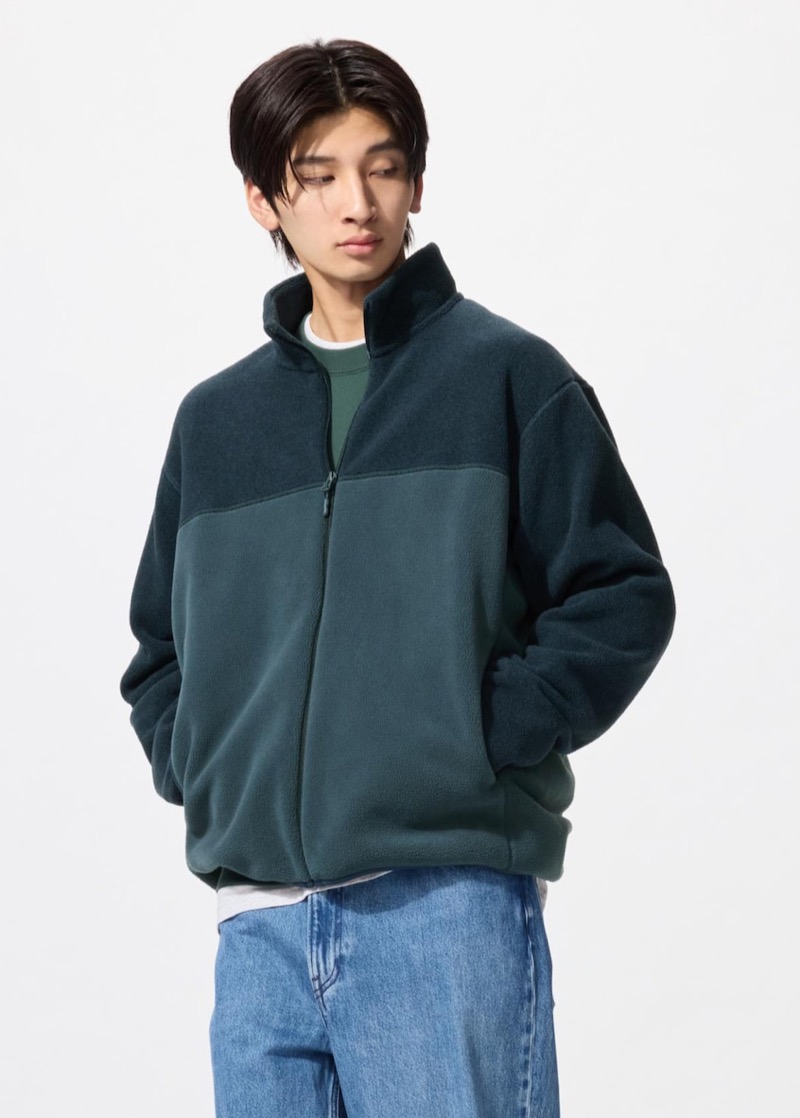
A fleece jacket is a midlayer made from polyester fleece fabric, providing warmth through trapped air while staying lightweight and quick-drying.
Patagonia popularized fleece in the late 1970s as an alternative to wool for outdoor use. Modern fleece comes in several weights: grid fleece for high-output activity, midweight for everyday use, heavyweight for static cold-weather use. A sherpa jacket uses a thicker, more textured fleece that resembles shearling. Technical fleece adds wind-resistant panels or water-resistant treatments to the standard construction.
Best for midlayer use in autumn and winter, outdoor activities, casual cold-weather wear.
Quilted Jacket
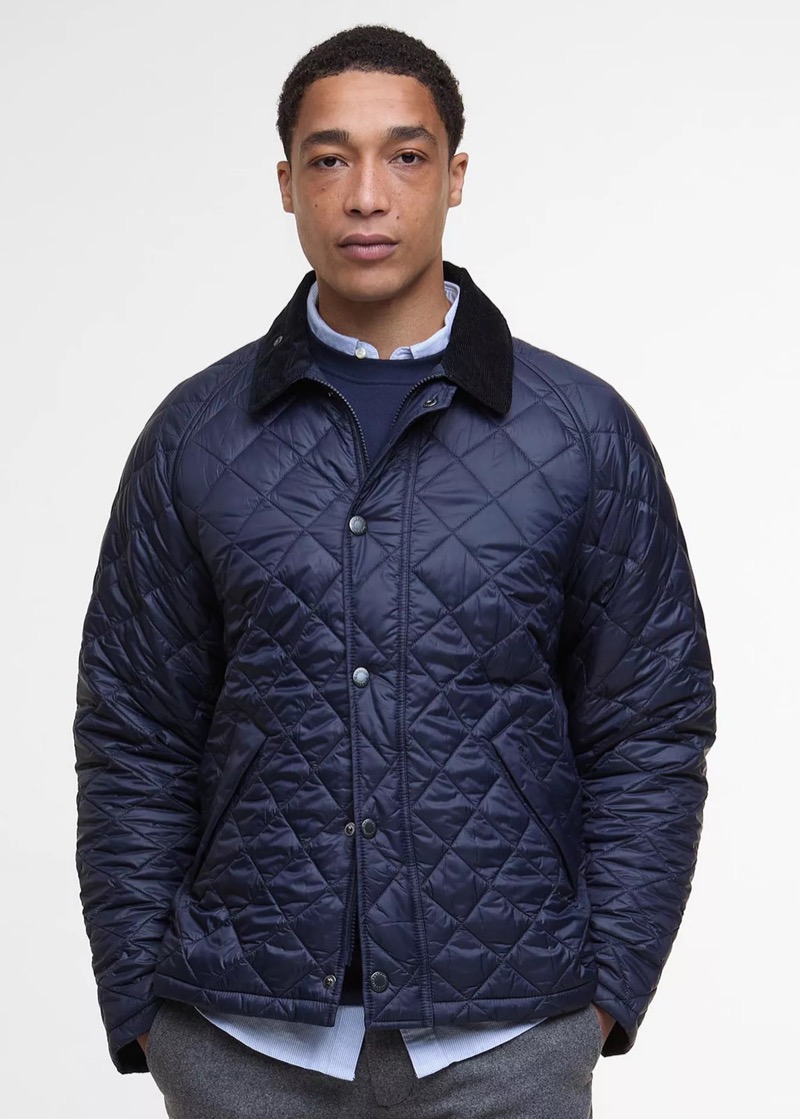
A quilted jacket is a jacket with sewn-through diamond or box-stitch quilting over an insulated fill, providing warmth in a trim silhouette.
The quilted jacket sits between the puffer and the tailored layer. It is warm enough to function as a light outer layer in autumn, smart enough to wear over a blazer in winter, and slim enough to keep a clean profile where a puffer would add bulk. Liner jackets are a related form, designed specifically to be worn inside a shell jacket or field jacket rather than on their own.
Best for autumn and mild winter, smart-casual occasions, layering under a shell jacket.
Wax Jacket
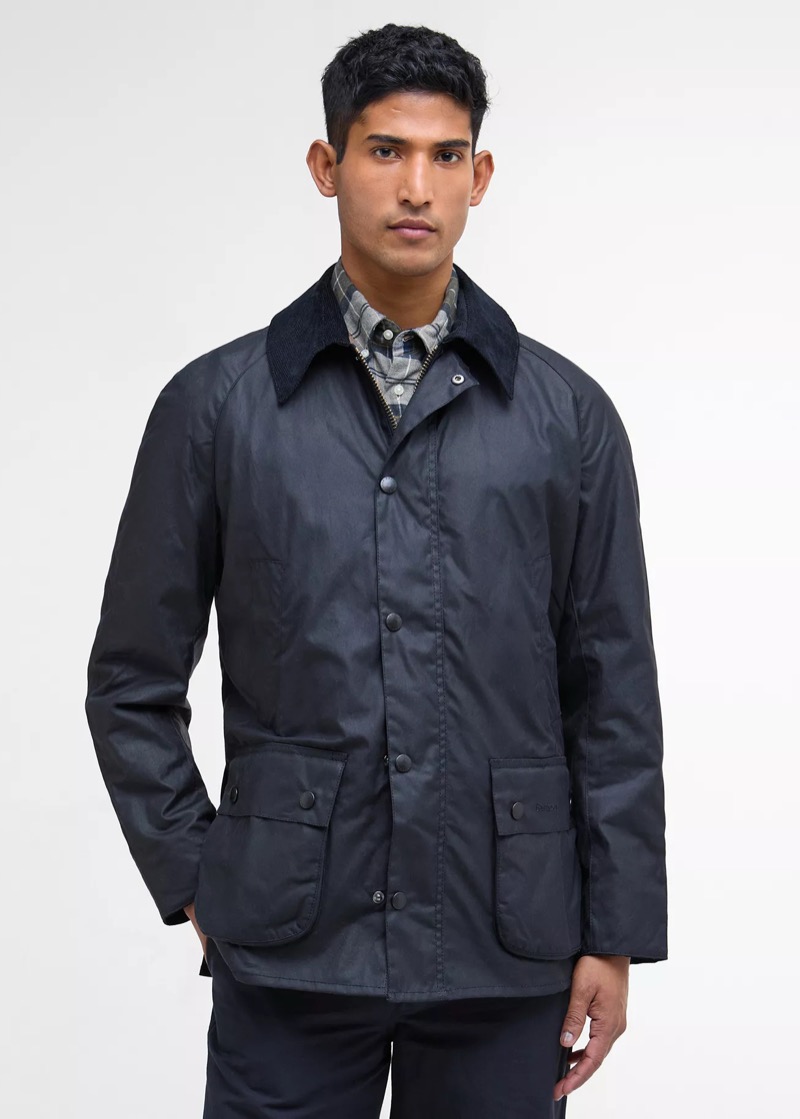
A wax jacket is a cotton jacket coated with a wax finish that makes it waterproof and highly wind-resistant, associated with British country dress.
Barbour defined the category, manufacturing waxed cotton outerwear in South Shields since 1894. The wax coating needs periodic renewal as it wears off, a process that takes around twenty minutes with a tin of wax and warm water. Waxed canvas is a harder-wearing American variant on the same principle, used in workwear contexts where the country associations of Barbour are not the point.
Best for autumn and mild winter, outdoor and country activities, smart-casual wear in rural settings.
Windbreaker
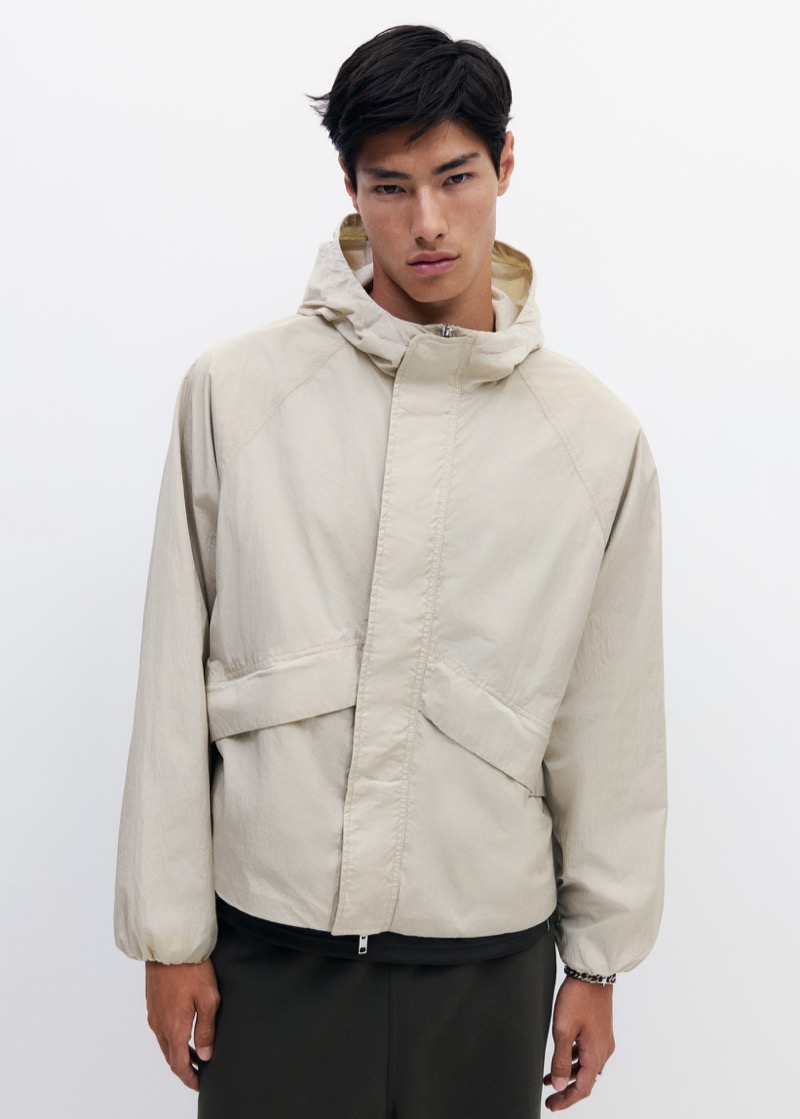
A windbreaker is a lightweight, packable jacket made from nylon or polyester, designed to block wind and light rain at minimal weight.
The windbreaker is the most pared-down piece in the outerwear category. Some have a small amount of DWR treatment. Few provide meaningful warmth. The value is packability and wind protection. A windbreaker that folds into its own pocket is one of the most practical things to carry in variable weather, especially while traveling.
Best for spring and autumn, outdoor activities in mild conditions, travel.
Ski and Snowboard Jacket
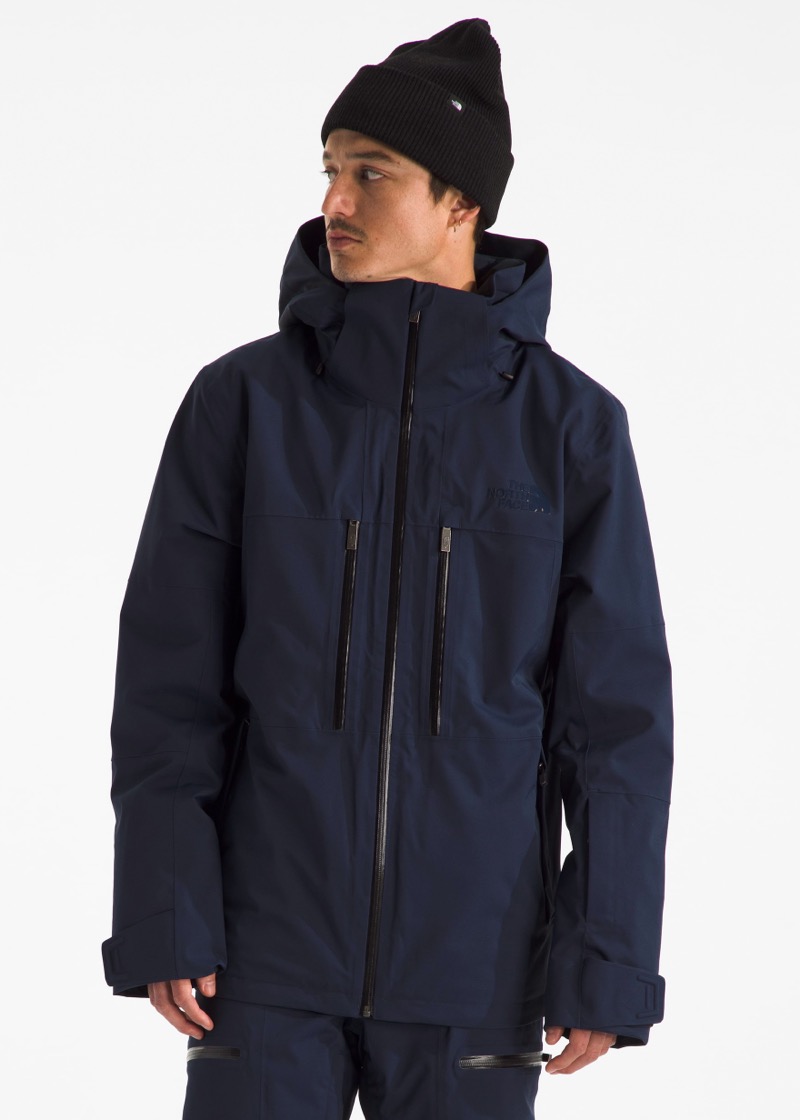
A ski jacket is technical outerwear designed for snow sports, combining waterproofing, insulation, and features like powder skirts, lift pass pockets, and helmet-compatible hoods.
Ski and snowboard jackets are constructed similarly but differ in fit and styling. Ski jackets tend to be slimmer, with a profile suited to moving fast on snow. Snowboard jackets are baggier, often longer at the back, and heavily influenced by streetwear aesthetics. Both are significant overengineering for everyday use, but neither can be replaced by general outerwear when conditions require them.
Best for skiing and snowboarding, mountain conditions, winter outdoor activities.
Formal and Tailored Jackets
The category where most confusion lives. The distinctions here have consequences that casual jacket mistakes do not.
Blazer
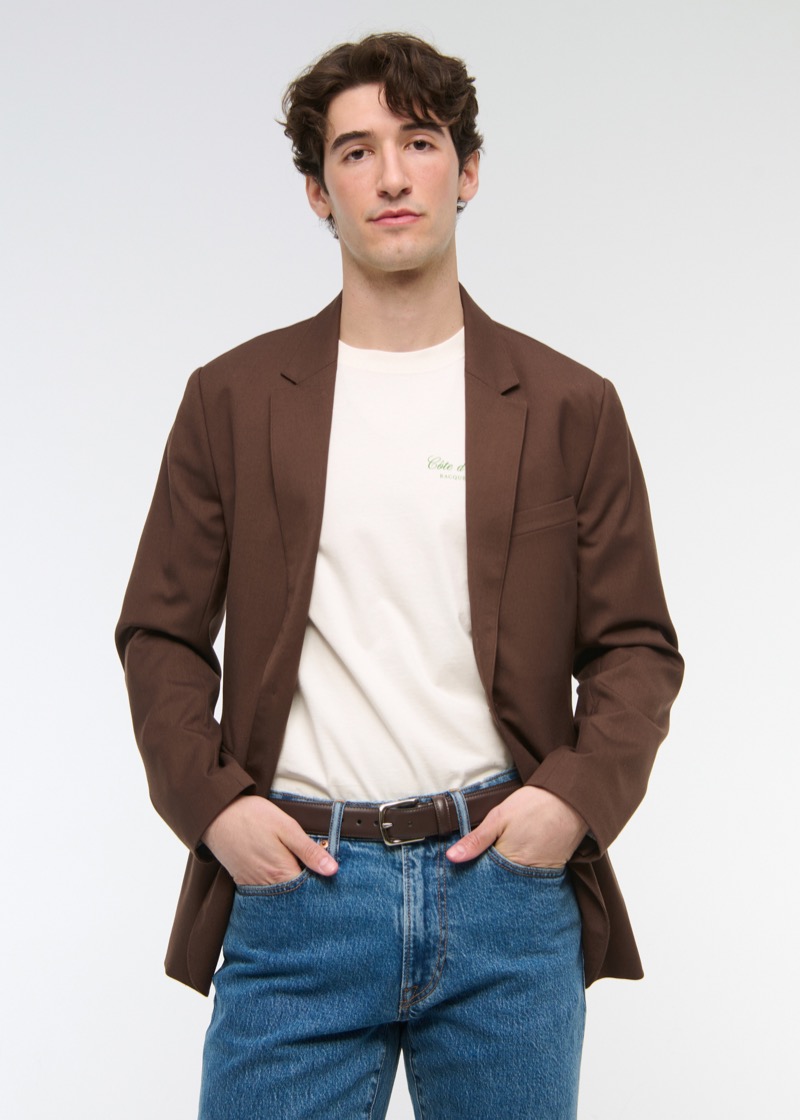
A blazer is a structured jacket in solid colors or simple patterns, made from fabrics that would not be used for a full suit, designed as a standalone top to be worn with non-matching trousers.
A blazer is specifically designed to stand alone, which sets it apart from a suit jacket worn as a separate. Navy wool, charcoal flannel, camel cashmere: all blazer territory. The construction is typically more relaxed than a suit jacket, with patch pockets in place of jetted pockets. Brass or horn buttons distinguish a traditional blazer from a sport coat. The single most adaptable piece in this list is a navy blazer in a medium weight.
Best for smart-casual and business-casual occasions, formal social events, over chinos, tailored trousers, or dark jeans.
Sport Coat
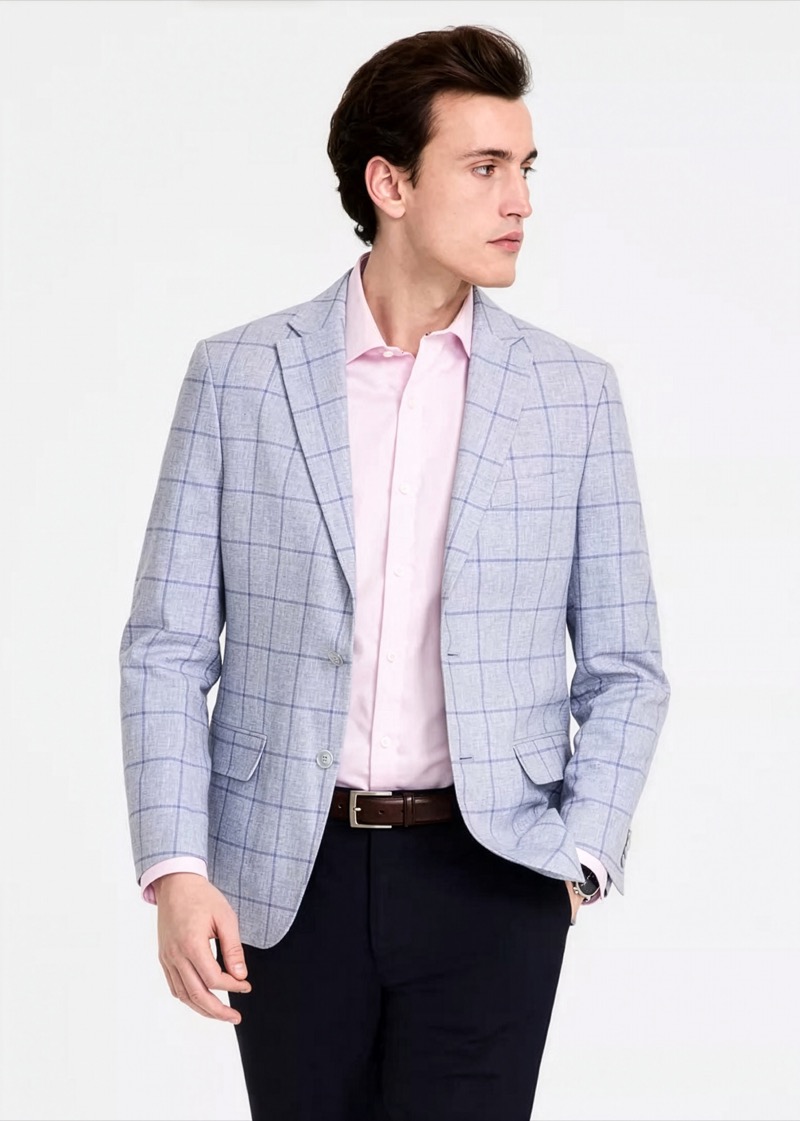
A sport coat is a structured jacket in checks, plaids, tweeds, or other patterns too distinct for a full suit, designed for smart-casual wear with non-matching trousers.
The sport coat comes from country pursuits. Hacking jackets, with their single back vent and hook-vent closure, were designed for riding. Tweed jackets were designed for walking through fields. The contemporary sport coat retains the same principle: a patterned jacket designed to pair with complementary trousers in different tones. A hacking jacket sits tighter in the waist with a single vent. A tweed jacket is the same silhouette in a heavier, more textured fabric.
Best for smart-casual occasions, outdoor events, weekends that call for polished dress.
Suit Jacket
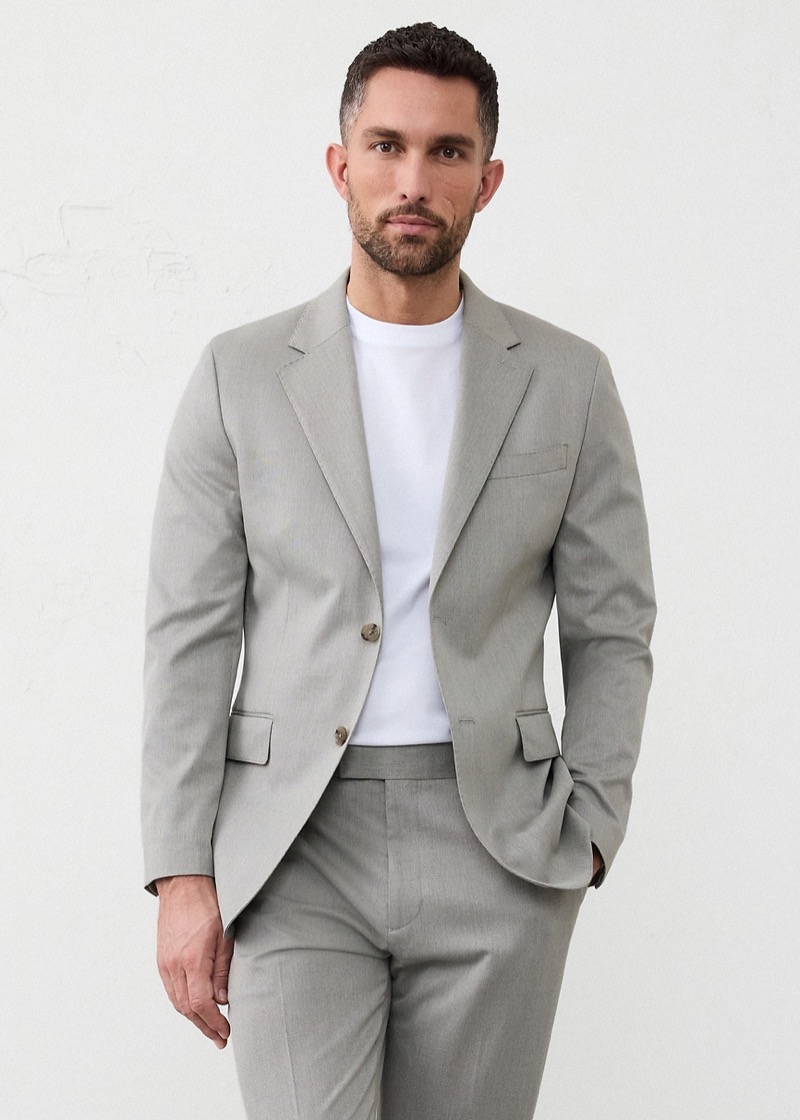
A suit jacket is a tailored jacket made as part of a matching set with trousers, in the same fabric, cut as a pair. Across different styles of suits, from single-breasted two-pieces to double-breasted three-pieces, that matched-fabric pairing is the defining trait.
Wearing a suit jacket with odd trousers almost always shows for what it is: a suit orphaned from its trousers. It can work in casual settings where the suit fabric reads as something else, but the effect is difficult to pull off. A blazer or sport coat is a far better choice when the goal is a structured jacket with non-matching trousers.
Best for wearing as a complete suit; a blazer or sport coat serves better when separates are the goal.
Trench Coat
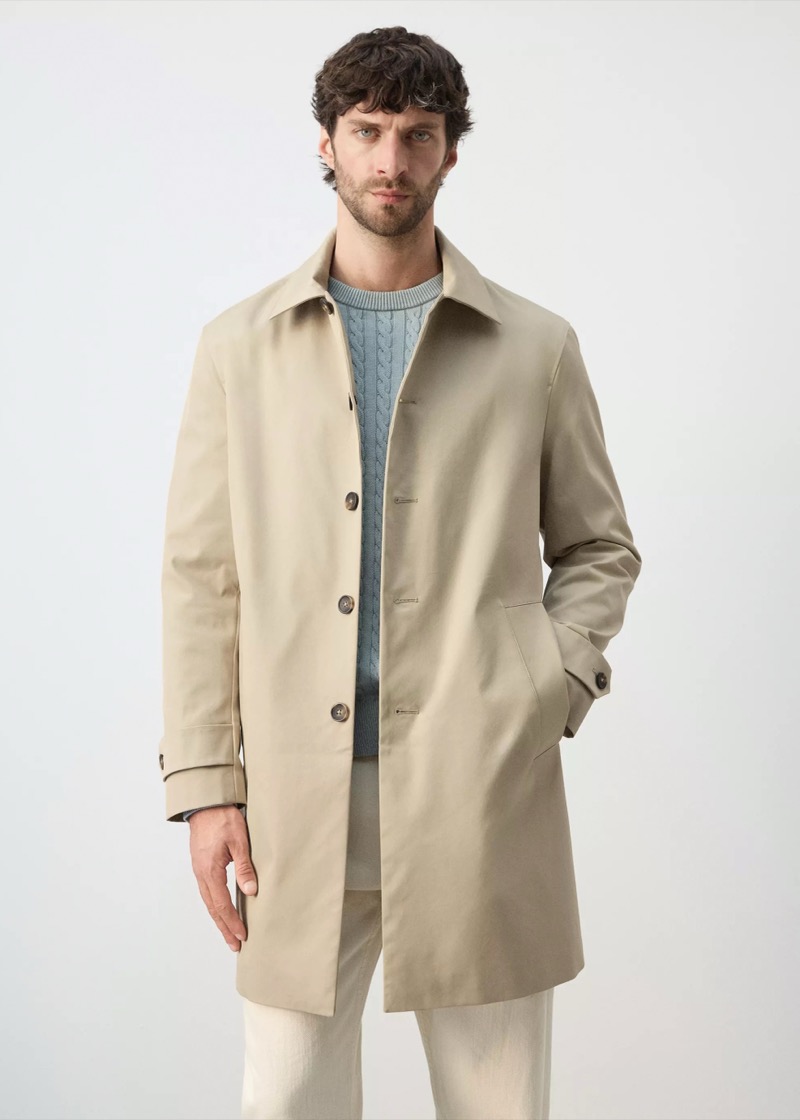
A trench coat is a double-breasted, belted waterproof coat reaching the knee or below, with epaulettes, a storm flap, and D-ring buckles, designed for British officers in World War I.
Aquascutum and Burberry both claim the original design, and the argument has continued for over a century. What is settled is that the trench coat is one of the most successfully civilianized military garments in history. It works over suits, jeans, and most things in between. The belt should be tied, not buckled, when worn informally. The collar goes up in rain.
Best for autumn and spring, smart-casual to formal, over suits or as a statement layer over casual dress.
Tuxedo / Dinner Jacket
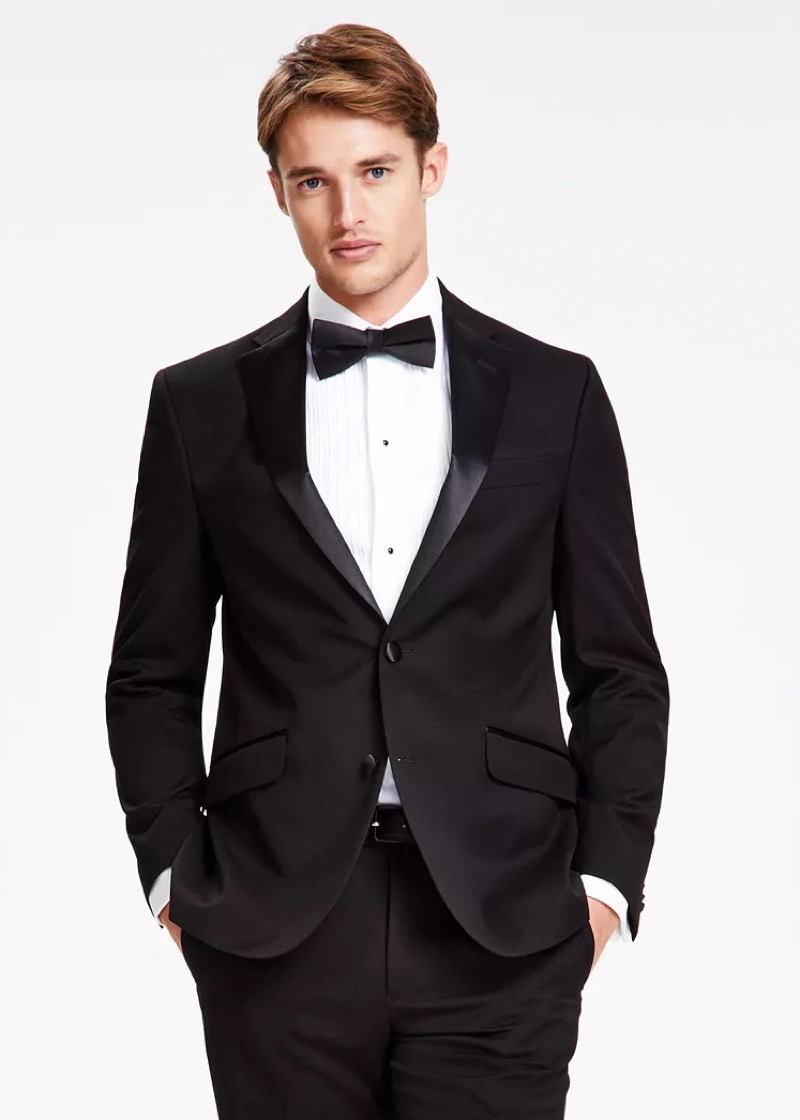
A dinner jacket is a formal evening jacket in black or midnight blue, with satin-faced lapels and no exterior buttons, designed for black tie occasions.
Dinner jacket is the British term. Tuxedo is the American one. Both refer to the same garment: a jacket with silk or satin lapel facing and a covered button front, worn with matching formal trousers with a satin stripe. A white dinner jacket is appropriate in warm climates and cruise settings, using the same construction in white. The Nehru jacket, with its stand collar in place of lapels, functions as an alternative for those who want to observe the black tie spirit in their own way.
Best for black tie events, formal evening occasions.
Blazer vs Sport Coat vs Suit Jacket
| Blazer | Sport Coat | Suit Jacket | |
|---|---|---|---|
| Pattern | Solid or minimal | Checks, plaids, textures | Matches trousers |
| Construction | Relaxed tailoring | Casual tailoring | Formal tailoring |
| Buttons | Brass or horn | Various | Covered or fabric |
| Worn as a separate | Yes, designed for it | Yes, designed for it | Rarely works |
Trench Coat vs Mackintosh
| Trench Coat | Mackintosh | |
|---|---|---|
| Origin | British military, WWI | British civilian, 1820s |
| Length | Knee to calf | Hip to mid-thigh |
| Closure | Double-breasted, belted | Single-breasted |
| Formality | Smart-casual to formal | Casual to smart-casual |
Vests and Sleeveless Outerwear
A vest adds insulation or wind protection at the core while leaving the arms free. It is practical before it is fashionable, which is why it disappears from wardrobes and reappears reliably the moment temperatures drop.
Vest / Gilet
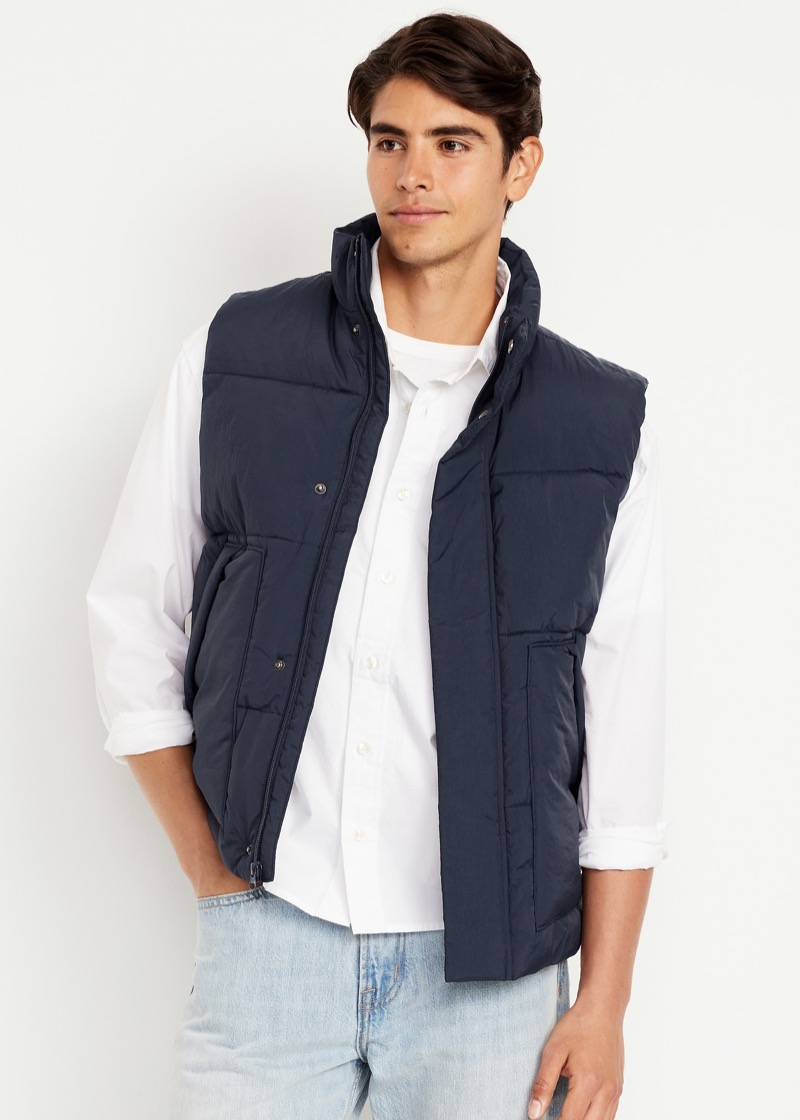
A vest (or gilet in British usage) is a sleeveless outer layer providing insulation or wind resistance for the torso while allowing full arm mobility.
The fill determines the feel. A down vest is the lightest and warmest option, the same insulation as a puffer jacket but in a sleeveless form. A quilted vest uses synthetic fill and sits slightly heavier. A fleece vest is the most breathable and functions well as a midlayer under a shell. A bodywarmer is typically a thicker quilted or fleece vest designed for outdoor work use. All four share the same purpose: keeping the core warm in conditions that do not require full sleeve insulation.
Best for outdoor activities in variable conditions, layering under a shell jacket or over a shirt in mild autumn conditions.
Iconic and Statement Jackets
Some jackets are designed around warmth and weather. These are the ones that carry cultural weight first and practical function second.
Letterman / Varsity Jacket
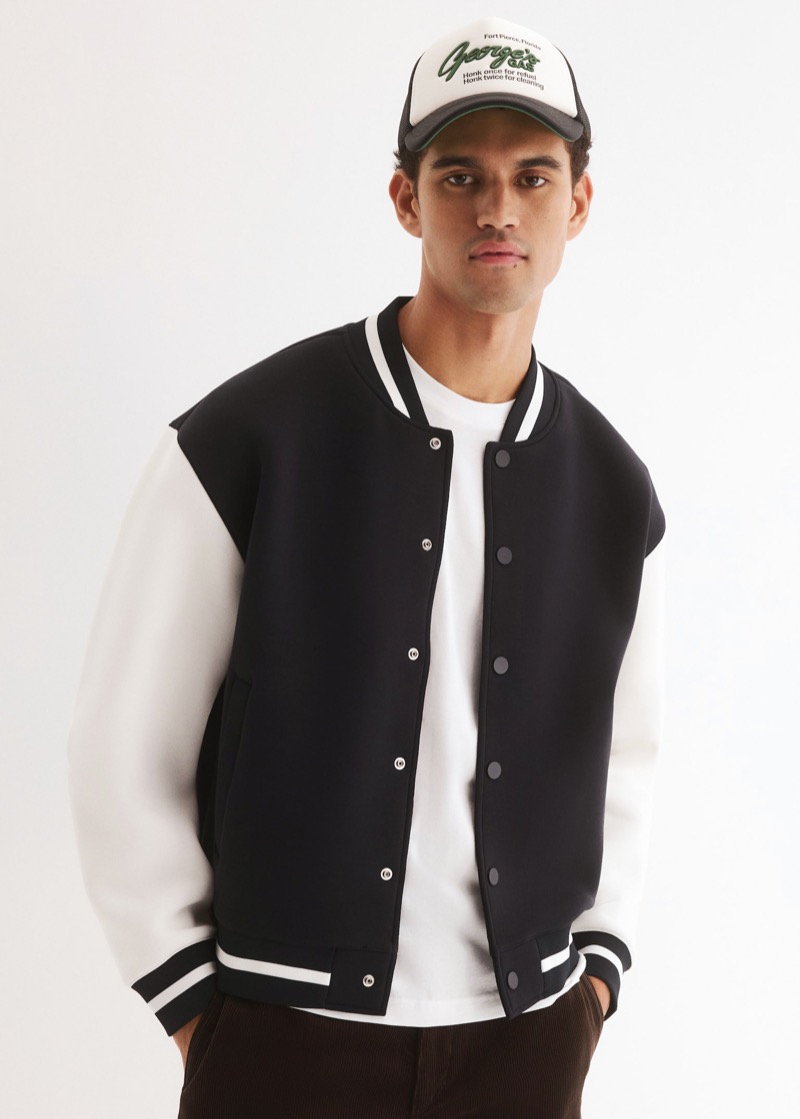
A letterman jacket (also called a varsity jacket) is a wool-bodied jacket with leather sleeves, a snap-front closure, ribbed cuffs, collar, and hem, typically in two contrasting colors with a chenille patch on the chest.
The letterman jacket originates in American collegiate athletics. Harvard’s baseball team is generally credited with the first version in the 1860s, where a letter sewn to the chest marked team membership. The construction, wool body with leather sleeves, was practical. The two materials handle different types of wear. Contemporary versions range from faithful reproductions to heavily fashion-interpreted takes. The crossover into hip-hop and Japanese streetwear gave it a second life entirely disconnected from any sporting context. Golden Bear and Varsity Headwear make the benchmark American versions.
Best for casual daily wear, streetwear outfits, autumn and mild winter.
Corduroy Jacket
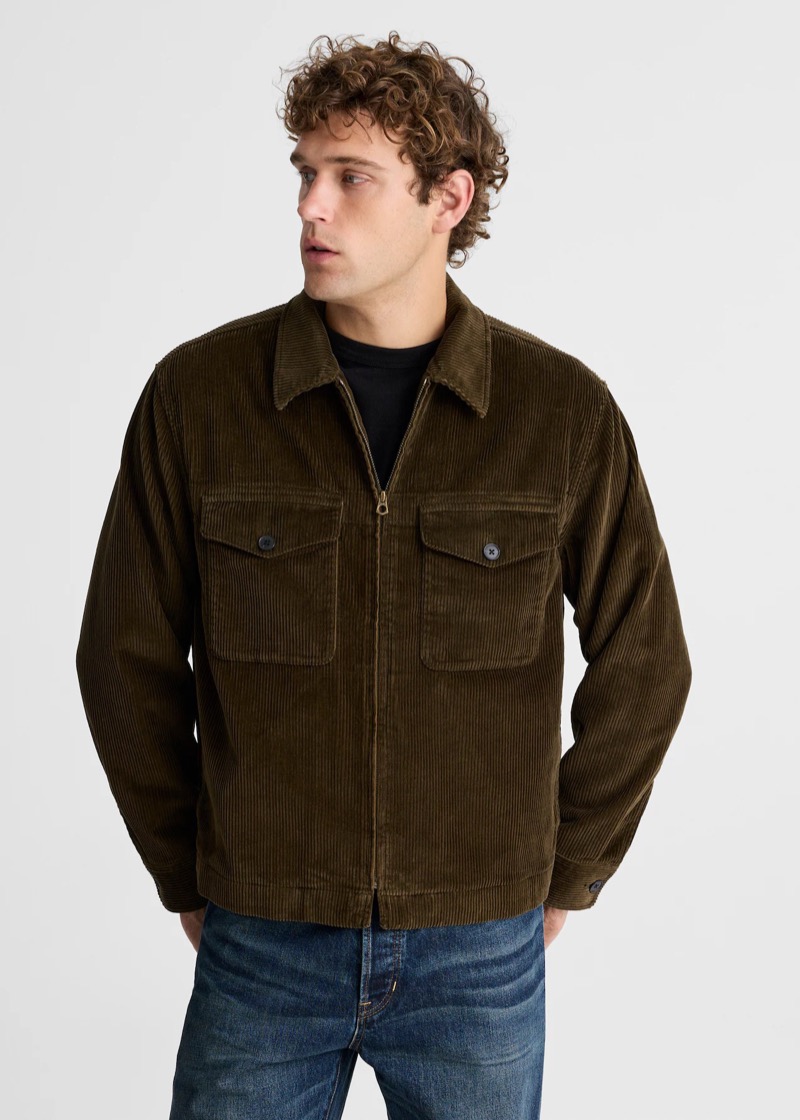
A corduroy jacket is a structured jacket made from corduroy fabric, which features parallel ridges called wales running vertically through the cloth, available in casual chore-coat silhouettes and in tailored sport-coat cuts.
Corduroy occupied student and academic dress from the 1970s onward, giving it an association with intellectual informality it has never fully shed. This works in its favor. A corduroy sport coat in brown, dark green, or rust is one of the most underrated smart-casual layers available. It pairs with flannel trousers, moleskin jeans, or dark chinos and works across the full autumn-winter range. The corduroy blazer overlaps with this category but tends toward a smoother finish and a slightly dressier profile.
Best for smart-casual occasions, autumn and winter, with tailored trousers or dark casual trousers.
How to Choose Your First Three Jackets
Nobody needs thirty-five jackets. Most people need three good ones and will get far greater use from those than from a wardrobe full of compromises.
The formula is one versatile lightweight, one smart layer, one winter workhorse.
A versatile lightweight handles the majority of your days. Something you can grab leaving the house in any casual situation. A denim jacket, a trucker, or a Harrington depending on your instincts. All three work across most casual and some smart-casual contexts, layer well, and age in a way that keeps them current.
A smart layer upgrades what is under it. A navy blazer is the most efficient piece in this category. It works over a t-shirt for elevated casual dress, over a shirt for smart-casual, and over a roll-neck for winter evenings. A well-cut overcoat serves the same function for cold months. Start with one, not both.
A winter workhorse handles the genuinely cold days. A puffer is the practical choice: warm, packable, and low-risk stylistically. A peacoat handles cold weather with greater elegance at the cost of extreme warmth. A shearling offers warmth and character in equal measure but costs significantly more. The choice depends on where you live and how cold it actually gets.
Choose a Jacket by Season and Climate
| Jacket | Mild | Cool | Cold | Wet | Windy |
|---|---|---|---|---|---|
| Denim / Trucker | Yes | Yes | No | No | No |
| Harrington | Yes | Yes | No | Light | Yes |
| Bomber (MA-1) | Yes | Yes | No | Light | Yes |
| Field Jacket | Yes | Yes | No | Light | Yes |
| Leather / Biker | Yes | Yes | Light | No | Yes |
| Shearling | No | Yes | Yes | No | Yes |
| Puffer | No | Yes | Yes | No | Yes |
| Parka | No | Yes | Yes | Yes | Yes |
| Peacoat | No | Yes | Yes | Light | Yes |
| Overcoat / Chesterfield | No | Yes | Yes | Light | Yes |
| Trench Coat | Yes | Yes | No | Yes | Yes |
| Rain Jacket | Yes | Yes | No | Yes | Yes |
| Hardshell | Yes | Yes | Yes | Yes | Yes |
| Fleece | Yes | Yes | No | No | Light |
| Quilted Jacket | Yes | Yes | Light | No | Yes |
| Windbreaker | Yes | No | No | Light | Yes |
Choose a Jacket by Occasion
Work (formal): An overcoat or Chesterfield over a suit. A trench coat in wet weather. Formal outerwear in this slot.
Smart-casual office: A blazer or sport coat as the primary layer. A quilted jacket or peacoat as outerwear. A field jacket or chore coat if the office culture allows it.
Casual weekend: A denim jacket, trucker, harrington, chore coat, or bomber depending on the season. The field jacket handles most conditions and contexts.
Black tie or formal evening: A dinner jacket (tuxedo). No substitutions.
Outdoor and hiking: Hardshell for severe weather, softshell for variable conditions, fleece as a midlayer. The gear here serves the activity.
Travel: A packable windbreaker, a trench coat, or a lightweight bomber. The goal is one jacket that covers the range of conditions at the destination.
Choose a Jacket by Body Type
If you are under 5’8″: Long overcoats cut across mid-thigh and visually shorten the leg. A peacoat is typically the maximum safe length. Bombers, harringtons, and truckers work well because they end at the hip and preserve the proportional line from hip to foot. Cropped or slim-cut jackets work in your favor.
If you are over 6’2″: Long coats are your strongest option. A full-length overcoat is proportional on a tall frame in a way it is not on a shorter one. Short bombers and cropped jackets can appear undersized; compensate with longer, looser trousers underneath.
If you have a broader upper body: Skip jackets with very structured shoulders in constructions that already have strong shaping. A relaxed bomber or an oversized chore coat suits the frame better than a double-breasted peacoat, which adds visual width at the chest. Longer lengths help balance the overall proportion.
If you are slim: Structured jackets work well because they hold their shape against a lean frame. A blazer, a cafe racer, or a peacoat on a slim build looks sharp. Oversized chore coats and shackets can also work, but the contrast between jacket volume and frame needs to read as a clear choice.
Care and Maintenance by Material
Leather: Condition with a leather-specific conditioner two to three times a year, and more frequently if the jacket is worn daily or you live in a dry climate. Keep leather away from direct heat sources, which dries and eventually cracks the hide. Store on a wide, padded hanger in a breathable bag. For deep scuffs or significant damage, take it to a specialist.
Wax cotton: Rewax when the fabric shows dry patches or when water stops beading off the surface. Use manufacturer-recommended wax, warm it slightly for easier application, and work it in with a soft cloth. Allow to dry fully before wearing. Wax cotton needs hand care only; machine washing strips the coating.
Down: Machine wash on a gentle cold cycle with a down-specific detergent. Dry on low heat with a few clean tennis balls in the drum to break up insulation clumps. Leave it in the dryer until completely dry before storage. Down stored damp develops mildew quickly.
Wool: Brush regularly with a soft clothes brush to lift surface dust and lint. Dry clean once or twice a season if worn frequently. Store in a breathable garment bag to protect against moths. Cedar blocks or lavender sachets in the wardrobe help deter moths.
Technical shells and Gore-Tex: Wash on a gentle cycle and tumble dry on low to reactivate the DWR coating. Fabric softener clogs the membrane; skip it entirely. Apply a reproofing spray after washing and activate with low heat from a dryer or iron when the jacket stops beading water effectively.
Frequently Asked Questions
What is the difference between a jacket and a coat?
A jacket ends at the hip or waist. A coat extends to mid-thigh or below. The distinction shifts in informal naming, which is why a peacoat contains the word coat despite sitting at mid-thigh. In formal and tailored contexts, wearing a proper full-length overcoat over a suit is expected and a shorter jacket would look incomplete.
What is the most versatile jacket for men?
A navy blazer is the single most adaptable jacket most men can own. It works over casual, smart-casual, and business-casual outfits and adjusts to a wider range of contexts than any other piece. For the casual end of the spectrum, a field jacket or harrington covers a similar range of situations with a different aesthetic.
How many jackets should a man own?
Three to five covers the real-life range for most men. One lightweight casual jacket for daily use, one smart layer for elevated occasions, one winter outerwear piece, and a technical jacket if your activities require it. Beyond five, you are addressing edge cases.
What jacket is best for everyday wear?
A denim jacket, harrington, or bomber covers everyday casual use across most of the year. Which suits you best depends on the climate and your personal dress. In colder climates, a fleece or quilted jacket fills the same slot as a midlayer. The field jacket is also a strong everyday option because of its pocket space and neutral profile.
Are bomber jackets still in style?
The MA-1 bomber has cycled in and out of fashion since the 1960s, but the cycling has become less relevant as it has settled into classic status. A clean, well-fitting bomber in sage green or black is not a trend piece. It is an established part of the casual menswear vocabulary. The well-fitted version in sage or black is the one worth owning; oversized cuts, heavy branding, and thin shells miss what makes it work.
What is the difference between a peacoat and an overcoat?
A peacoat is naval outerwear reaching to mid-thigh, double-breasted, made from heavy wool, and associated with practical cold-weather dressing. At its most formal it sits in smart-casual territory. An overcoat is a formal garment designed to be worn over a suit, made in finer woolens, and reaching the knee or below. Both are heavy wool outerwear, but they occupy different points on the formality scale.
Which jacket is warmest?
A high-fill-power down parka designed for sub-zero conditions is the warmest jacket type available. For everyday winter use in temperate climates, a shearling jacket, a heavy wool overcoat, or a quality puffer at the right fill rating will all perform well. The warmth of any insulated jacket depends on fill quality and construction integrity as much as on the jacket type.
What jacket should I wear to a wedding?
For a formal or black tie wedding, a dinner jacket (tuxedo). For a smart-casual or garden wedding, a blazer or sport coat. In cool weather, a trench coat or well-fitted overcoat worn on arrival and removed inside works well. Field jackets, bombers, and puffers are casual outerwear and belong in casual contexts.