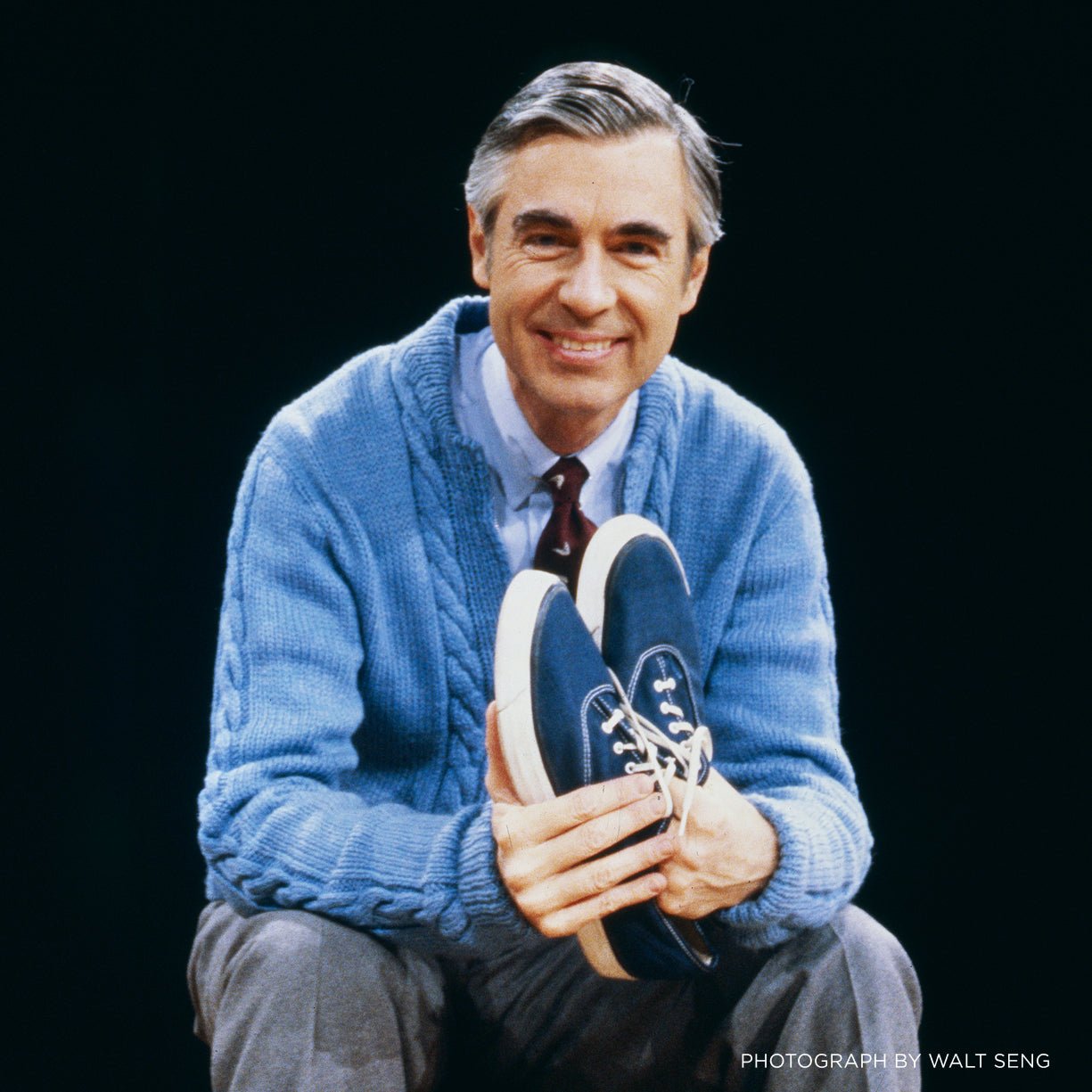
Fred Rogers had a wardrobe people remembered. The zip-up cardigan, the shirt and tie underneath, the canvas sneakers he changed into: each was part of a routine that made getting comfortable look deliberate. Todd Snyder and Sperry have found plenty to work with there.
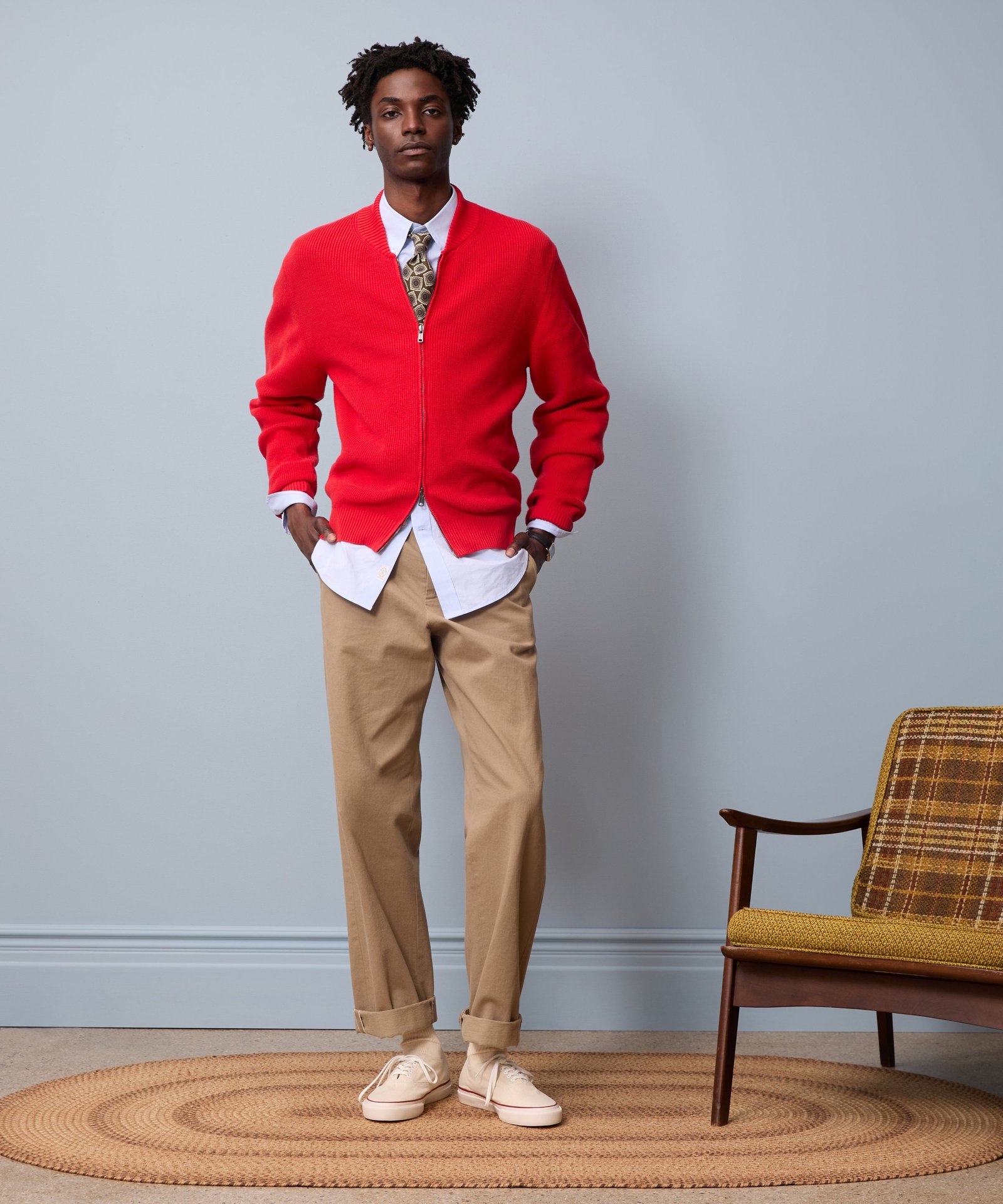
Their third collaboration revisits Mister Rogers’ Neighborhood through a cotton sweater, a graphic T-shirt, and Sperry’s CVO sneaker. The strongest image puts a model in a bright red cardigan over a white shirt and patterned tie, beside four canvas shoes hanging from a wooden coat stand. The sweater’s ribbed hem sits neatly at the waist. White cuffs show at the wrists. It is a convincing argument for taking Rogers’ clothes seriously.
Snyder says the idea began when he noticed Rogers’ blue sneakers while looking through the archives and identified them as Sperry CVOs. According to the collection’s launch material, Rogers favored the shoes because they let him move quietly around the studio. That practical detail gives the reissue a connection to the man beyond his name on the box.
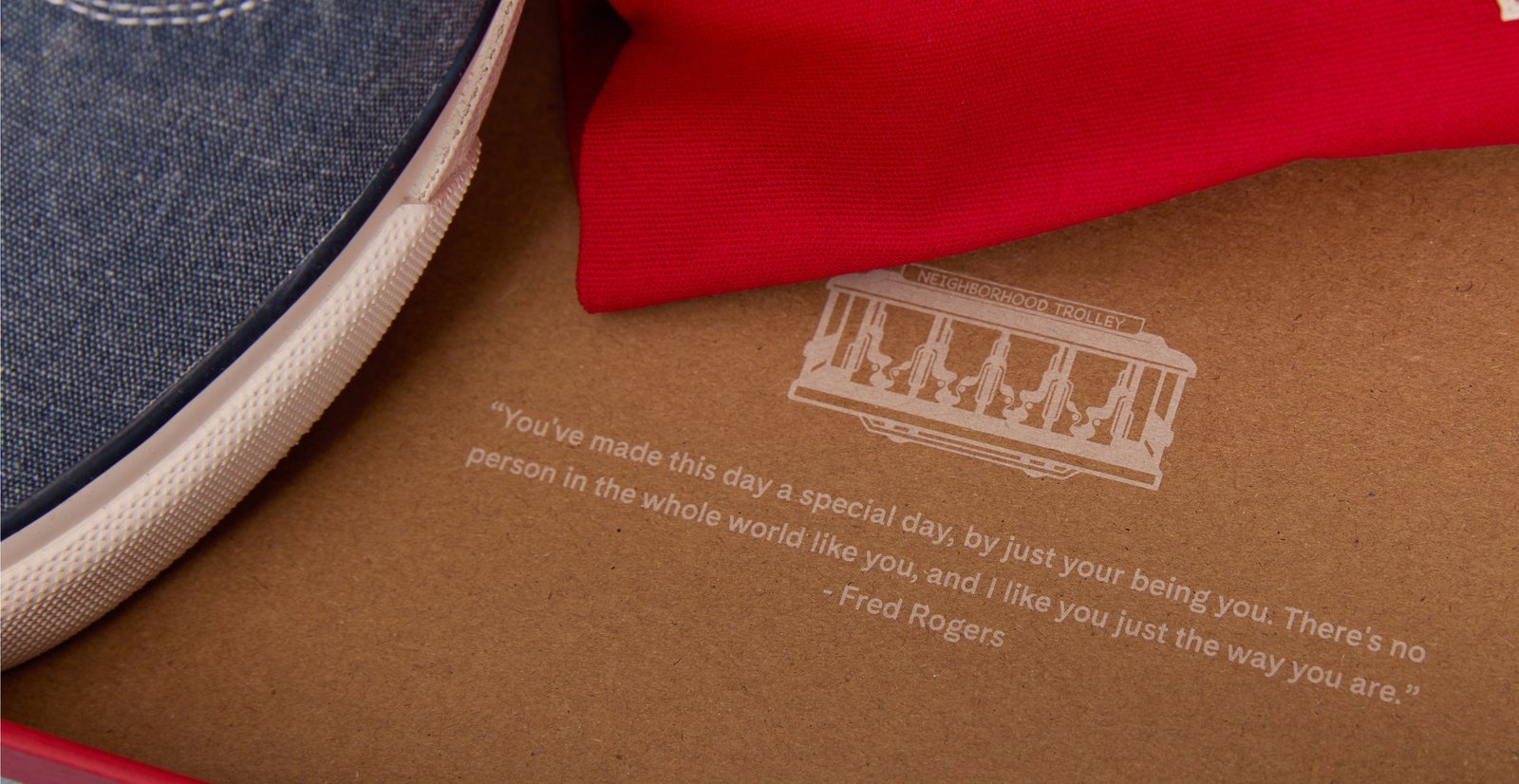
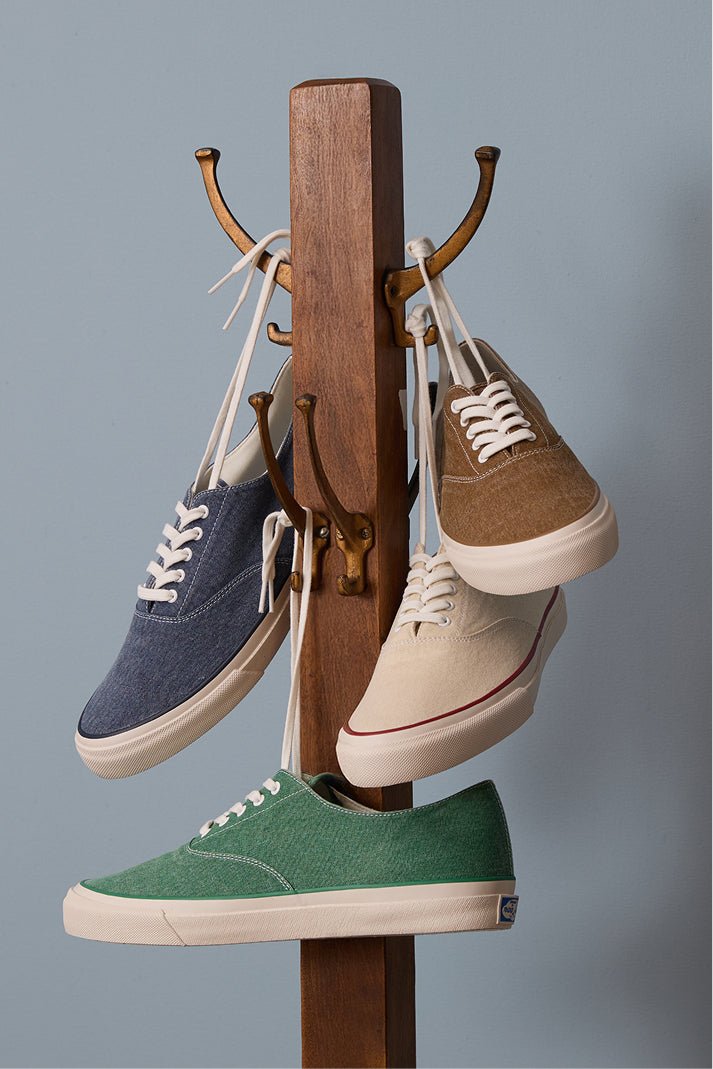
The new CVO has garment-washed canvas uppers, a rubber bumper based on the versions from the 1960s and ’70s, and a chambray footbed. Vintage indigo is the obvious link to Rogers, while ecru, brown, and green widen the palette. Cream-colored soles and pale laces keep the shoes visually simple. The red packaging adds the television reference more explicitly, with a trolley illustration and a message from Rogers inside.
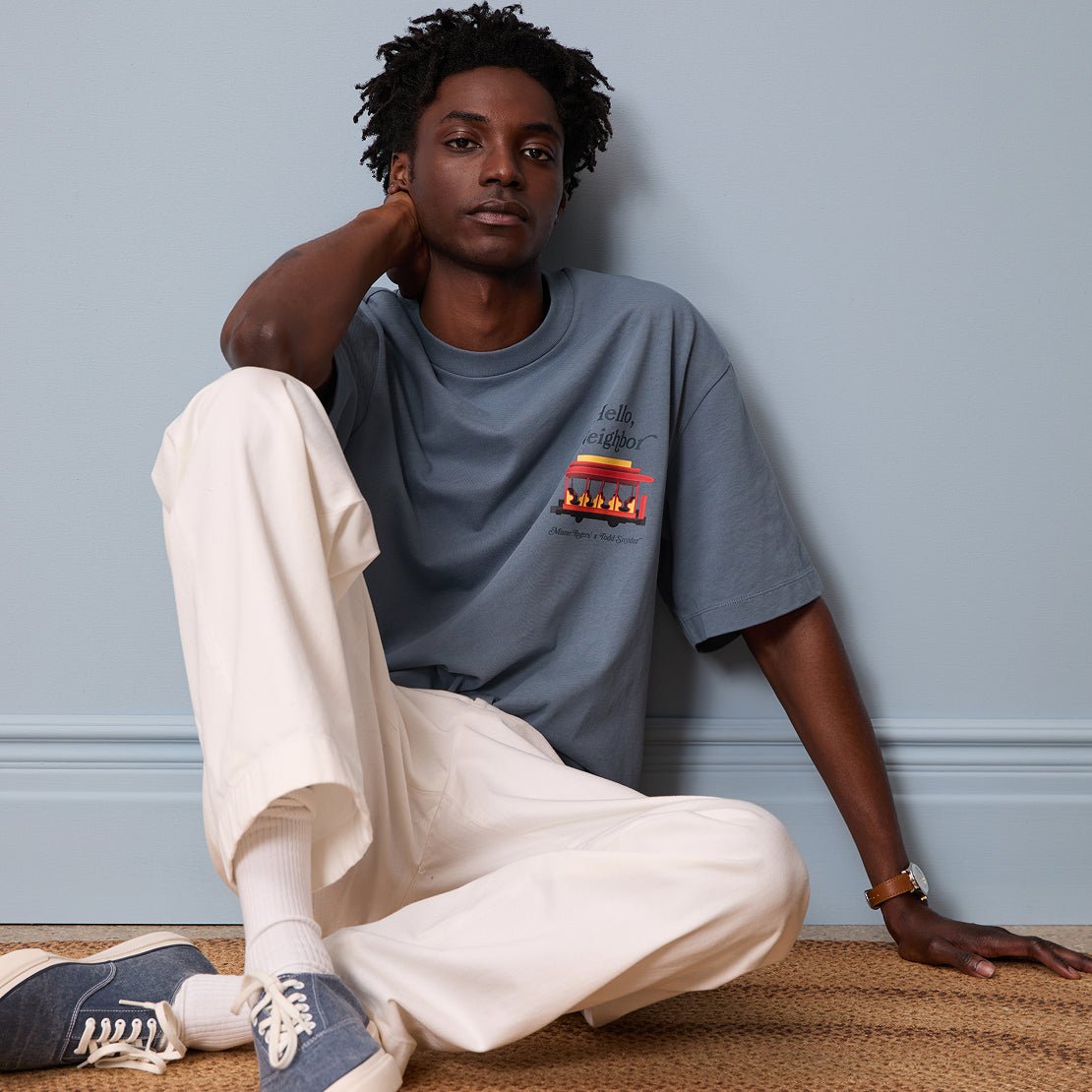
The zip-up sweater is made from cotton in a nine-gauge half-cardigan stitch, with ribbing at the cuffs and waist and a rounded, double-layered collar. Its two-way metal zip is concealed by the placket. Those details give the zip-up cardigan a tidy finish; the red version supplies all the color it needs. The Trolley Tee takes a more literal approach, putting an archival illustration of the show’s red trolley on heavyweight cotton jersey.
The cardigan and sneakers are the more interesting proposition. Both carry a recognizable association with Rogers while remaining useful clothes in their own right. The campaign’s shirt and tie sharpen that point: the red knit looks composed, with enough ease to make the tie feel entirely at home underneath it.
A portion of each purchase from the collection benefits Fred Rogers Productions. It is an appropriate connection for a collaboration whose appeal rests so heavily on affection for its subject. The clothes have something to offer, too. Rogers understood the value of a consistent uniform. Snyder has had the good sense to keep it recognizable.