
Two men in the same office, one in a blazer and wool trousers, the other in a polo and chinos, both believe they’re dressed business casual. Both are technically correct. The distance between those two outfits is where most men lose direction.
The dress code covers a range wide enough to include a navy blazer and Derbies at one end and dark denim with clean sneakers at the other. Every industry, city, and company draws the line in a different place. The standard across all of them stays the same. Business casual means you made a decision about what to wear and the outfit shows it. A polo and khakis grabbed from the closet on autopilot look like autopilot.
What Business Casual Means in 2026
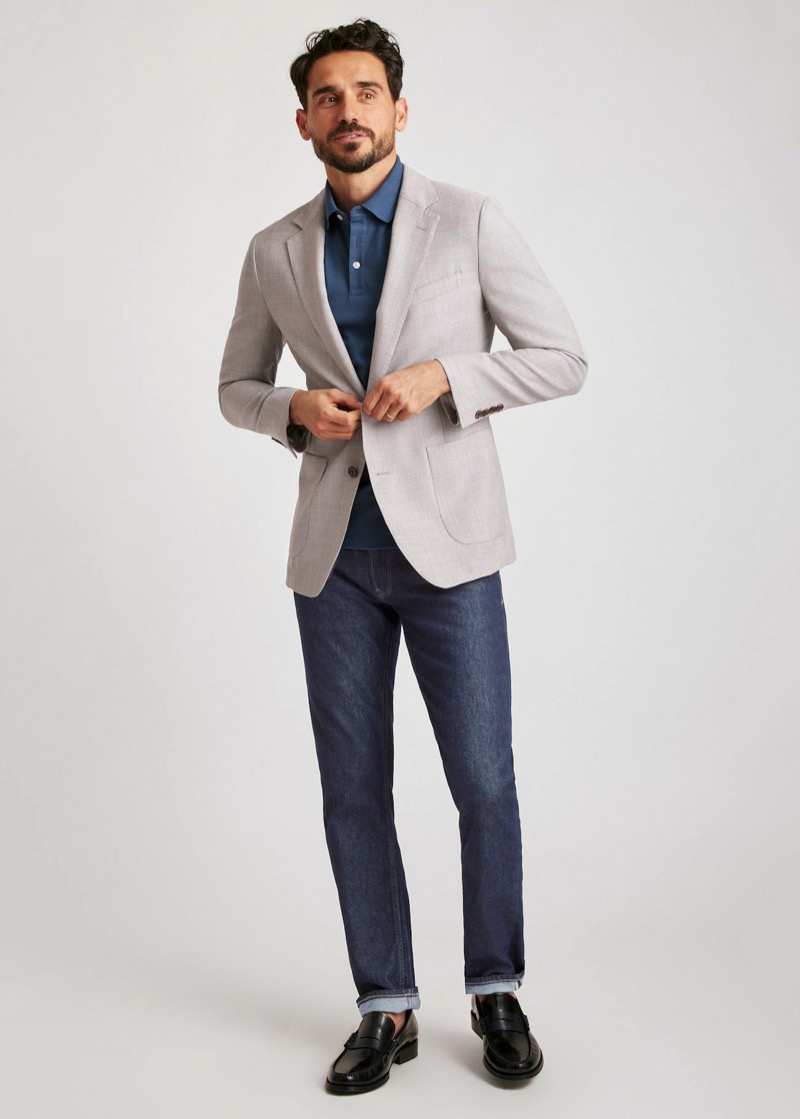
Business casual is a dress code defined by tailored separates, occupying the full range between a suit and tie on one side and a T-shirt and jeans on the other. The core is specific. Collared shirts or fine-knit sweaters. Tailored trousers or chinos. Leather shoes or clean leather sneakers. A blazer when the situation calls for it, a sweater when it calls for something softer. The tie stays in the closet for most offices. The attention to fit and fabric stays in every outfit.
How formal your version of business casual needs to be depends entirely on where you work. A tech company in Austin and a consulting firm in Chicago both call it business casual. The outfits in each office look like different dress codes. A creative agency and a law firm share the same label and share almost nothing else about the clothes.
The simplest test for any business casual outfit works like this. You could wear it to a client lunch and feel right, or to an after-work dinner and still fit. If the outfit belongs at a wedding, scale it back. If it belongs at a barbecue, step it up.
The Business Casual Wardrobe for Men
Every business casual outfit draws from the same pool of pieces. The list below covers the full range. A man starting from zero needs five of these. A man refining an existing wardrobe can expand from here.
Tops
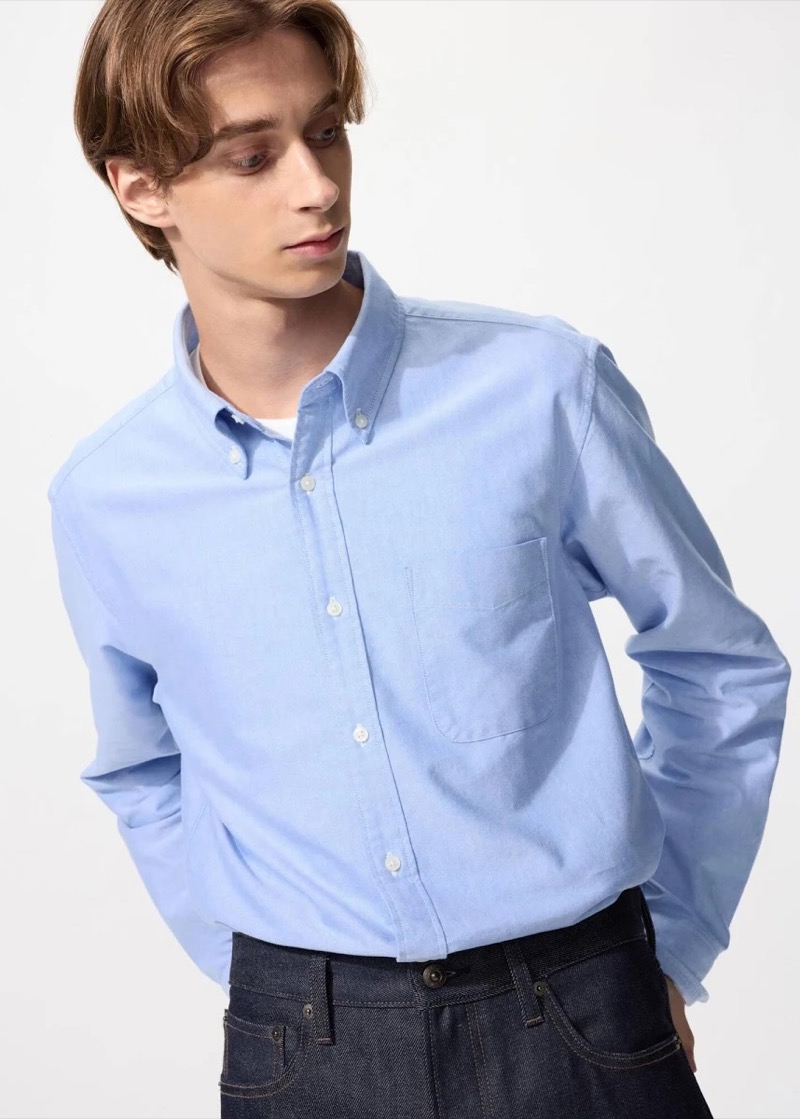
Oxford cloth button-down (white and light blue). The foundation shirt for business casual. An OCBD in oxford cloth has enough texture to look right on its own, enough formality to sit under a blazer, and enough comfort to survive a full workday. White and light blue cover every situation. For a full rundown of collar styles and fabric weights, the types of shirts for men guide breaks down the options.
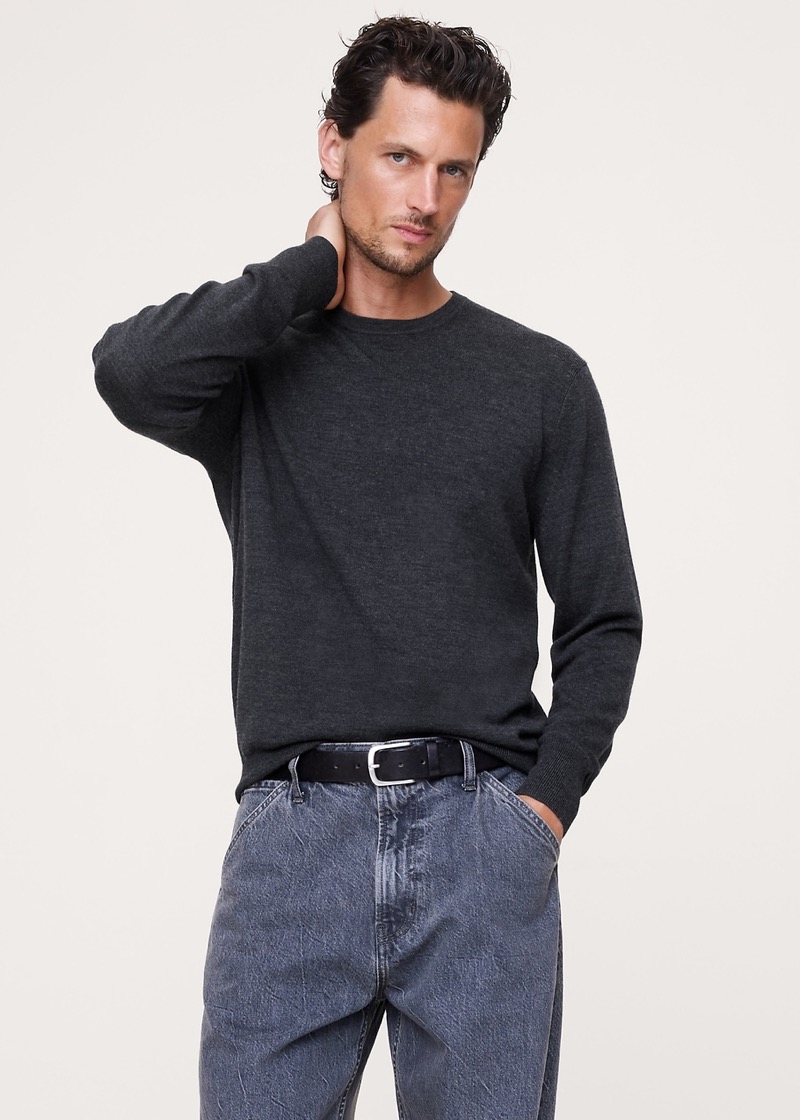
Merino crew neck or V-neck sweater (charcoal, navy). Over a button-down in colder months. On its own in transitional weather. Merino holds its shape, breathes in heated offices, and layers flat under a jacket. Skip logos and patterns. A solid charcoal merino sweater does the work of three printed options. The types of sweaters for men guide covers the full knit category.
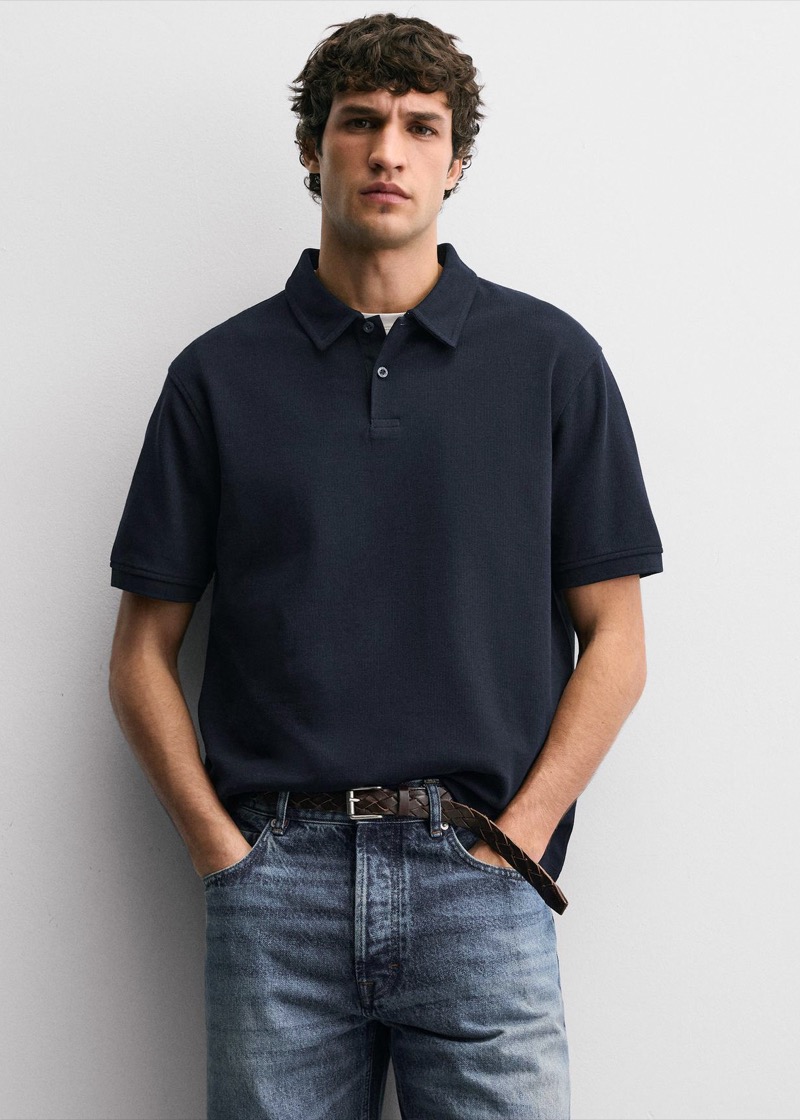
Polo shirt (summer only, quality fabric only). A merino or long-staple cotton polo in navy or charcoal can work in summer at an office that trends casual. A pique polo with a chest logo is the uniform of the man who stopped making decisions about clothes. The fabric and the collar determine whether a polo belongs in business casual or at a corporate team-building event. Choose accordingly.
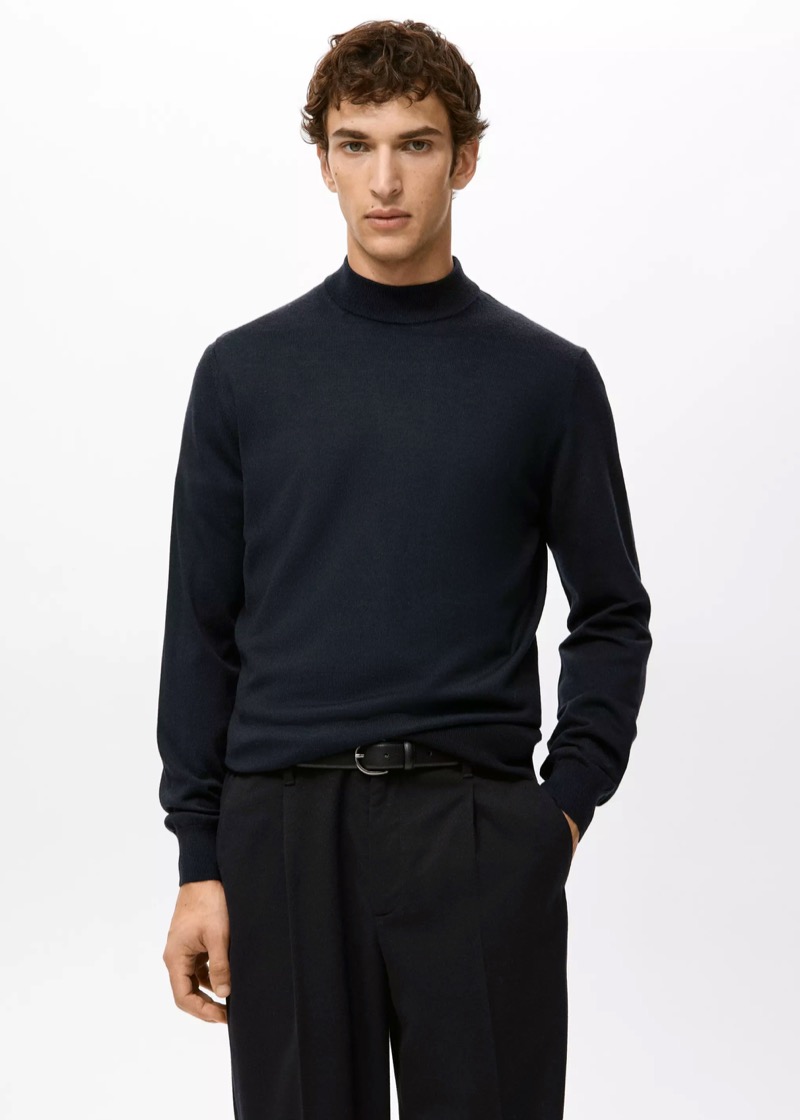
Fine-gauge turtleneck or knit polo (optional). For men who want to skip the button-down collar entirely. A fine-gauge turtleneck in charcoal or navy under a blazer is a cleaner alternative that works in the same formality range.
Pants
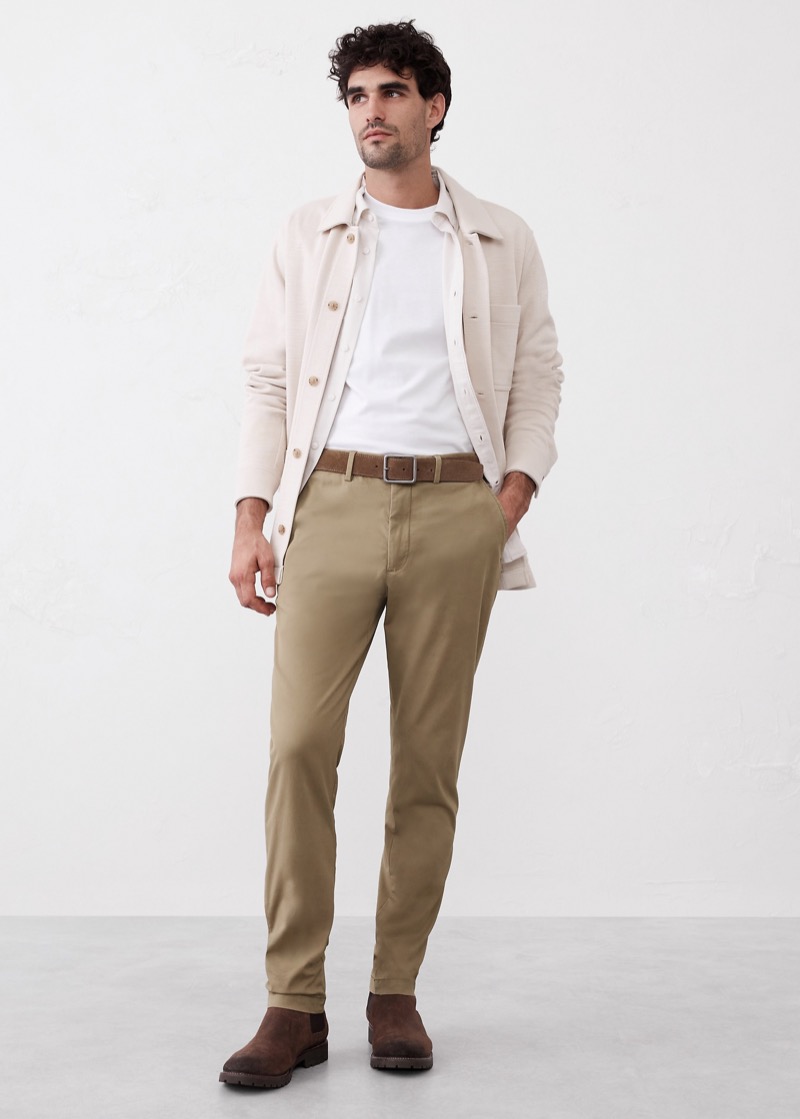
Chinos (khaki, navy, olive). The backbone of business casual bottoms. Flat-front, tailored through the leg, hitting at the shoe with a slight break or a clean crop. Khaki is the default. Navy and olive expand the rotation and pair better with brown leather.
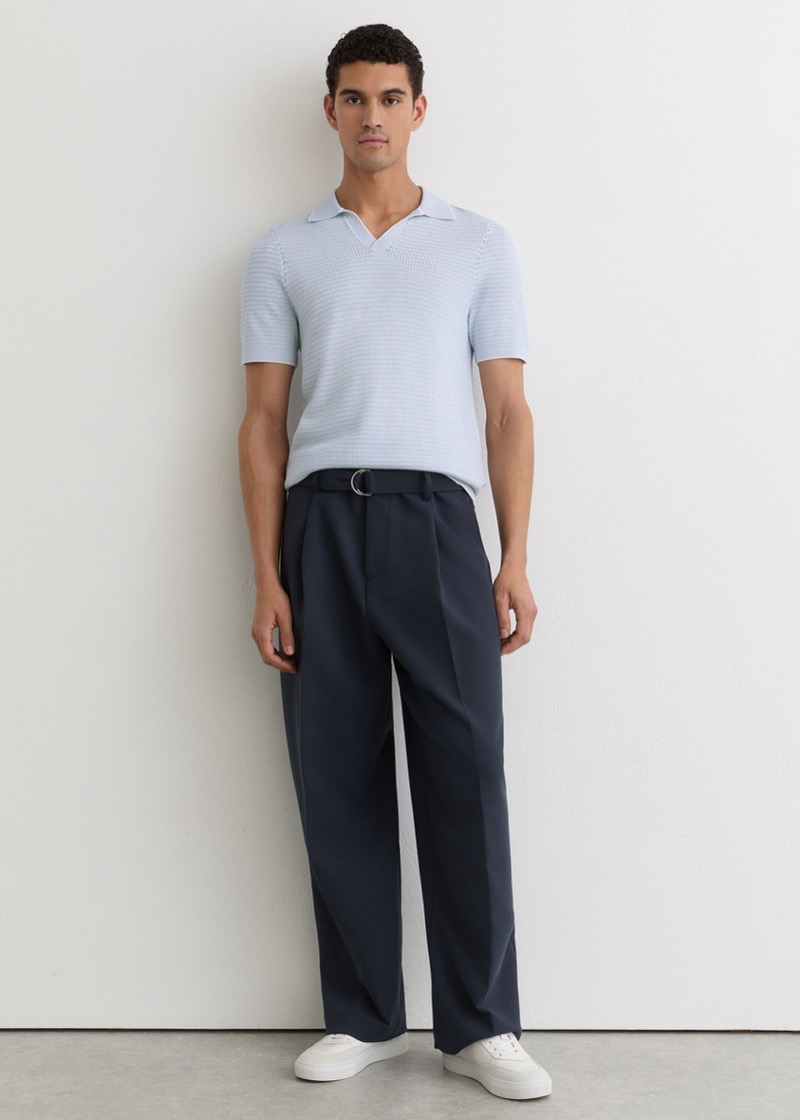
Wool trousers (charcoal, mid-gray). The simplest way to shift a business casual outfit toward the formal end. Wool trousers with a crew neck sweater and loafers sit a full tier above chinos in the same combination. The fabric does that work.
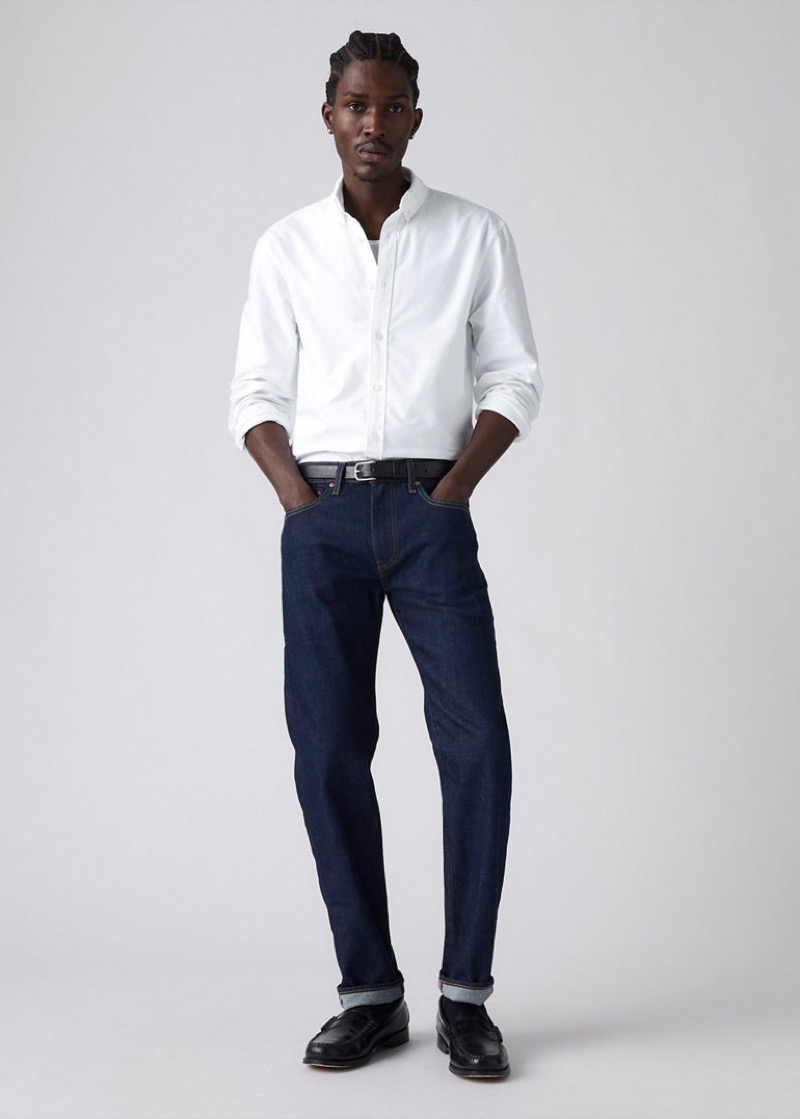
Dark denim (office-dependent). Only dark indigo or black. Only with a blazer, sport coat, or structured knit on top. A pair of dark selvedge jeans under a gray blazer belongs in a business casual office. Light-wash jeans belong at brunch. The wash makes the call.
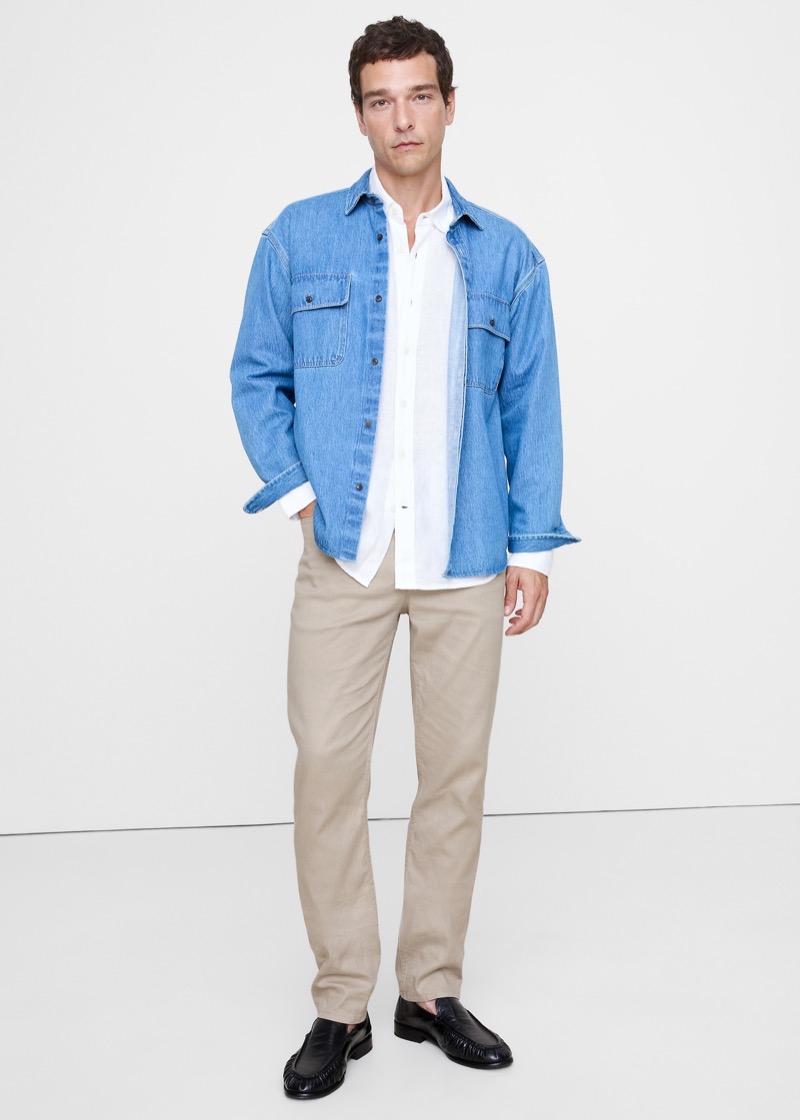
Linen or linen-cotton trousers (summer). A warm-weather alternative to chinos. Linen wrinkles. Accepting that is part of wearing it. A linen-cotton blend in stone or khaki keeps the drape cleaner and handles air-conditioned offices where full linen looks too relaxed.
Layers
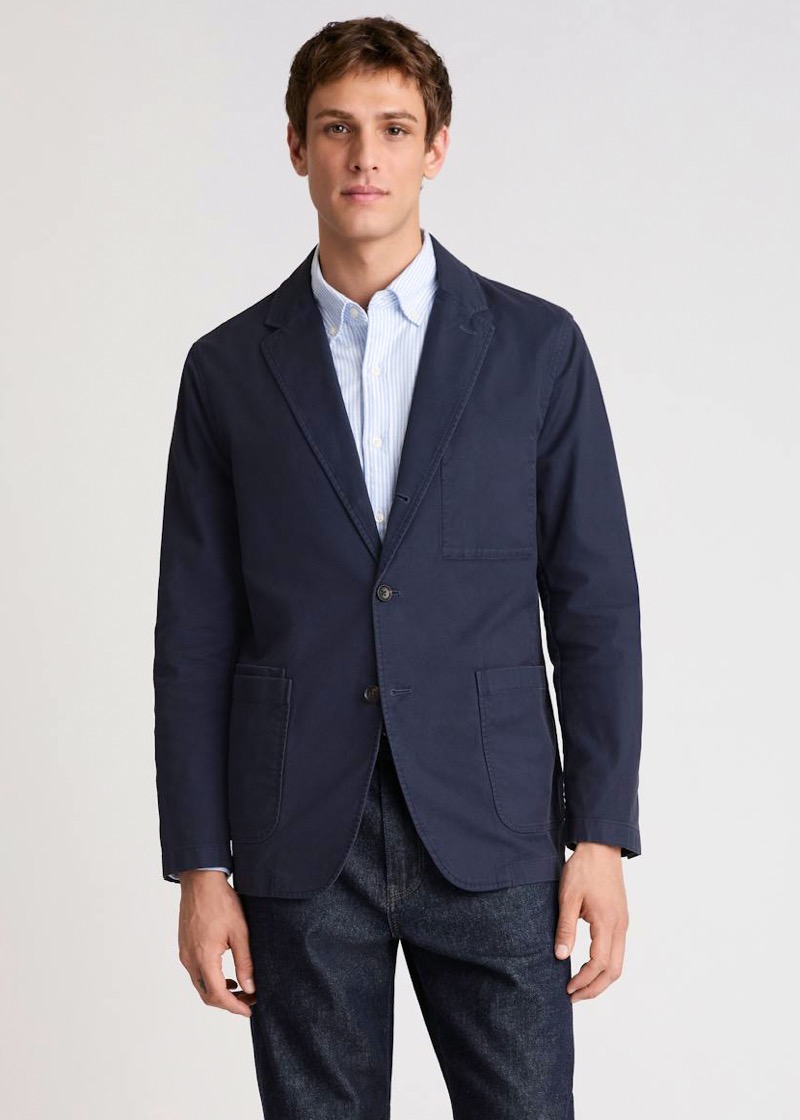
Unstructured blazer (navy, gray, tan). The single piece that turns a casual outfit into a business casual one. Unstructured means minimal shoulder padding, soft construction, a drape that sits closer to a cardigan than a suit jacket. Navy is the starting point. Gray and tan expand the rotation for warmer months. The types of jackets for men guide covers the full range of jacket construction and style.
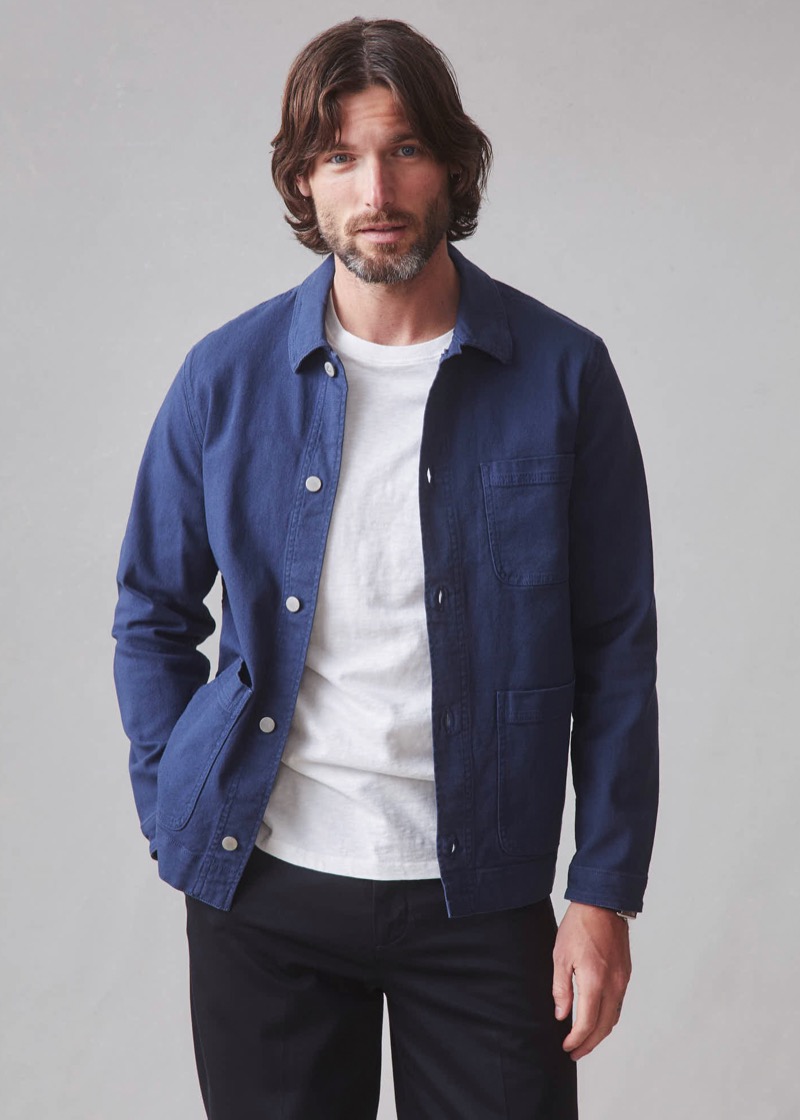
Chore coat or field jacket. For creative and tech offices where a blazer feels overdressed. A cotton or canvas chore coat in olive or navy does the same work, signaling effort and coordination, in an environment where a blazer would stand out.
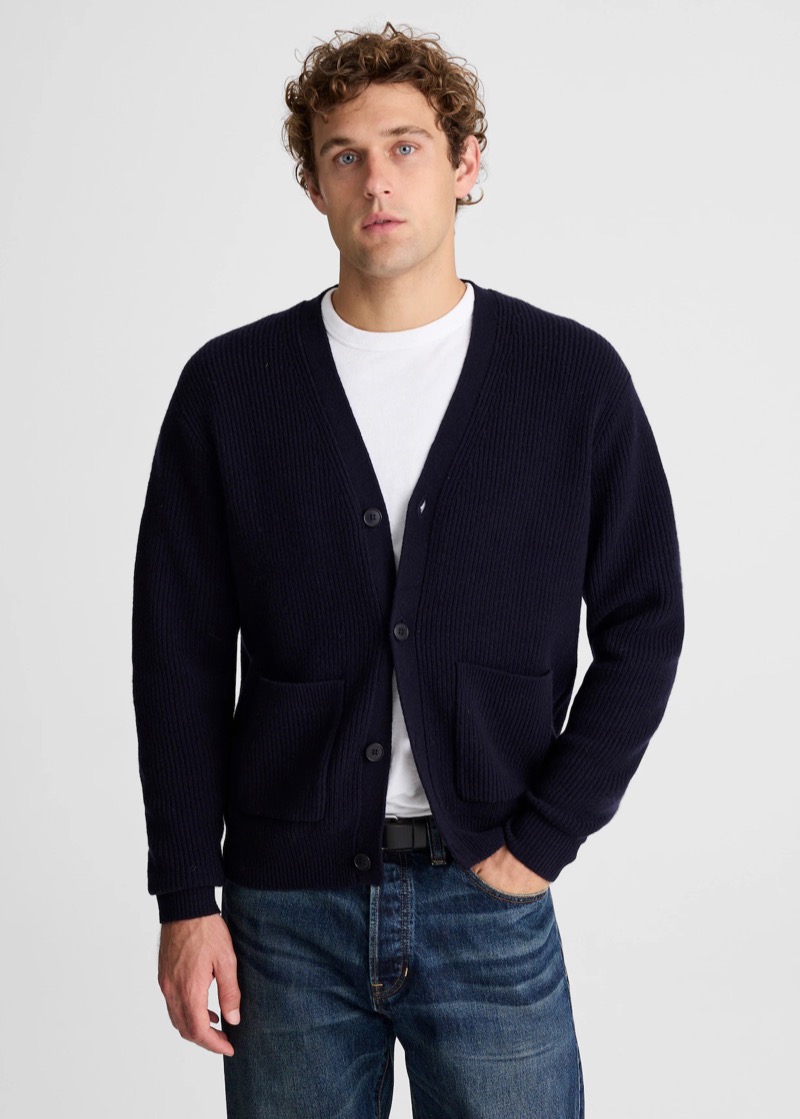
Cardigan. A softer option when the blazer feels too sharp for the day. A fine-gauge merino cardigan in charcoal or navy layers over an OCBD and creates a clean, professional look that handles internal meetings and low-key days.
Shoes
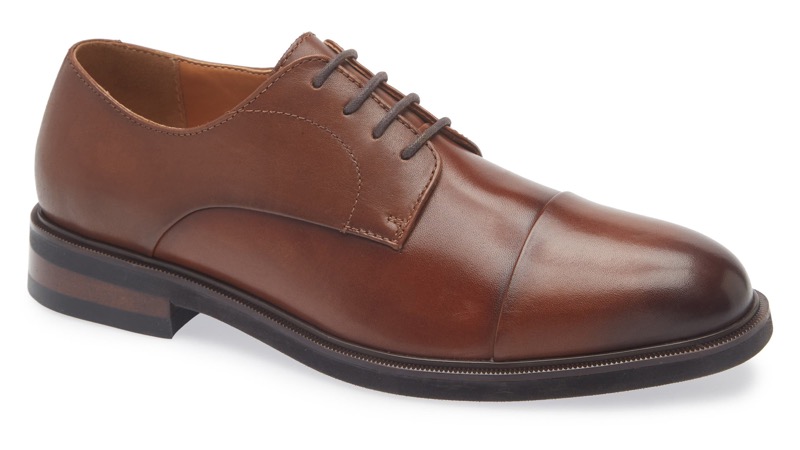
Brown leather Derby. The standard business casual shoe. A Derby (open lacing) sits one step below an Oxford (closed lacing) on the formality scale, which places it in the center of this dress code. A medium brown covers every outfit combination above.
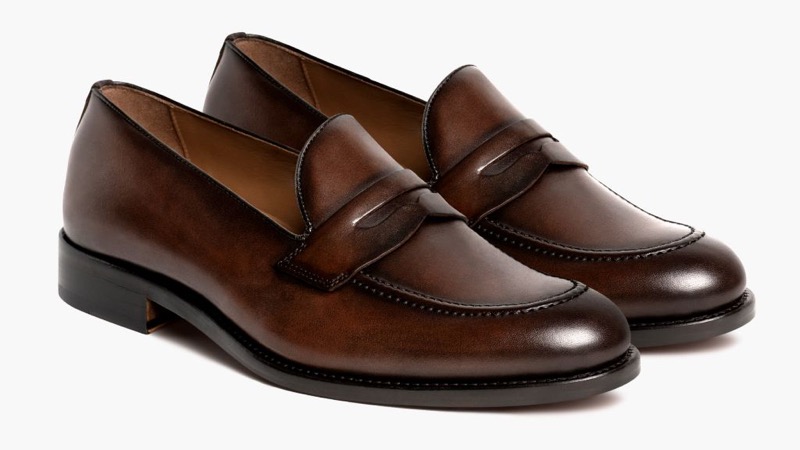
Brown leather or suede loafer. Slightly relaxed compared to a Derby. A penny loafer or bit loafer in brown leather works year-round. Suede shifts the shoe toward summer and toward the casual end of the spectrum.
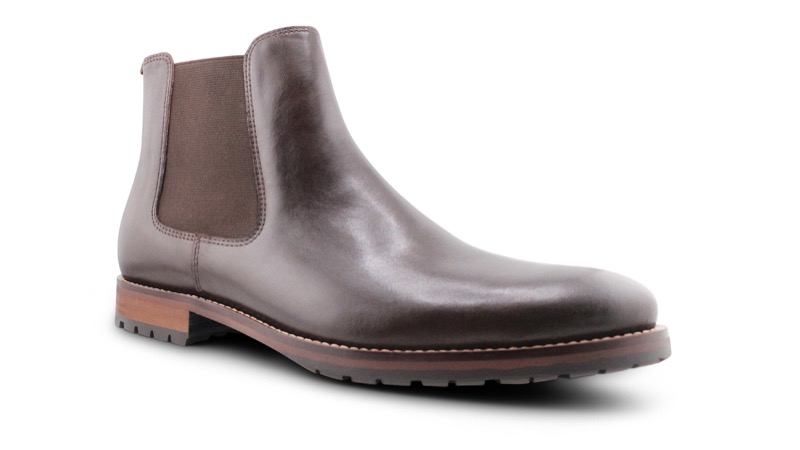
Leather or suede Chelsea boot. The cleanest boot option for business casual. A Chelsea in brown leather or tan suede works under wool trousers or chinos and transitions between seasons.
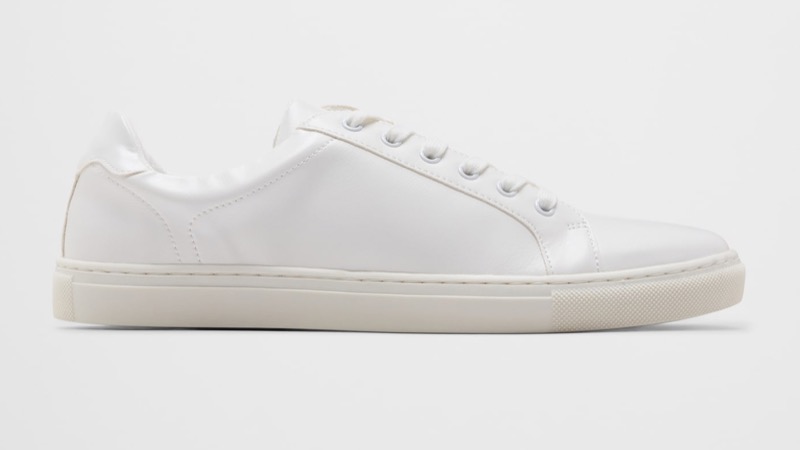
White leather sneaker. Yes, in 2026. A clean, minimalist leather sneaker in white with a flat sole and minimal branding sits comfortably in business casual when paired with a blazer and chinos. Running shoes, mesh uppers, and chunky soles belong to a different category entirely.
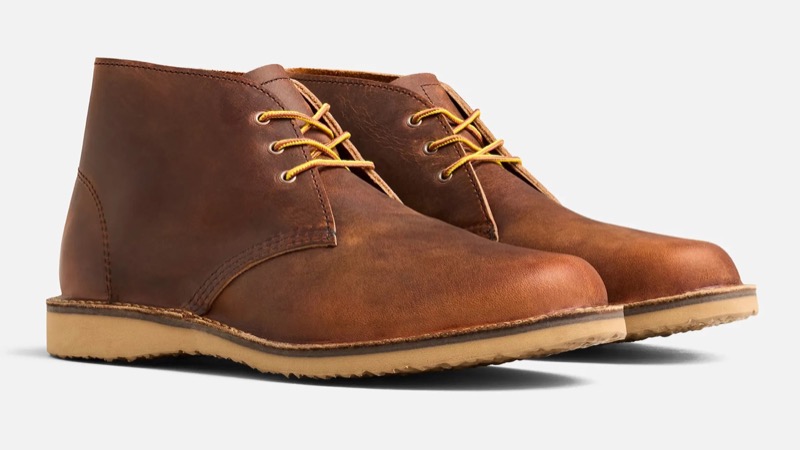
Leather or suede chukka boot. The most versatile transitional shoe in the business casual rotation. A chukka in tan or brown leather or suede pairs with chinos, wool trousers, and dark denim and works from early fall through late spring.
For a deeper look at shoe categories, the types of shoes for men guide covers every style and formality level.
Business Casual Outfit Formulas for Men
The wardrobe only matters when the pieces come together. These eight business casual men outfits cover the full spectrum, organized from most formal to most casual. Each one works as a complete look. The combination of top, bottom, shoe, and optional layer determines where the outfit sits on the formality range.
The Blazer Standard
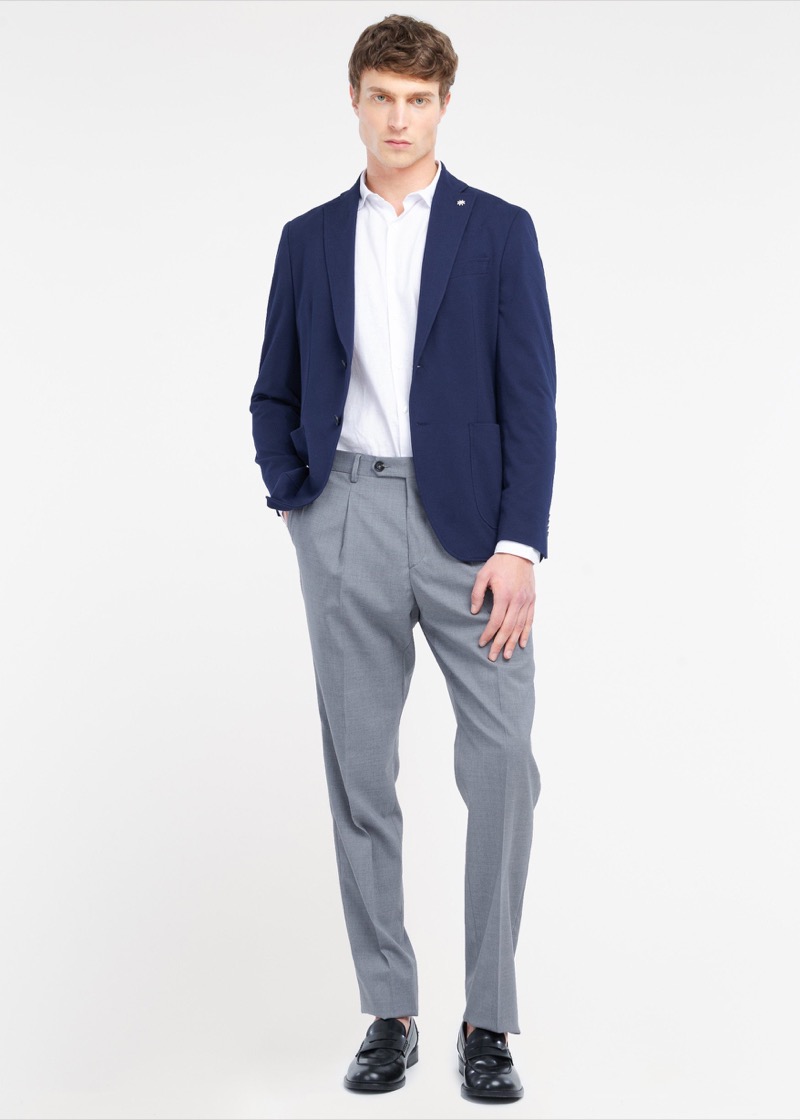
Navy unstructured blazer, white OCBD, mid-gray or charcoal wool trousers, brown leather Derbies or loafers. This combination works in any office, any city, any industry. It is the default business casual outfit. If a man owns one outfit for the dress code, this is the one. The trouser shade can shift between charcoal and light gray depending on the season, and loafers offer a slightly relaxed alternative to the Derby when the rest of the outfit is doing enough.
The Polo Upgrade
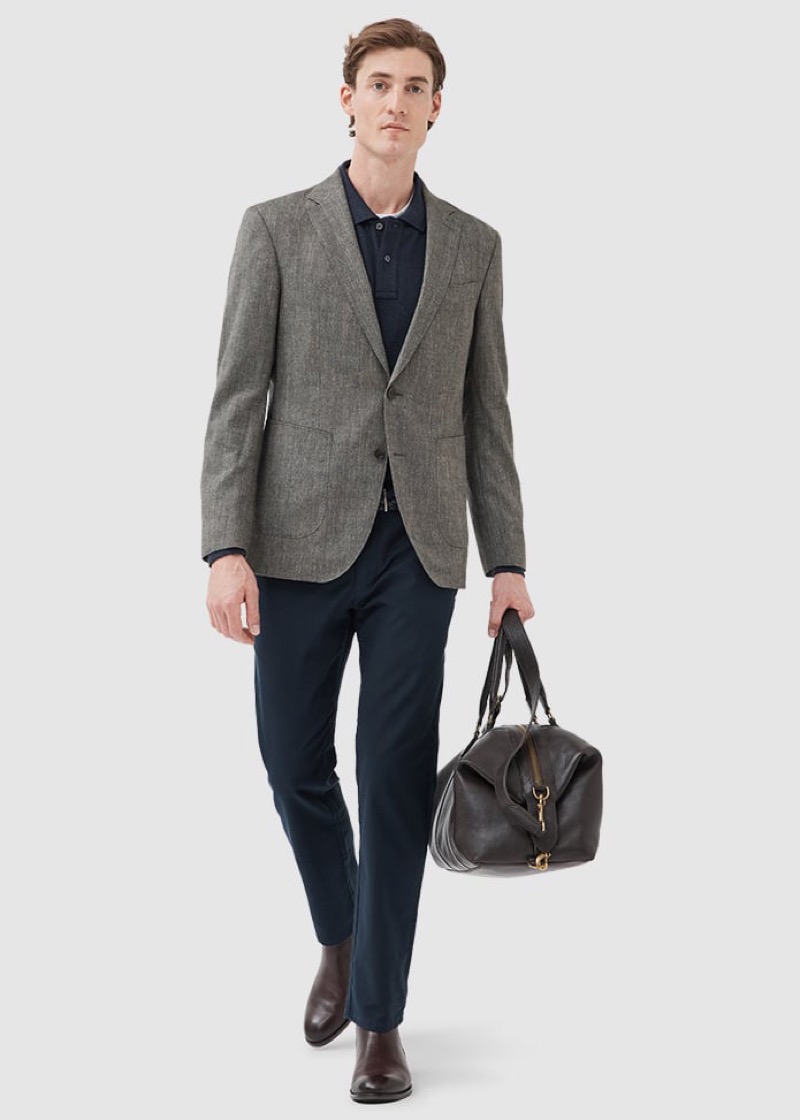
Textured or sport blazer in gray or tan, navy knit polo, navy or charcoal chinos, brown leather Chelsea boots. This formula skips the button-down collar and lets the polo do the work underneath the blazer. The blazer provides the structure. The polo keeps the neckline clean and open. Choose a blazer with visible texture, herringbone, linen weave, or a tonal check, and the combination holds together at the collar-free neckline. Chelsea boots sharpen the base.
The Sweater Swap
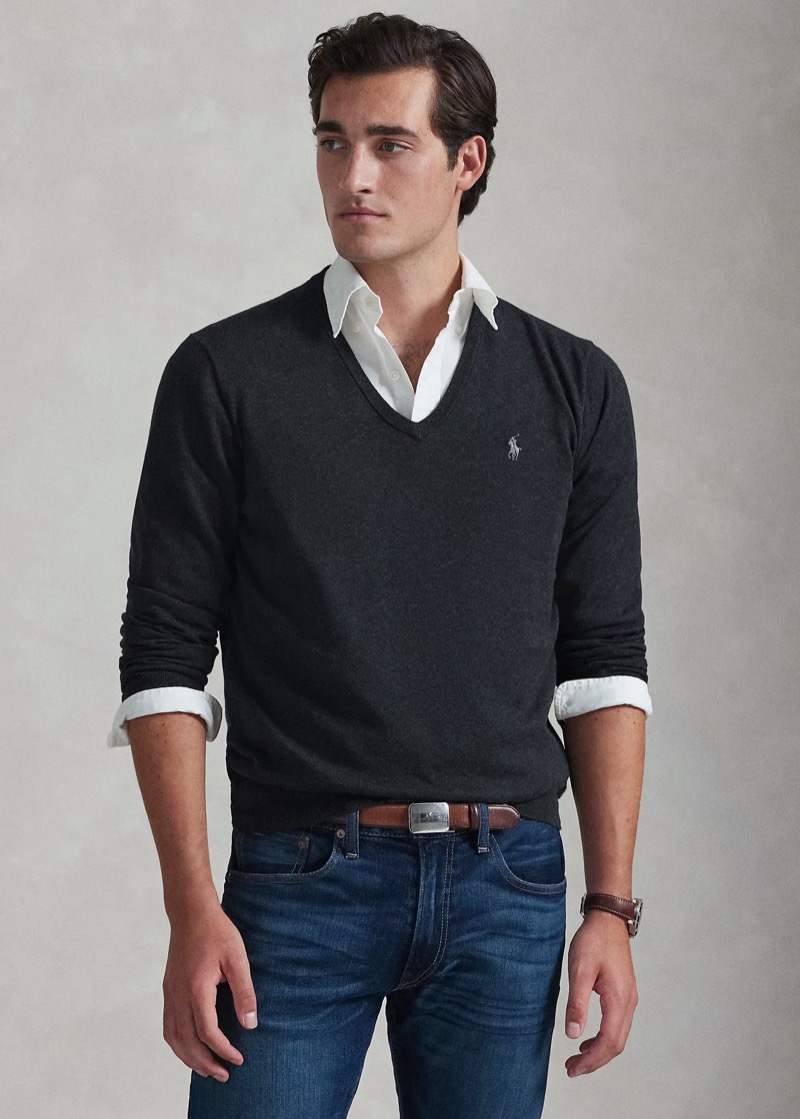
Charcoal merino V-neck over a white OCBD, khaki chinos or dark denim, brown suede chukka boots or Derbies. The sweater-over-shirt combination is one of the strongest formats in business casual because the collar shows at the neckline and the knit softens the overall shape. It works with chinos for a traditional office or with dark denim for offices that allow jeans. The V-neck keeps the collar visible. A crew neck tucks it away for a cleaner line.
The Quarter-Zip Layer
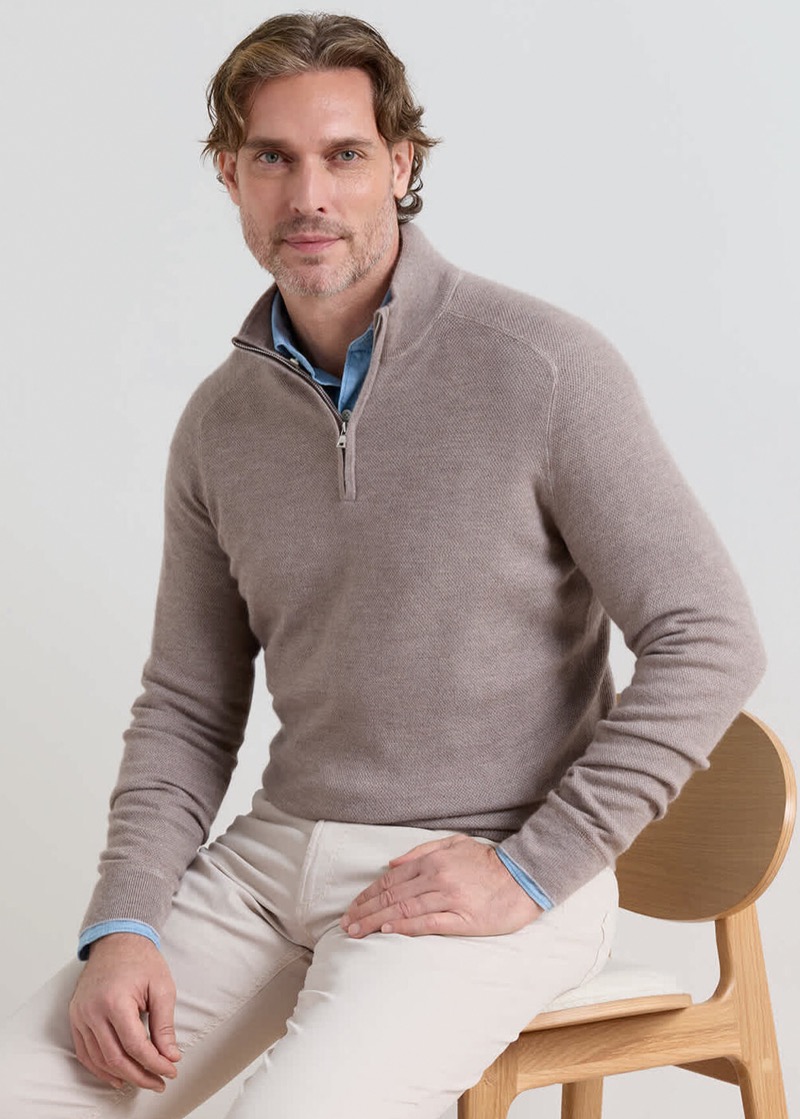
Fine-gauge merino or cotton quarter-zip in taupe, oatmeal, navy, or gray, over a light blue button-down, stone or khaki chinos, brown leather loafers or Derbies. The quarter-zip sits in the same formality range as the V-neck but with a zip collar that frames the shirt underneath and gives the neckline a focal point the crew neck and V-neck lack. Let the button-down collar show at the top of the zip. This formula works best in fall and winter and transitions from the office to after-work settings with nothing changed.
The Elevated Smart-Casual
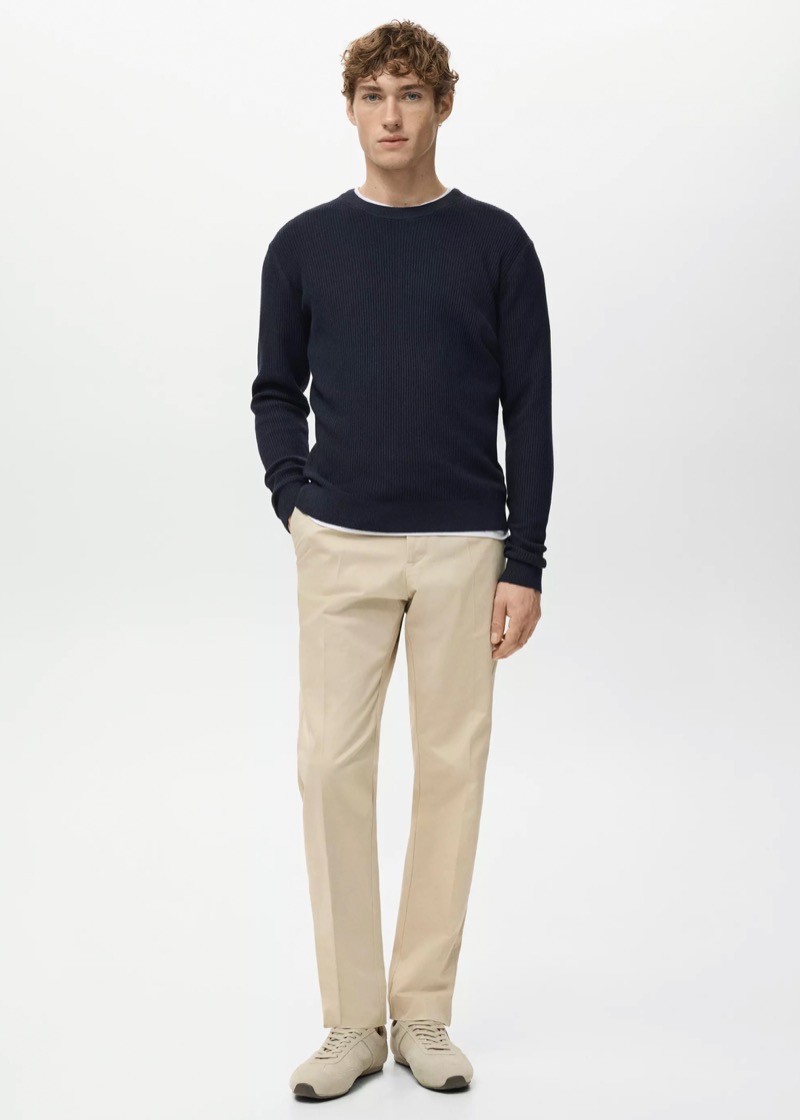
Navy merino crew neck on skin or over a white tee, olive or khaki chinos, brown leather loafer or a clean minimal sneaker. The crew neck worn solo drops the formality a half step below the OCBD combinations. A slim white tee visible at the hem adds a base layer that cleans up the silhouette. Keep the chinos tailored and the footwear simple and the outfit holds its position in the dress code.
The Linen Switch
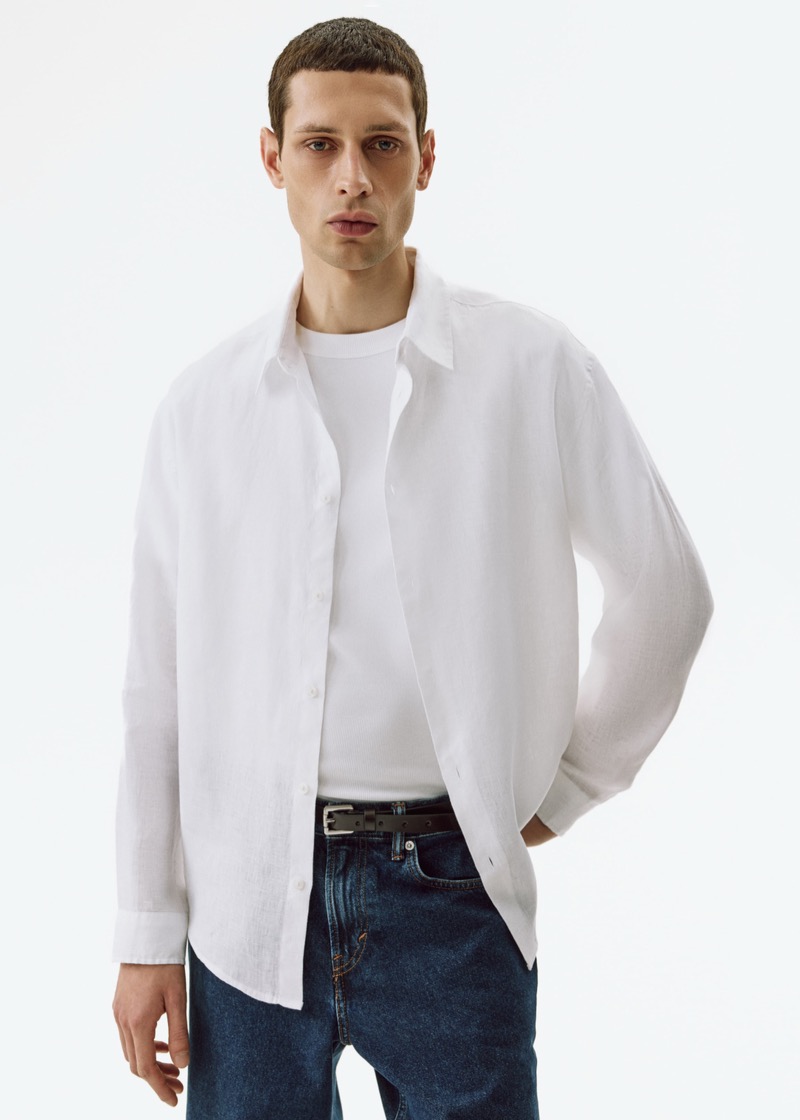
White linen button-down, stone chinos or dark denim, brown suede loafers, bare ankles. For business casual men in summer, this is the formula. The linen shirt works buttoned and tucked for a traditional look or open over a white tee for offices that skew casual. Dark denim is a strong pairing here because the weight of the denim balances the lightness of the linen. Loafers and bare ankles complete the warm-weather lineup.
The Sneaker Move
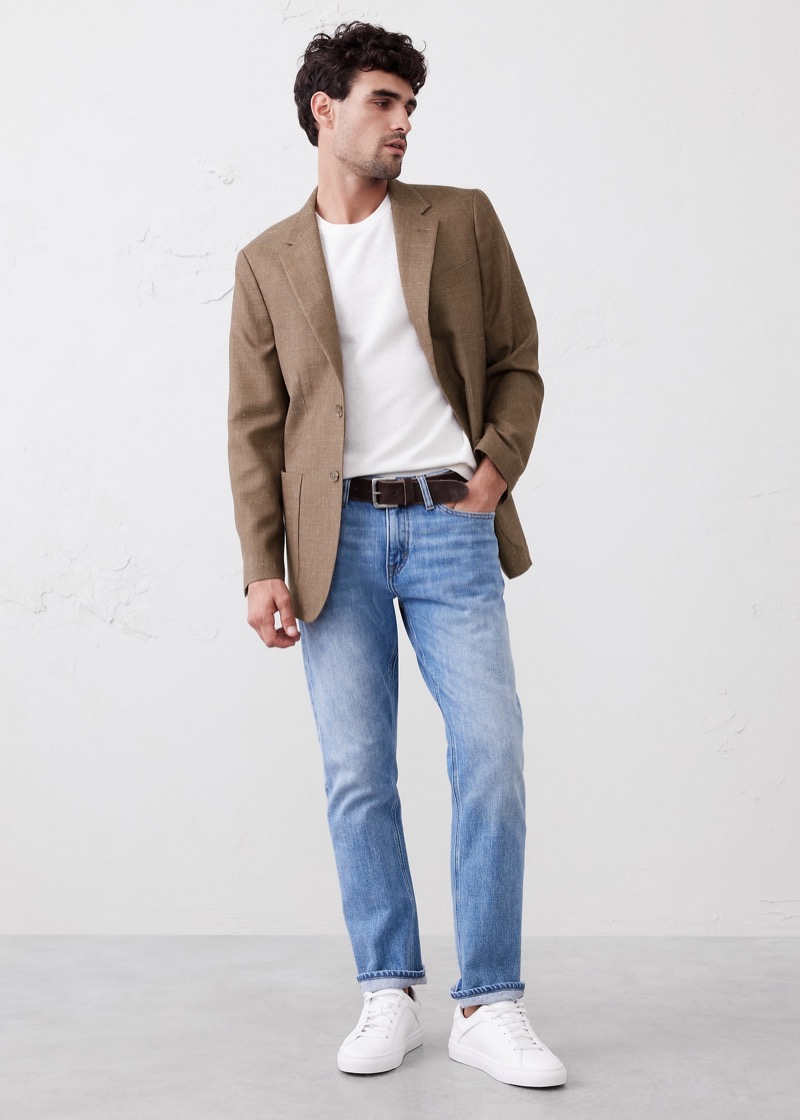
Tan or olive unstructured blazer, white tee or light blue OCBD, chinos or jeans, white leather sneakers. The sneakers are the focal point and the blazer is what makes them work. A white tee under the blazer pushes the outfit toward the casual end of the spectrum. An OCBD pulls it back toward the center. Either way, the sneakers should be clean, white, leather, and minimal. The rest of the outfit compensates for the informality at the feet.
The Friday Minimum
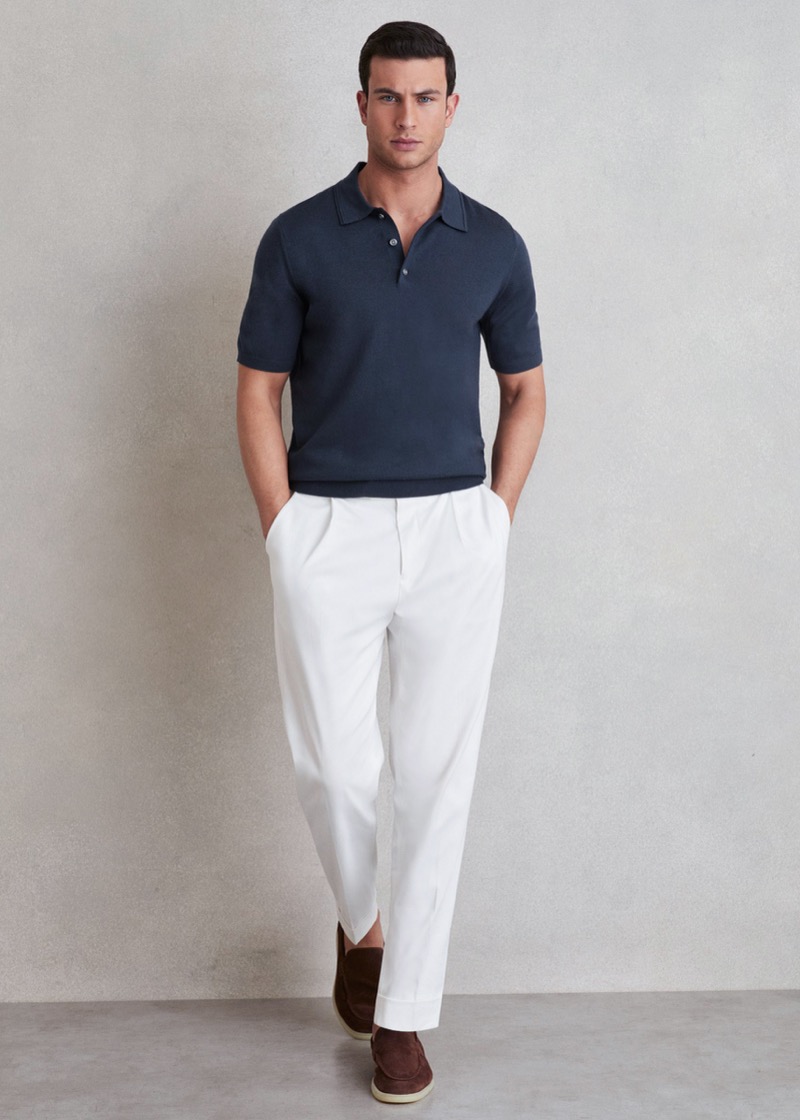
Knit polo in navy, olive, or charcoal, tailored chinos or pleated trousers in khaki, cream, or navy, brown suede loafers or chukka boots. For offices where Friday means relaxed dress but you still have a client lunch on the calendar. This outfit sits at the bottom of business casual and the top of casual, but the right knit polo and a tailored trouser can push it closer to the center than most men expect. The fabric is what separates this from the default polo outfit. A fine-gauge merino or cotton knit in a solid color stays in dress code territory. A pique polo with a logo falls out of it. Suede loafers complete the look. Dark denim and clean sneakers are the casual-Friday variation when the office allows both.
For pairing details on many of these formulas, the how to style chinos for men guide breaks down practical looks.
The Debated Questions
These are the items every business casual conversation circles back to. The guidelines are clear.
Are Jeans Business Casual?
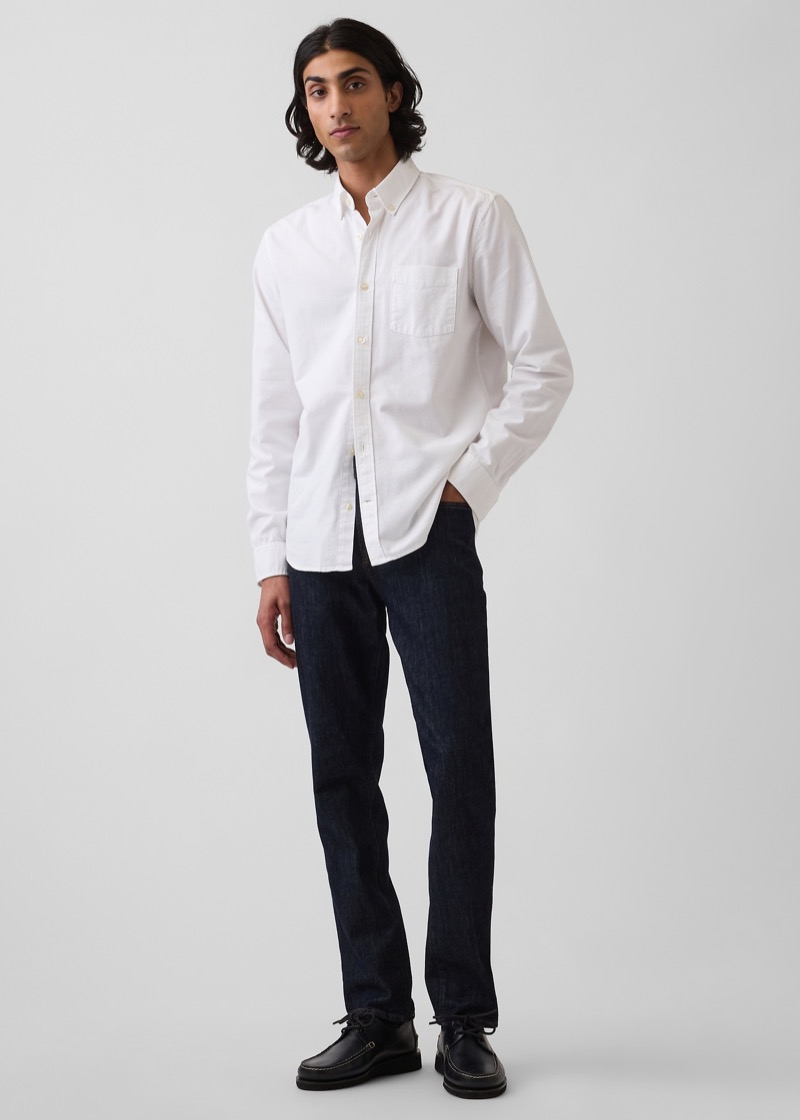
They can be. Dark indigo or black selvedge, fitted through the leg, paired with a blazer or a structured knit on top. Under those conditions, jeans work in a business casual office that allows them. Light-wash, distressed, or relaxed-fit jeans belong to a different dress code entirely. The wash and the context make the determination, and the pieces paired with the denim matter as much as the jeans themselves.
Are Sneakers Business Casual?
One specific type. A white leather minimalist sneaker with a flat sole, clean lines, and no visible branding belongs in business casual when paired with a blazer and tailored bottoms. Running shoes, trainers, mesh uppers, and chunky fashion sneakers fall outside the category. The distinction is between a leather shoe that happens to have a rubber sole and an athletic shoe repurposed for the office.
Are Polos Worth It?
In narrow conditions. A merino or fine-cotton knit polo in navy or charcoal works in summer at an office that already trends casual. A pique cotton polo in bright blue with a logo looks like 2007 corporate casual. The material decides the outcome. Upgrade to merino or long-staple cotton, keep the color muted, and a polo can hold a spot in a summer business casual rotation.
What About Shorts?
For the vast majority of offices, shorts fall outside business casual. The one exception is a creative or ultra-casual office in peak summer where leadership already wears them. In that case, tailored, flat-front shorts above the knee, paired with a knit polo or linen button-down. This is still a high-risk choice. Lightweight linen-cotton trousers handle the same temperatures and stay firmly in the business casual category.
Seasonal Adjustments
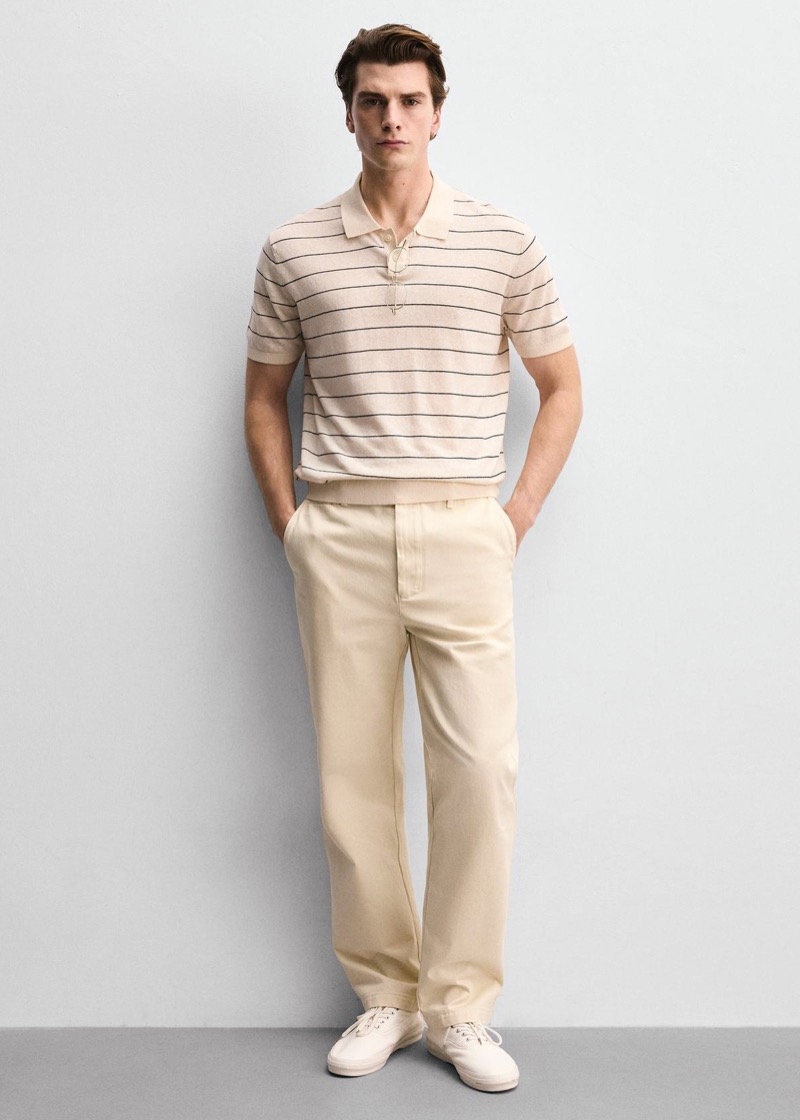
Summer. The fabrics get lighter. Linen, linen-cotton blends, lightweight merino, and breathable cotton replace heavier wools and dense knits. Bare ankles with loafers work in offices that trend casual. Sleeves can roll on a linen button-down. Colors shift toward lighter tones, stone, sky blue, cream, and the wardrobe still stays within the business casual range.
Winter. The layers stack. A merino sweater under an unstructured blazer. A wool overcoat on top of both. Chelsea boots and chukka boots replace loafers. Heavier fabrics like flannel wool trousers and brushed cotton chinos come into the rotation. Textures get richer, tweed, corduroy, cashmere, and the palette shifts toward charcoal, navy, forest green, and burgundy.
The 5-Piece Starter Wardrobe
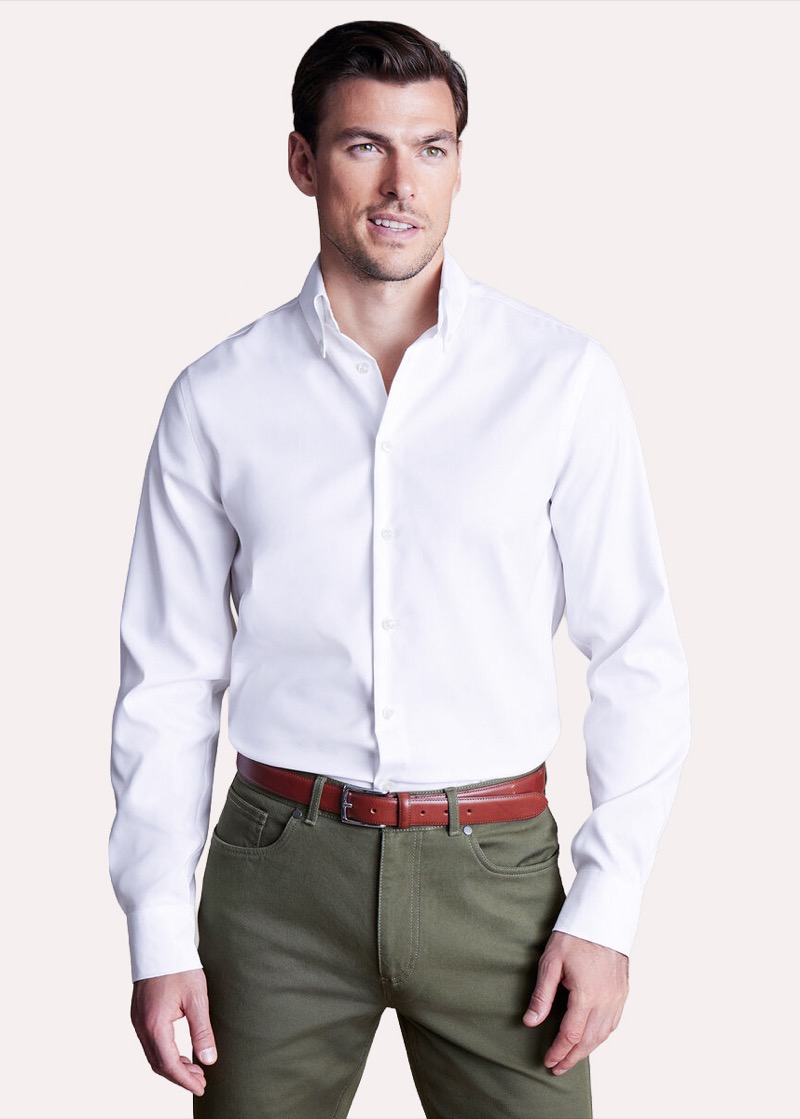
A man starting from zero needs five pieces to cover the full business casual range.
- White OCBD
- Navy unstructured blazer
- Khaki chinos
- Brown leather Derby shoes
- Charcoal merino V-neck sweater
Those five pieces combine into six to eight distinct outfits that cover every formality level in the business casual spectrum. The blazer and sweater alternate as the layering piece. The OCBD works under both. The chinos and Derbies form the base of every combination. Every additional piece in this guide, the second pair of trousers, the loafers, the dark denim, expands from this starting point. The foundation handles the first month. The rest of the wardrobe develops from there.
Frequently Asked Questions
What is business casual for men? Business casual is a dress code defined by tailored separates, typically a collared shirt or fine-knit sweater, chinos or wool trousers, and leather shoes. It sits between formal business attire (suit and tie) and casual wear (T-shirt and jeans). The specific interpretation varies by industry and office culture, but the standard across all of them is polished dressing with clear attention to fit, fabric, and coordination, at a formality level below a full suit.
How should men dress business casual in summer? Summer business casual favors lighter fabrics, linen, linen-cotton blends, and lightweight merino, in lighter colors like stone, sky blue, and cream. A linen button-down with chinos and suede loafers covers most summer offices. Bare ankles work with loafers in casual-leaning environments. The outfit should still feel composed, just in fabrics that handle heat.
Are jeans business casual? Dark indigo or black jeans in a slim or straight fit can work in business casual when paired with a blazer or structured knit on top. Light-wash, distressed, or relaxed-fit jeans fall outside the category. The office culture determines whether denim is accepted at all, and the wash and pairing determine whether it looks business casual or just casual.
What shoes work with business casual? The standard business casual shoe options are brown leather Derbies, loafers (leather or suede), Chelsea boots, suede chukka boots, and clean white leather sneakers. Running shoes, athletic trainers, and casual fashion sneakers belong to separate categories. The shoe should have a leather or suede upper, a clean silhouette, and a streamlined sole.
Can you wear sneakers with business casual? A clean white leather sneaker with minimal branding and a flat sole works in business casual, especially when paired with a blazer and tailored chinos. The sneaker should look like a selected part of the outfit, chosen to complement the combination above it. Athletic shoes, running sneakers, and chunky fashion silhouettes belong to a different category.
What is the difference between business casual and smart casual? Business casual sits one tier above smart casual on the formality scale. Business casual assumes a collared shirt, tailored trousers, and leather shoes as the baseline. Smart casual allows T-shirts, crew neck sweaters on their own, and relaxed footwear. In practice, the blazer is the dividing line, expected in business casual, optional in smart casual.
How many pieces do you need for a business casual wardrobe? Five core pieces, a white OCBD, navy unstructured blazer, khaki chinos, brown leather Derbies, and a charcoal merino sweater, combine into six to eight complete business casual looks. Adding a second pair of trousers, a loafer, and a knit polo expands the rotation to twelve or fifteen distinct combinations. Most men find that eight to ten pieces cover a full workweek with variety.
Is a tie ever appropriate with business casual? A tie with business casual is uncommon in 2026 and signals a formality level above what most offices expect. If the occasion calls for it, a knit tie in navy or charcoal with an OCBD and blazer can work for a client presentation or external meeting. For daily office wear, the blazer and OCBD on their own cover the expected formality level.