
A suit is the most consequential purchase in a man’s wardrobe. Get it right and you have something that works across decades, occasions, and almost every version of your life. Get it wrong and it sits in the back of a closet proving that fit and fabric matter more than price.
The range of types of suits for men is wider than most buyers realize. There is a suit for the job interview, one for the wedding, one for the dinner reservation that demands something sharper than trousers and a shirt, and several that blur those lines entirely. Knowing what each one does, and where it does it best, is the difference between owning a suit and knowing how to use it.
Different Types of Suits for Men
What are the different types of suits for men? The main types of suits for men are the two-piece suit, three-piece suit, double-breasted suit, tuxedo, dinner jacket, morning suit, lounge suit, and linen suit, each suited to specific formality levels, occasions, and seasons.
Two-Piece Suit
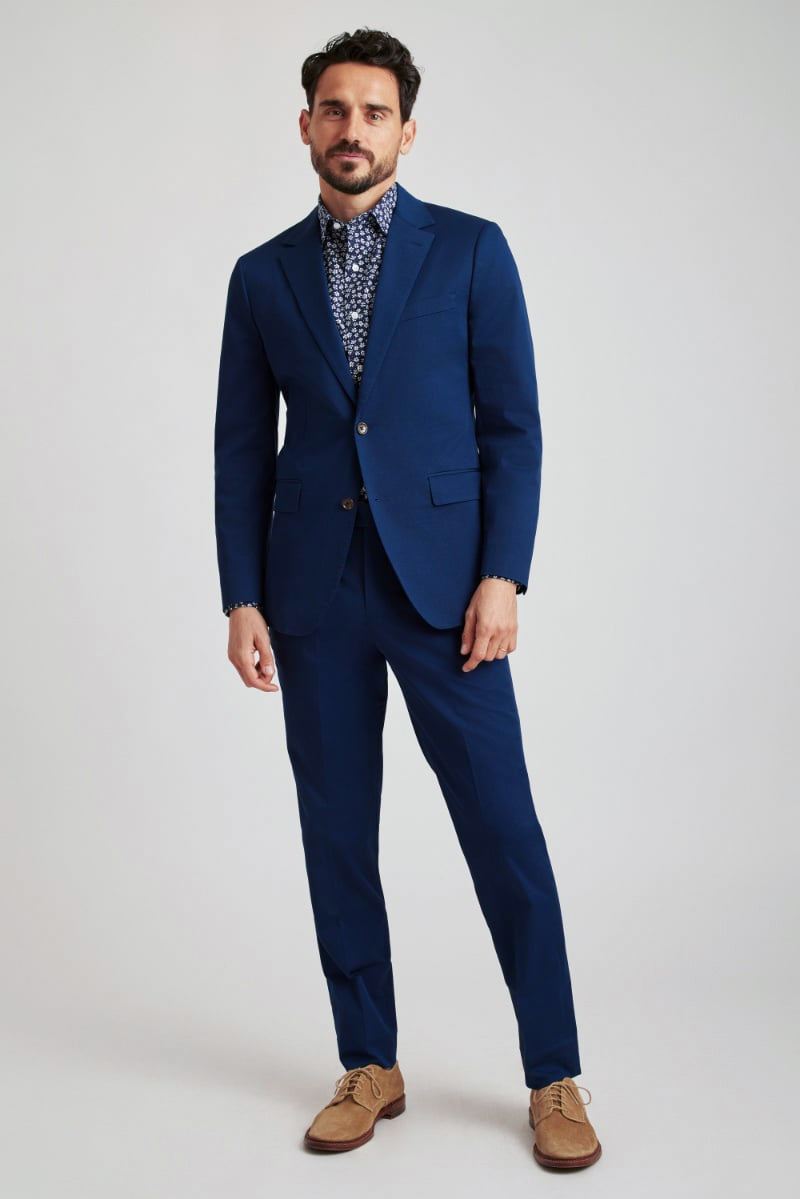
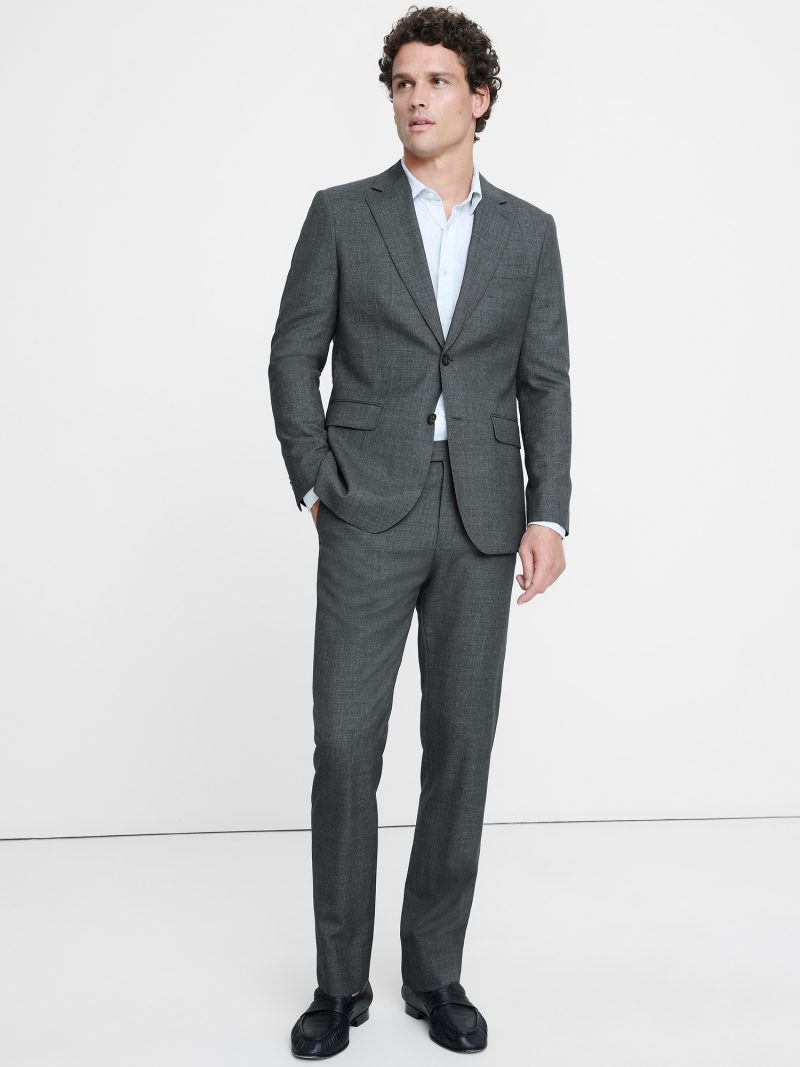
A two-piece suit is a matching jacket and trousers with no waistcoat, cut from the same fabric and constructed to be worn together.
It is the default suit in most men’s wardrobes for a reason. The two-piece covers business meetings, formal dinners, weddings, and most occasions where a suit is required. It comes in every cut from classic to slim, making it accessible to every body type. Navy, charcoal, and mid-grey are the foundation colors. Get one that fits in the shoulders and have the rest altered.
Best for job interviews, business formal, weddings, funerals, most occasions requiring a suit.
Three-Piece Suit
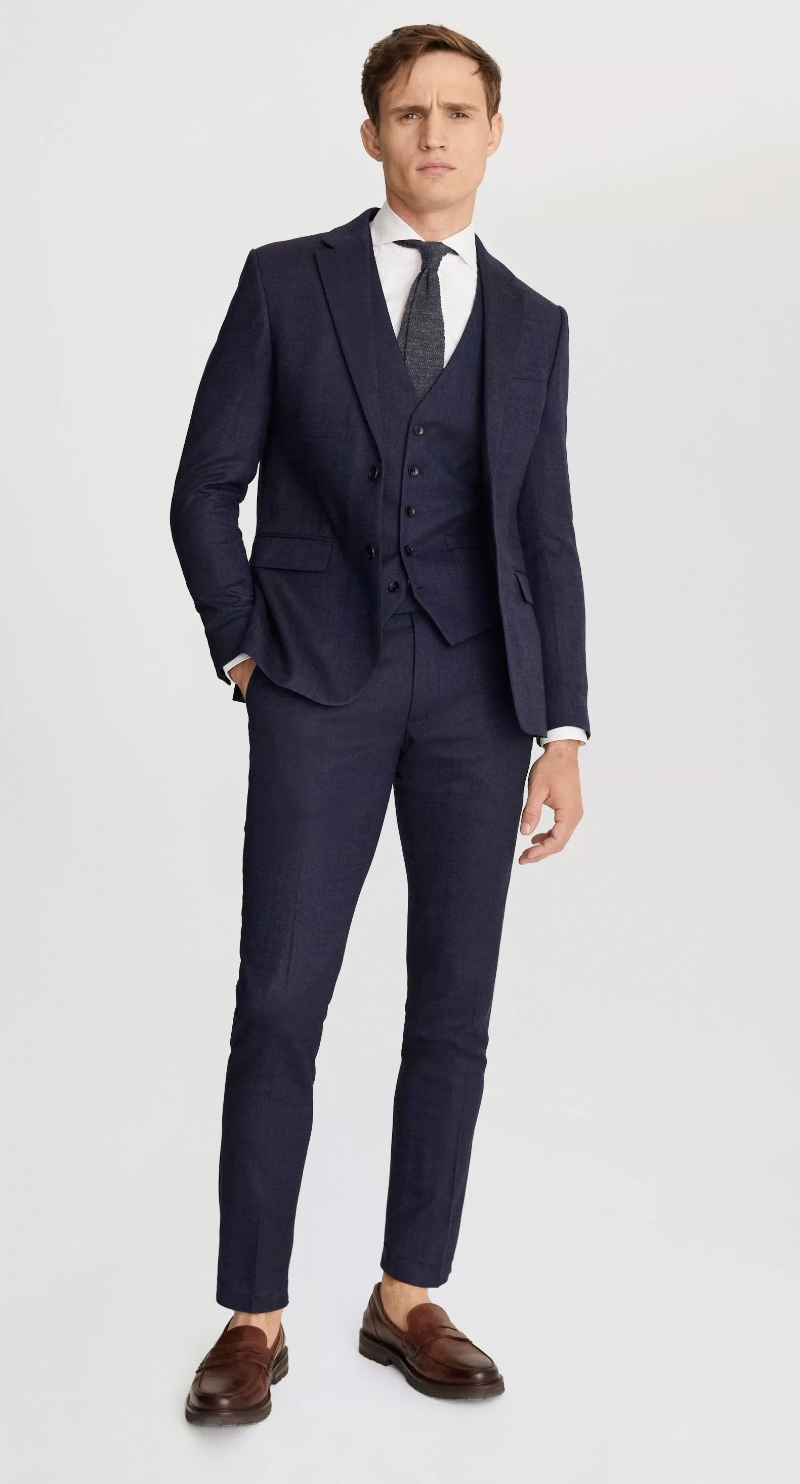
A three-piece suit adds a matching waistcoat to the standard jacket and trousers combination, cut from the same cloth.
The waistcoat is the detail that changes everything. It adds a layer of formality and a visual structure that the two-piece cannot match. It also solves the problem of the jacket coming off mid-event: the waistcoat holds the look together on its own. The belt disappears entirely, which is the correct move. If you wear pleated trousers, the three-piece is where they make the most sense, as the waistcoat defines the waistline and lets the pleat do its work below.
Best for weddings, formal dinners, occasions where the two-piece feels underdressed.
Double-Breasted Suit
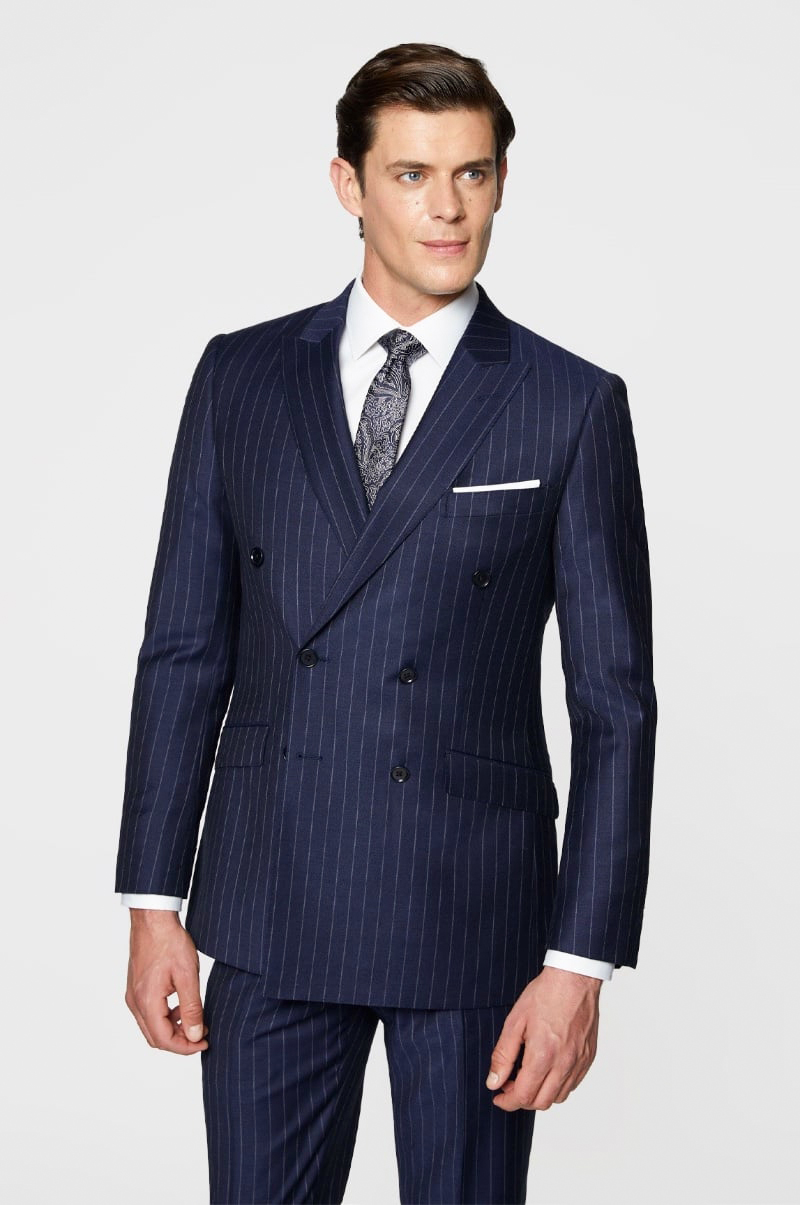
A double-breasted suit features a jacket with overlapping front flaps secured by two parallel rows of buttons, typically four to six in total.
This is the suit with the highest ceiling and the least margin for error. The construction is specific: peak lapels that extend toward the shoulders, a suppressed waist, and a jacket that must button every time you stand. Worn correctly, the double-breasted reads as the most polished thing in the room. Worn incorrectly, it reads as costume. The cut demands some physical presence, as the broad front panels work against very slight frames. Charcoal and navy are the reliable choices; chalk stripe raises the register.
Best for formal dinners, occasions requiring peak formality in business or social contexts.
Single-Breasted Suit
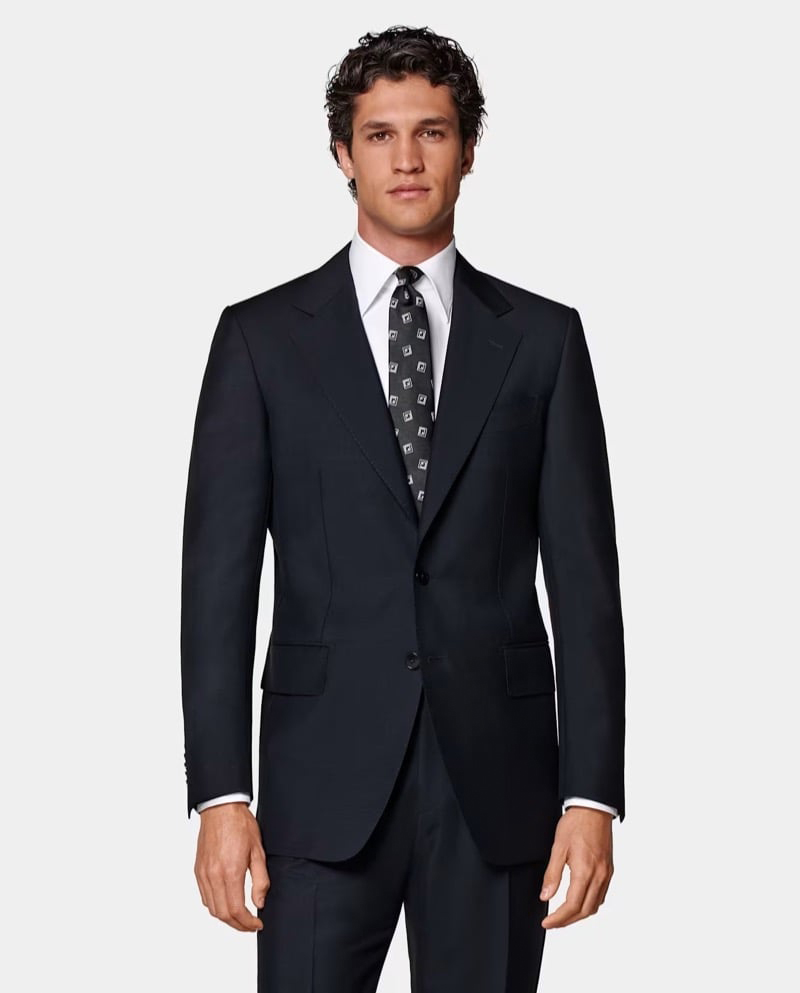
A single-breasted suit has a jacket that fastens at the front with a single row of one, two, or three buttons.
The two-button configuration is the standard. It produces a clean V below the lapels that flatters most body types and does not age. The three-button was the suit of the nineties and has dated badly. The one-button is specifically a statement cut, better suited to peak lapels and formal contexts. Single-breasted suits accommodate the widest range of fabrics, weights, and occasions, making them the foundation of any suit wardrobe.
Best for everyday business wear, versatile formal use, building a first suit wardrobe.
Slim-Fit Suit
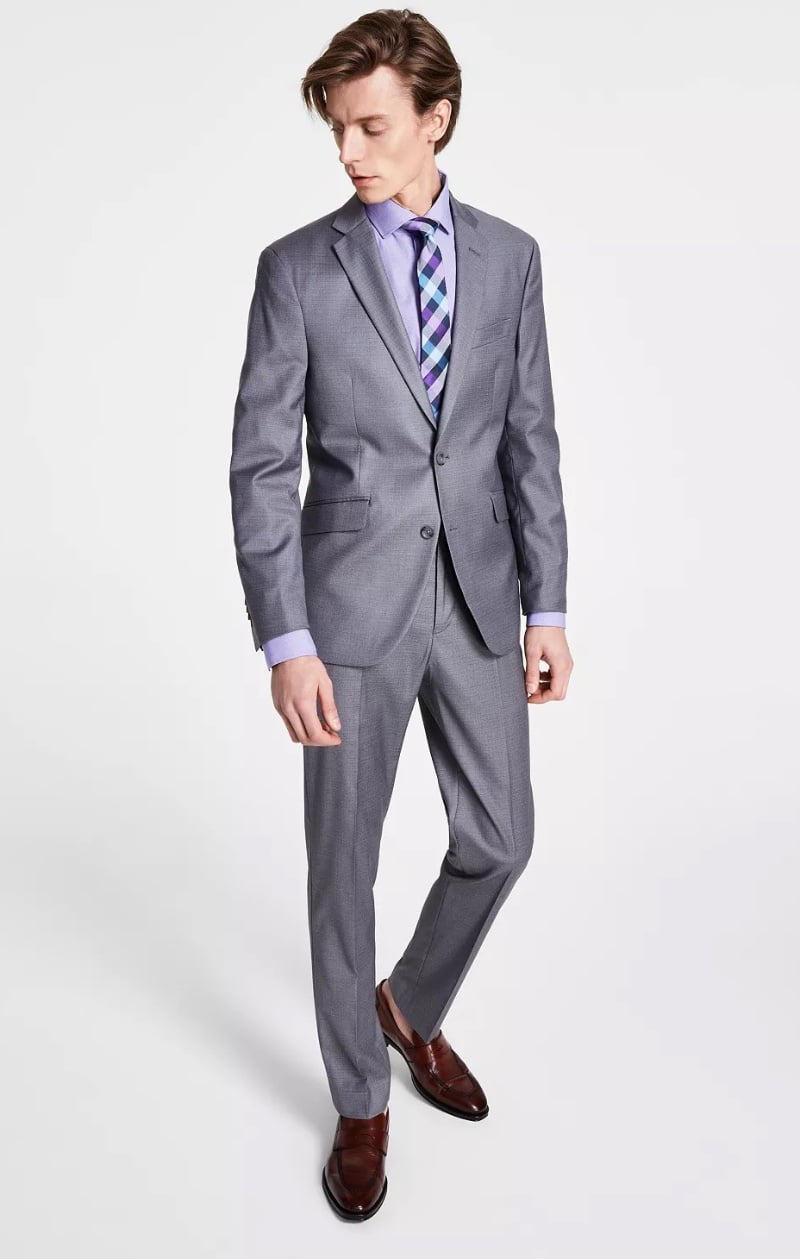
A slim-fit suit is cut with a narrower waist, slimmer sleeves, and tapered trousers to follow the body’s natural lines closely.
The slim cut works for lean and athletic builds. For athletic builds in particular, a slim jacket with some structure through the shoulders emphasizes the natural taper of the torso without adding bulk. The trousers are typically higher-rise and tapered through the thigh and calf. The leg break lands at the top of the shoe. Slim-fit suits age faster than classic cuts because they are tied to a specific era of tailoring, so fabric and construction quality matter here more than usual.
Best for lean to athletic builds, contemporary settings, business casual to business formal.
Classic-Fit Suit
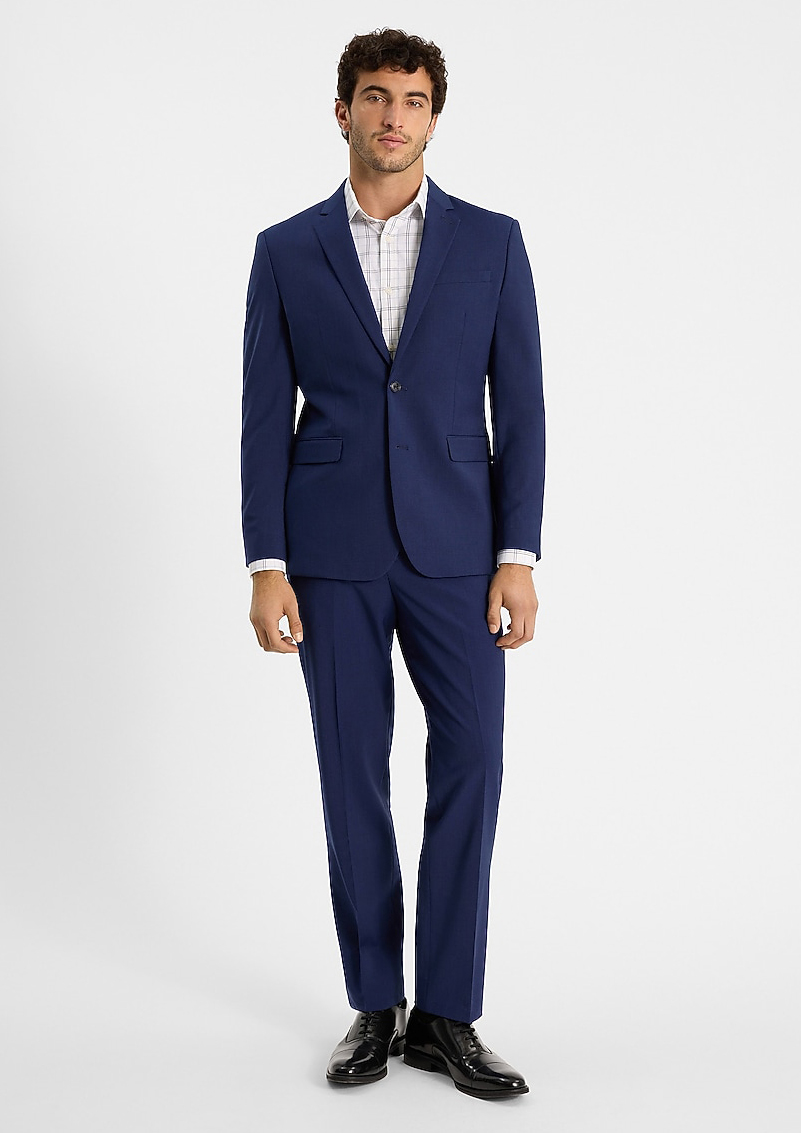
A classic-fit suit cuts with slightly more room through the chest, waist, and trouser leg than a slim-fit, following the traditional proportions of mid-century tailoring.
The classic fit is not the loose fit. The distinction matters. A classic suit still has shape: the jacket suppresses at the waist, the shoulders sit clean, the trouser falls straight from hip to break without excess fabric pooling at the thigh. The classic cut reads as permanent in a way that trend-driven cuts do not, which is why it remains the correct choice for made-to-measure investments. Quality trousers in a heavier wool flannel or worsted work better here than in the slim-fit, where fabric weight can distort the silhouette.
Best for most body types, formal events, made-to-measure investments, occasions where you want the suit to outlast the trend.
Modern-Fit Suit
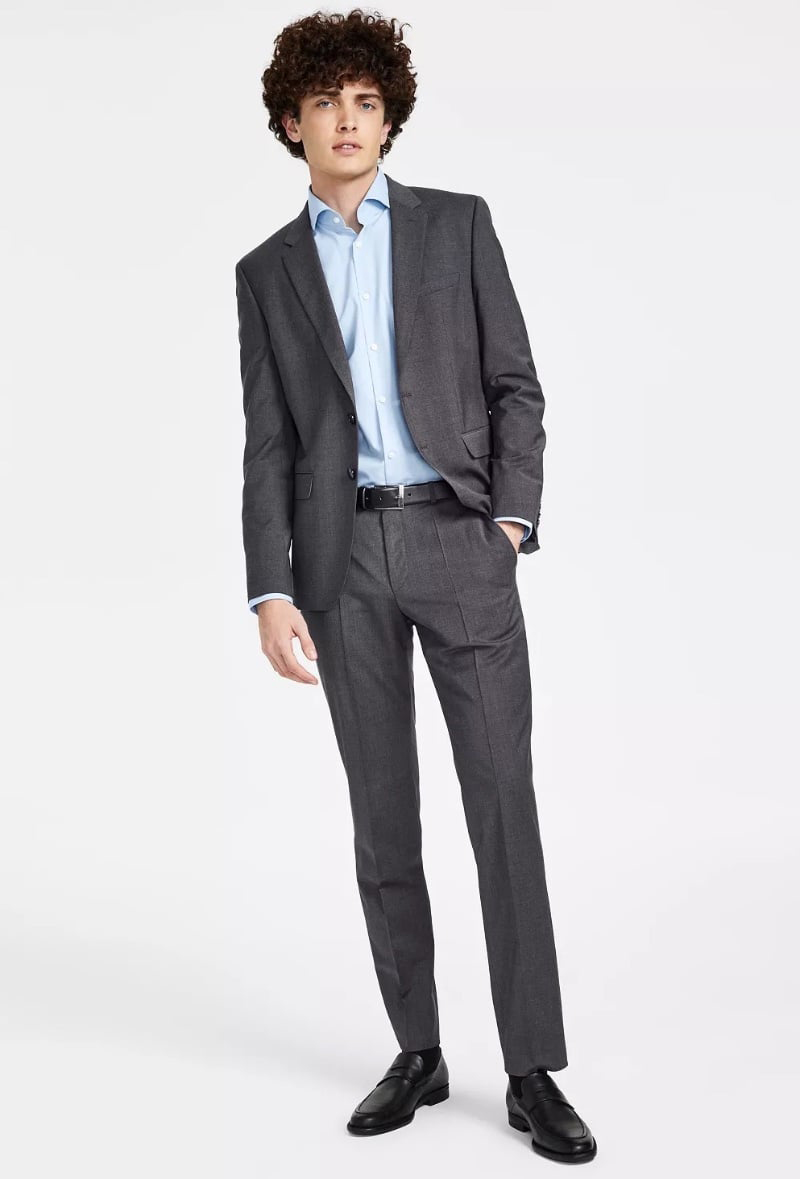
A modern-fit suit sits between the classic and slim-fit cuts, with a tailored silhouette that is trimmer than classic proportions but less fitted than slim.
Most off-the-rack suits sold today fall into this category. The jacket takes in at the waist, the trousers are cut without excess fullness, and the overall silhouette reads as current. The modern fit works across a wider range of body types than the slim cut, making it the practical choice for most men buying a suit for general use. Shoulders matter: the seam should hit at the end of the shoulder, no further.
Best for most body types, business wear, first suits, a wide range of formal occasions.
Tuxedo
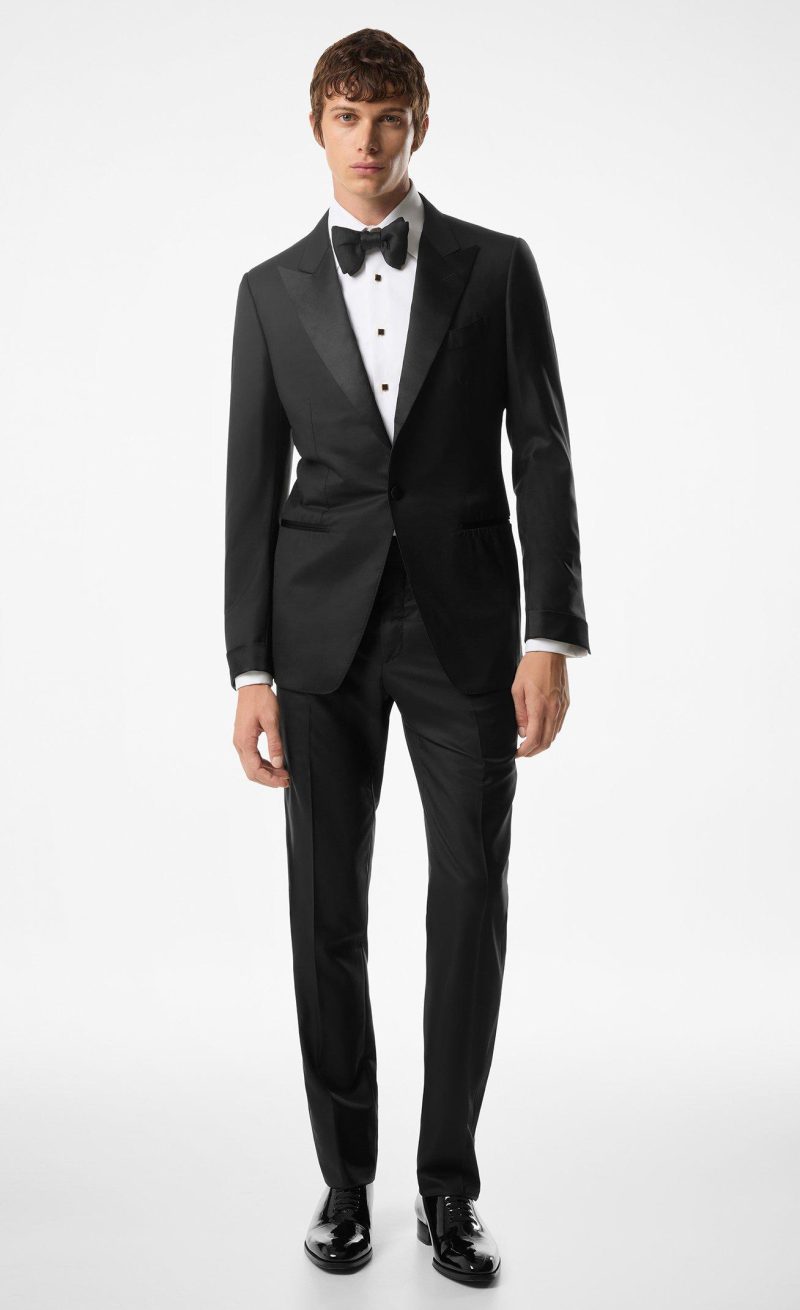
A tuxedo is a formal suit with satin or grosgrain lapels, matching satin trouser stripe, and a white dress shirt, designed specifically for black-tie events.
The tuxedo is not interchangeable with a dark suit. It is a specific dress code with specific rules. The jacket lapels are faced in satin, the trouser seam carries a matching stripe that replaces a belt, and the shirt is formal with a bib front or pleated front. A black bow tie is mandatory. Patent leather shoes or velvet slippers. Nothing else. The dinner jacket is the British term for the same garment, and the construction is identical.
Best for black-tie events, formal galas, certain weddings, premieres.
Morning Suit
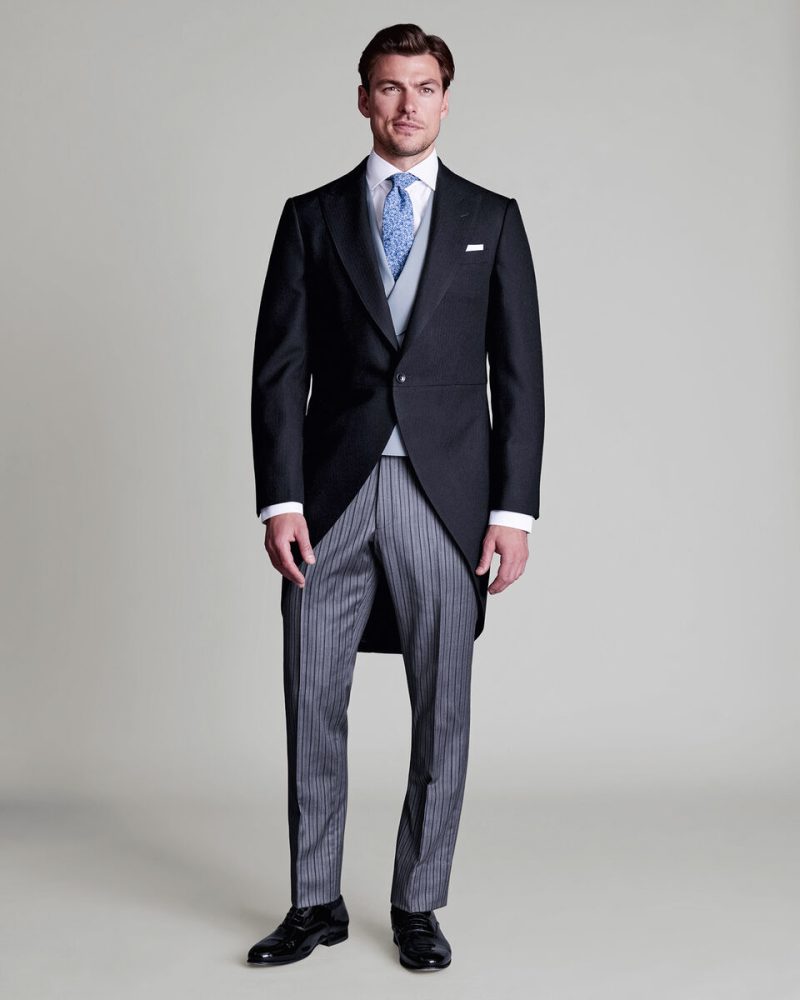
A morning suit consists of a morning coat with a cutaway front, waistcoat, and striped or plain formal trousers, worn for the most formal daytime occasions.
This is the suit for Royal Ascot, certain traditional weddings, and formal ceremonies where black-tie would be underdressed for the morning hour. The morning coat is cut short at the front and sweeps to tails at the back. The combination of the cutaway, the formal waistcoat, and the striped trousers produces a silhouette that reads as ceremonial by design. A top hat is traditional and genuinely optional depending on context.
Best for Royal Ascot, formal daytime weddings, ceremonial occasions, certain racing events.
Linen Suit
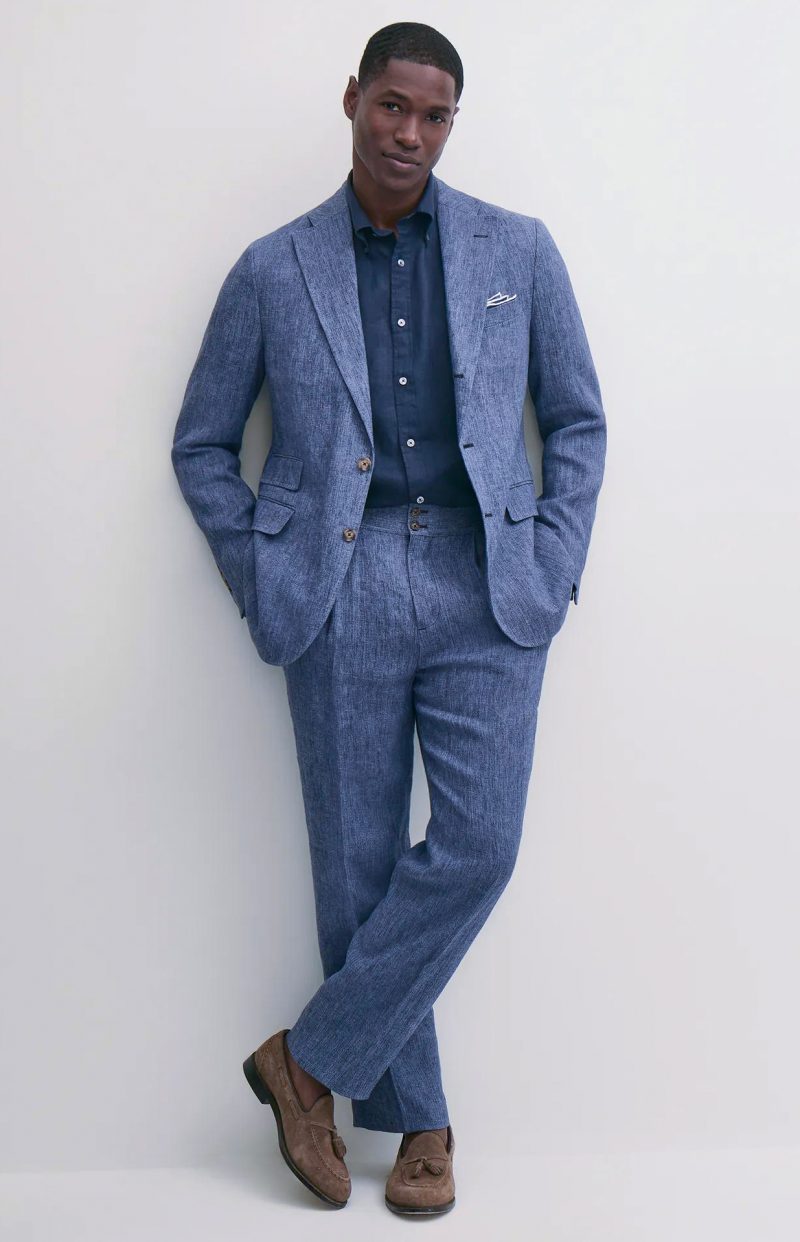
A linen suit is cut from woven flax fiber that is lightweight, breathable, and prone to visible creasing.
The linen suit is a summer suit and nothing else. The fabric lets air move in a way that wool cannot replicate in heat, and the lighter colors it comes in reflect rather than absorb warmth. The wrinkle is part of it. A linen suit that looks pressed all day is either cut from a blend that defeats the purpose or being worn somewhere air-conditioned enough to not need linen. Cream, sand, light grey, and pale blue are the colors. Just as a guide on shirt styles to pair with this: an unstructured linen or cotton shirt collar sits better here than a stiff dress shirt collar.
Best for summer weddings, outdoor events, garden parties, warm-weather travel.
Lounge Suit
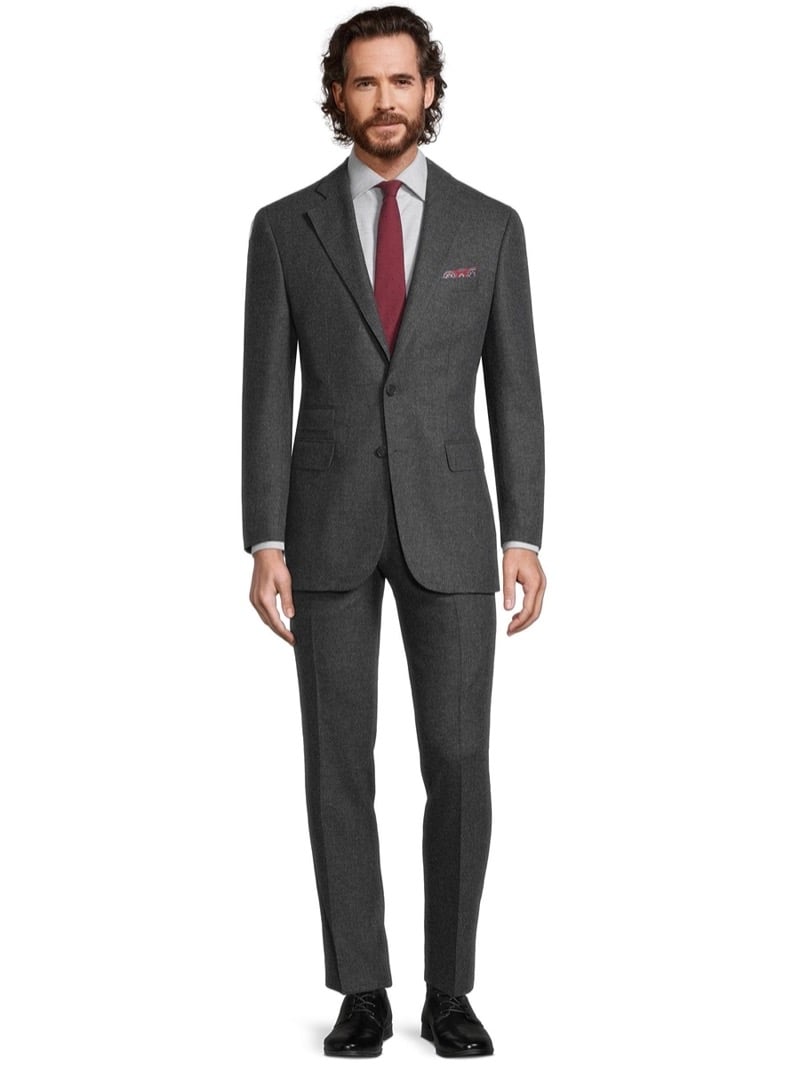
A lounge suit is a standard two or three-piece suit in conservative colors, representing the default business and social formal suit in British dress code terminology.
The term is used primarily in formal invitations as a dress code specification. When an invitation reads “lounge suit,” it means a standard two-piece in a neutral color, a dress shirt, and a tie. It is the level below black-tie and the level above smart casual. The term is British in origin and less commonly used in the United States, where “business formal” or “suit and tie” covers the same ground.
Best for formal daytime occasions, British-format events, traditional corporate settings.
Suit Fabrics
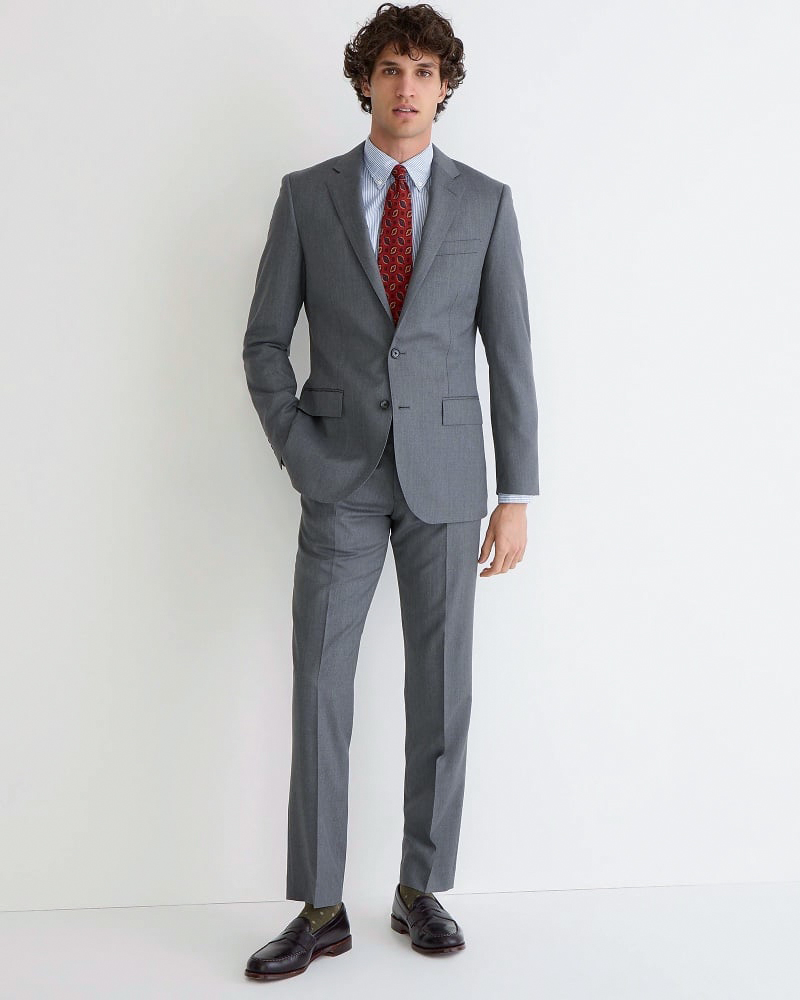
Wool is the baseline. A worsted wool in 150 to 200 grams per meter is the right weight for a year-round suit in most climates. It drapes cleanly, presses well, and recovers its shape after a day’s wear. Heavier flannel, from 260 grams and above, is a winter fabric with a softer hand and more casual texture. Tweed is rougher still, built for the country rather than the office.
Linen has the breathability advantage in summer but the wrinkle liability every day. A linen-cotton or linen-wool blend gives you 70 percent of the breathability and significantly more structure. The pure linen suit is correct for outdoor summer events and not much else.
Cotton in a heavier weight or a canvas weave produces a suit that reads as casual, which can work for certain dress codes but should not be mistaken for formal. Cotton seersucker is a specific summer choice with a textured surface that wears cooler than it looks.
Synthetic blends add wrinkle resistance and machine-washability to suits at lower price points. The tradeoff is drape: synthetics do not fall the way natural fibers do, and they can look flat in photographs and under direct light.
How to Choose the Right Suit
Occasion first. The occasion determines everything else. A black-tie event requires a tuxedo. A formal wedding calls for a two or three-piece in a neutral. A summer garden party opens the door to linen. Starting with the suit you want rather than the occasion you need it for leads to expensive mistakes.
Fit over price. A $400 suit that fits correctly will outperform a $1,200 suit that does not. The shoulders must hit at the exact end of the shoulder joint. The chest should button with a flat front. Everything from the sleeves to the trouser break can be adjusted by a tailor. The shoulders cannot, at least not economically.
Color for longevity. Navy and charcoal are the foundation colors for a reason. They work with more shirt and shoe combinations, they photograph well, and they do not read as tied to a specific moment in menswear. A bold color suit is a statement piece; it works once you have the foundations covered.
Fabric for climate. A heavy flannel suit in a city where summer reaches 90 degrees is an uncomfortable investment. A lightweight tropical wool in a climate with a real winter is underdressed for six months of the year. Match the weight to where you live and the occasions you are buying for.
Lapel style for formality. Notch lapels work across almost all formality levels. Peak lapels push the formality up and work particularly well on double-breasted construction. Shawl lapels are for dinner jackets and tuxedos. The lapel width should track roughly with the tie width and the trouser leg width for visual proportion.
Frequently Asked Questions
What are the main types of suits for men? The main types of suits for men include the two-piece, three-piece, double-breasted, single-breasted, slim-fit, classic-fit, tuxedo, morning suit, and linen suit. Each serves a different formality level and context, from everyday business wear to black-tie events and summer weddings.
What is the difference between a slim-fit and a classic-fit suit? A slim-fit suit is cut closer to the body with a narrower waist, slimmer sleeves, and tapered trousers, working best on lean or athletic builds. A classic-fit suit has more room through the chest and trouser leg while still maintaining a tailored shape, and it suits a wider range of body types and tends to age better.
What suit styles are in style right now? Current menswear trends favor soft-shouldered construction, slightly wider lapels than the peak slim era of the 2010s, and higher-waisted trousers with a fuller leg. Textured fabrics such as flannel, tweed, and hopsack are in circulation alongside classic worsted wool. The overall direction is toward a more relaxed, less sculpted silhouette.
How many suits should a man own? A starting wardrobe of two suits covers most situations: a navy two-piece for general use and a charcoal suit for more formal or corporate settings. A third suit in grey or a seasonal fabric such as linen extends the range. More than that depends on how often you wear suits, not how many you think you should own.
What is the difference between a suit and a tuxedo? A tuxedo is a specific formal suit with satin or grosgrain faced lapels, a matching satin stripe on the trouser seam, and a dress shirt, worn exclusively to black-tie events. A suit has no satin facing and is appropriate across a wide range of formal and business contexts. They are not interchangeable.
What suit color is most versatile? Navy is the most versatile suit color. It flatters a wide range of skin tones, pairs with more shirt and shoe combinations than black, and works from business settings to weddings to evening events. Charcoal grey is the close second and reads as slightly more formal.
What is a lounge suit dress code? A lounge suit dress code, specified on invitations primarily in the UK, means a standard two-piece suit in a conservative color with a dress shirt and tie. It sits below black-tie in formality and is the equivalent of business formal in US dress code language.