
Every man owns at least one sweater he reaches for on autopilot. It’s probably a crewneck in navy or grey, and it probably handles about 80% of what he needs a sweater to do. That’s fine. But the types of sweaters for men go well beyond the default crewneck, and understanding what each style does changes how you dress when the temperature drops.
Knitwear is the layer that sits between a shirt and an outerwear piece, which means it shapes the tone of an outfit in ways that a jacket alone cannot. A turtleneck under a sport coat suggests something different than a cable knit over a flannel. A cardigan over a T-shirt tells a different story than a quarter-zip pullover with chinos. The sweater you choose determines the direction of the outfit before anyone notices anything else.
Sixteen sweater styles cover the full range, from everyday basics to the pieces that only come out when the moment calls for them.
Men’s Sweater Styles
What are the different types of sweaters for men? The main types of sweaters for men are crewneck, V-neck, cardigan, turtleneck, rollneck, mock neck, quarter-zip pullover, full-zip sweater, cable knit, fisherman sweater, Fair Isle, shawl collar, sweater vest, henley, and polo sweater.
Crewneck Sweater
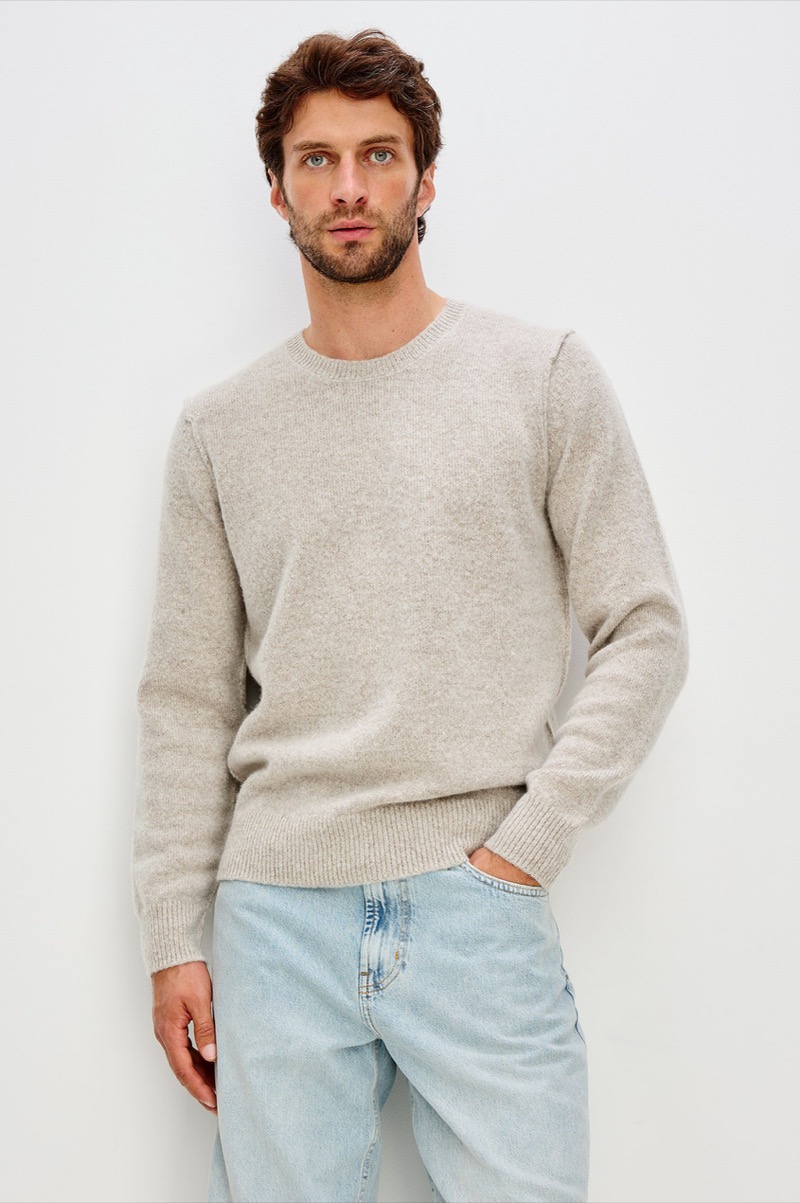
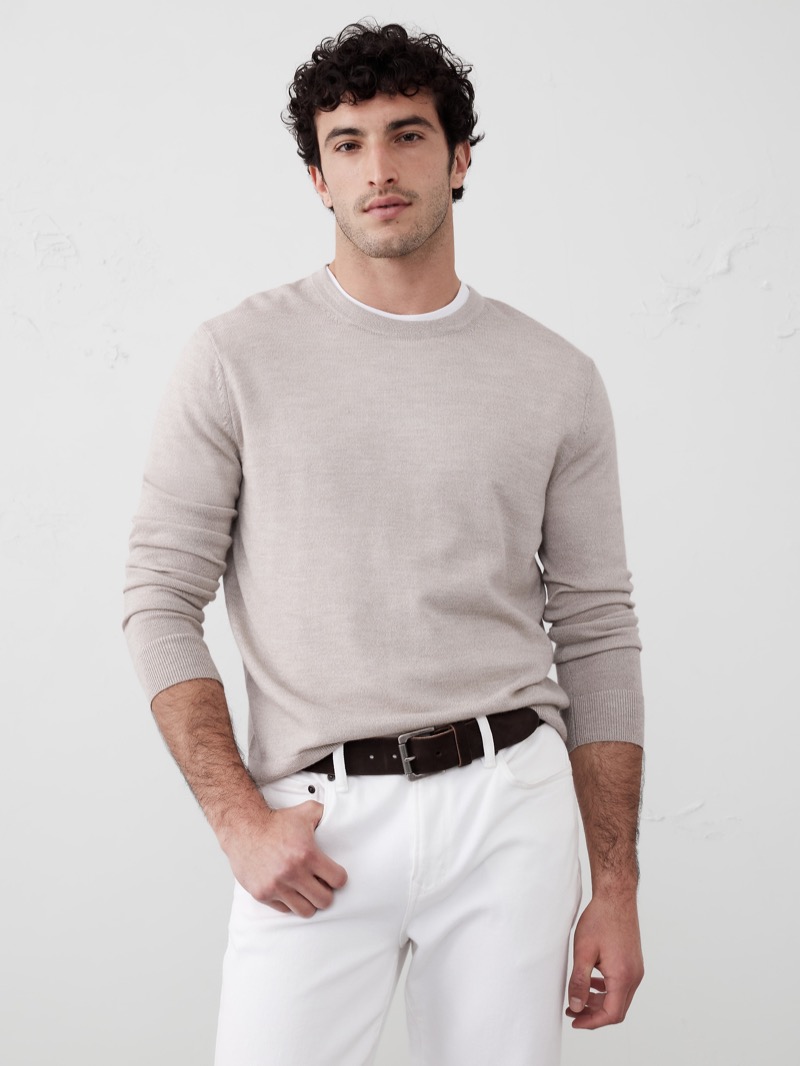
A crewneck sweater is a pullover with a round, collarless neckline that sits at the base of the neck. It is the most common and versatile sweater type in men’s knitwear, and the one that belongs in every rotation before any other style gets added.
The crewneck works alone over a T-shirt, layered over a button-down with the collar showing, or under a jacket for a polished cold-weather look. Navy, grey, and black cover the widest range of outfits. The simplicity is the point. A well-fitted crewneck in a quality wool or cotton knit does what most men need a sweater to do.
Best for everyday wear, layering, casual to smart casual settings, year-round use.
V-Neck Sweater
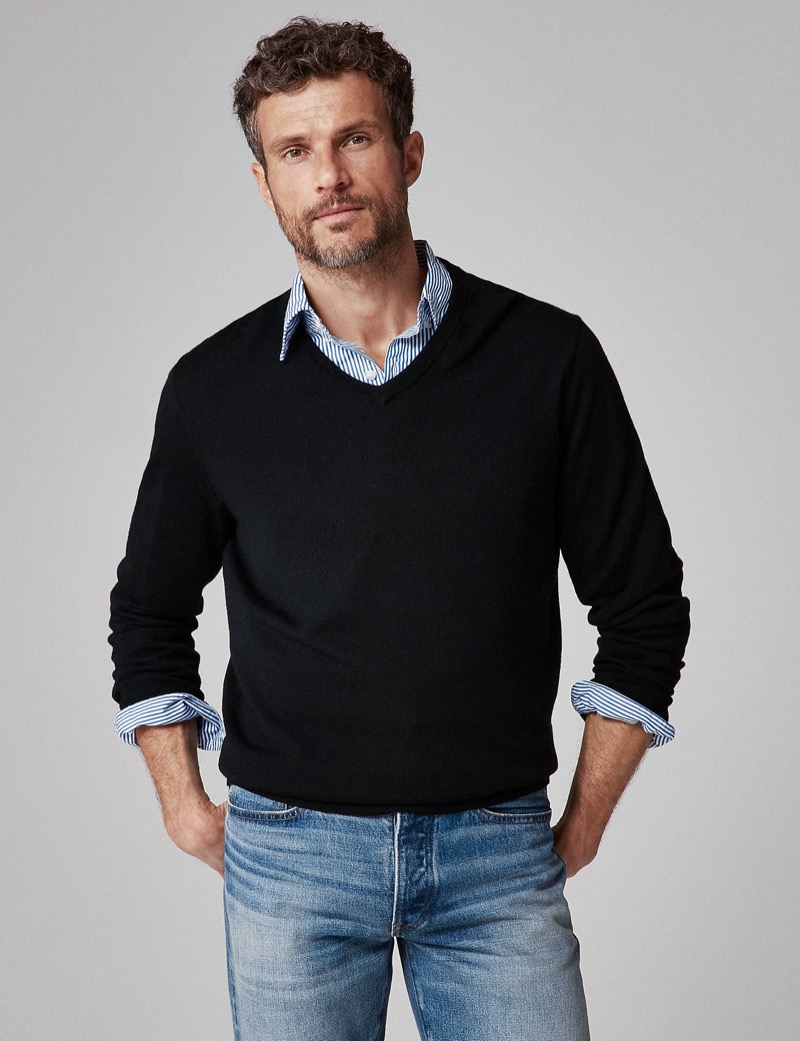
A V-neck sweater is a pullover with a V-shaped neckline that exposes the collar of the shirt beneath it. The open neckline creates a natural frame for a dress shirt and tie, which makes the V-neck the default sweater for office layering and business casual dressing.
The V-neck fell out of fashion conversation for a few years as crewnecks dominated casual style. It has returned as a layering tool for men who want to show their shirt and collar. Wearing a V-neck over a bare chest or a crew-neck T-shirt misses the purpose of the cut. The design exists to display what’s underneath it.
Best for business casual, office layering, showing a shirt collar, polished casual outfits.
Cardigan
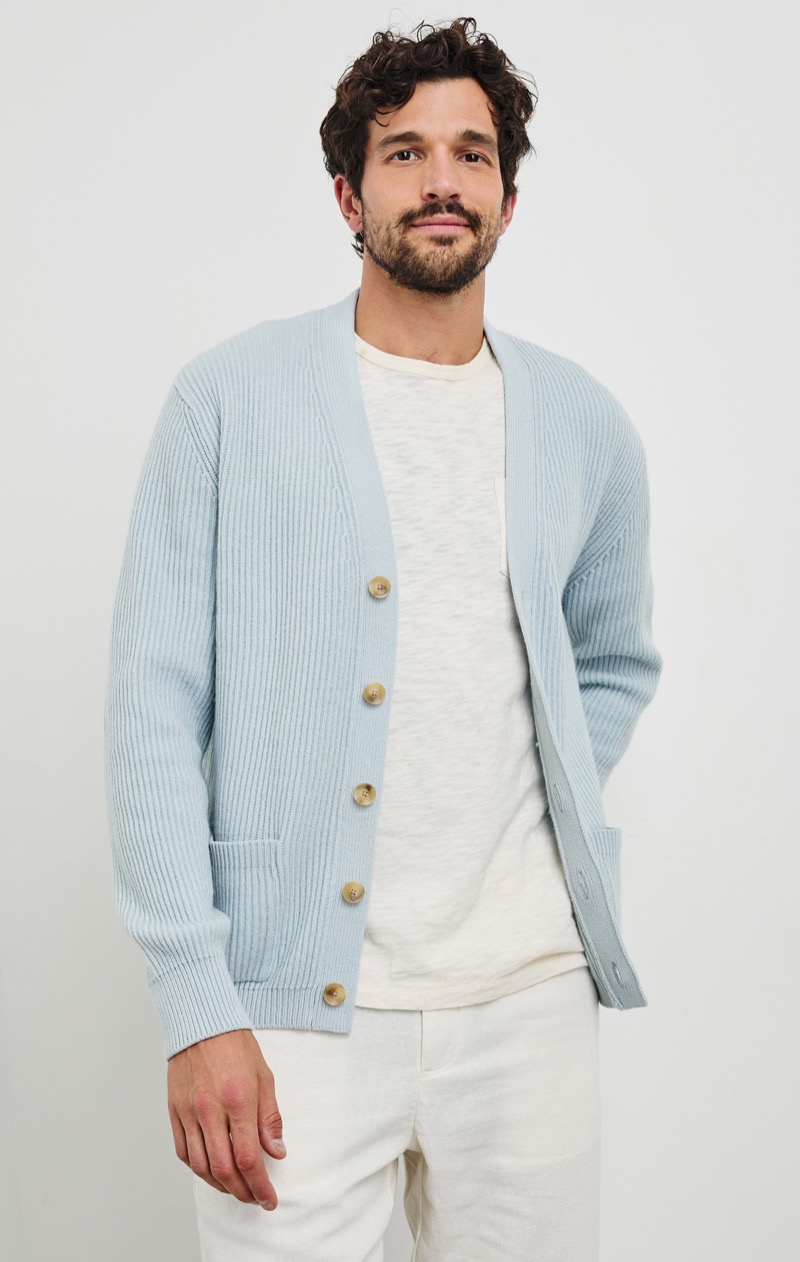
A cardigan is an open-front sweater that fastens with buttons, a zipper, or is left open entirely. The construction allows you to put it on and take it off like a jacket, which makes it the most flexible sweater type for temperature changes and transitional weather.
Cardigans range from lightweight fine-gauge knits that function as indoor layers to chunky shawl-collar versions that replace a jacket entirely. How to style a cardigan for men depends on the weight. A thin cardigan over a T-shirt and jeans is effortless casual. A heavier knit cardigan over a button-down with chinos crosses into smart casual, and our guide on how to style chinos for men covers the pairing in detail. What to wear with a cardigan comes down to treating it like a soft jacket and dressing accordingly.
Best for transitional weather, indoor layering, casual to smart casual, men who run warm and want to adjust layers easily.
Turtleneck Sweater
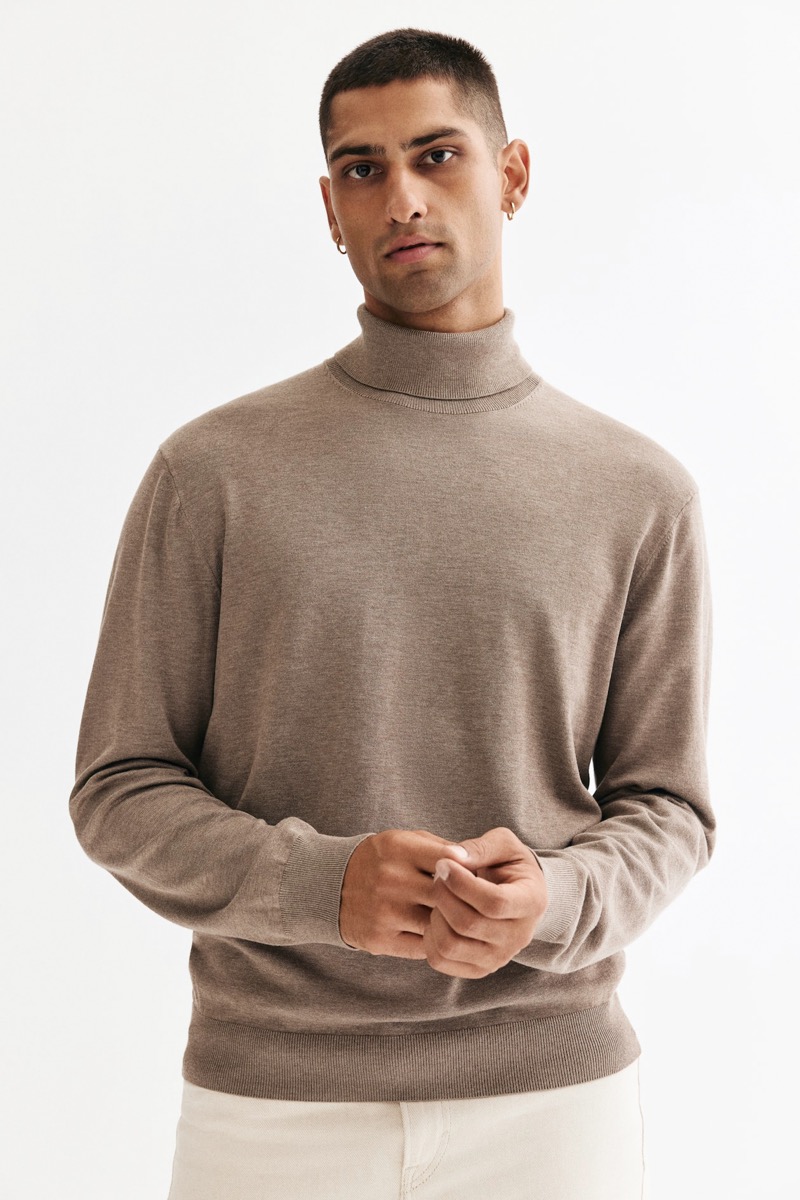
A turtleneck sweater is a pullover with a high, close-fitting collar that folds over and covers the neck. The turtleneck is the dressiest pullover sweater a man can own, and it functions as an alternative to a shirt and tie under a blazer or sport coat.
The key is fit. A turtleneck that bunches at the collar or bags through the body defeats the streamlined silhouette that makes the style work. Merino wool or cashmere in black, navy, charcoal, or cream covers the most versatile range. Pair it with tailored trousers and a sport coat for a look that replaces a suit and tie in most settings.
Best for smart dressing, layering under blazers, cold weather, evening outfits, replacing a dress shirt in polished settings.
Rollneck Sweater
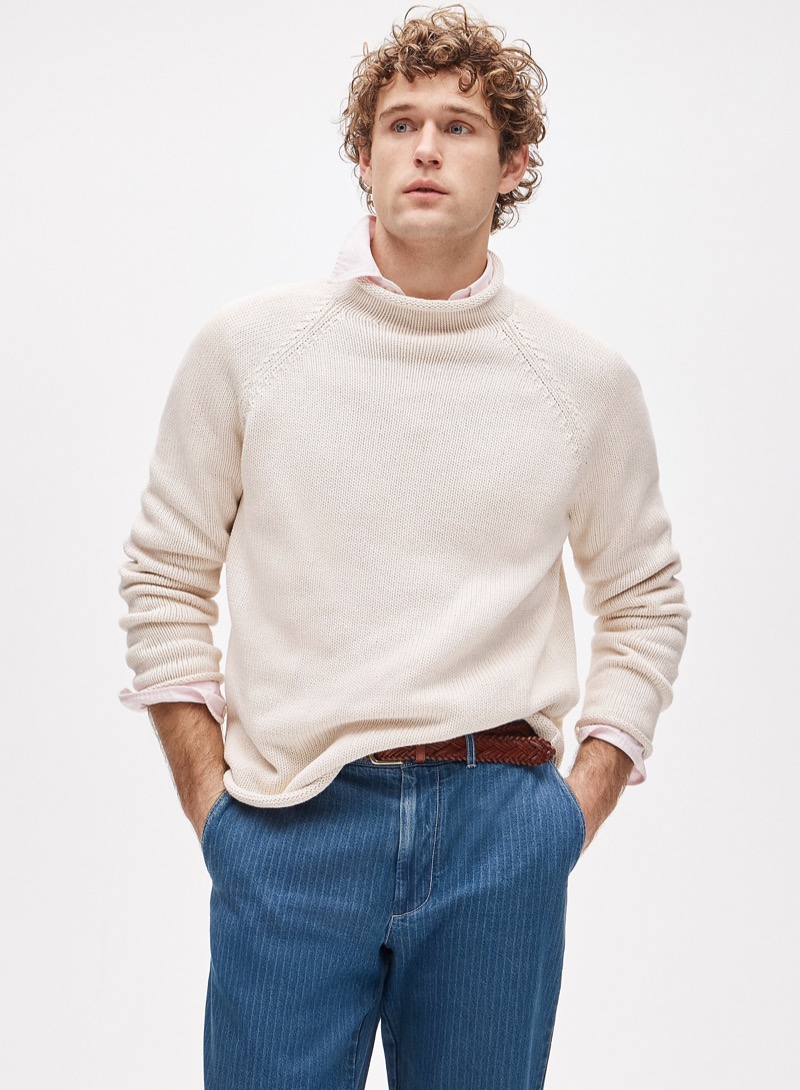
A rollneck sweater is a high-collared pullover where the collar falls and folds naturally against the neck instead of being shaped into a tight, structured fold like a turtleneck. The result is a softer, looser collar that bunches slightly and sits with a casual drape.
The distinction between a rollneck and a turtleneck is subtle but visible. A turtleneck collar is fitted and precise. A rollneck collar is relaxed and unforced, which gives the neckline a textured, slightly undone quality. Rollnecks tend to appear in heavier gauge knits where the thicker yarn makes a tight fold impractical. They pair well with overcoats and leather jackets where a polished turtleneck would feel too formal for the rest of the outfit.
Best for casual cold-weather layering, relaxed smart casual, pairing with outerwear, men who find turtlenecks too structured.
Mock Neck Sweater
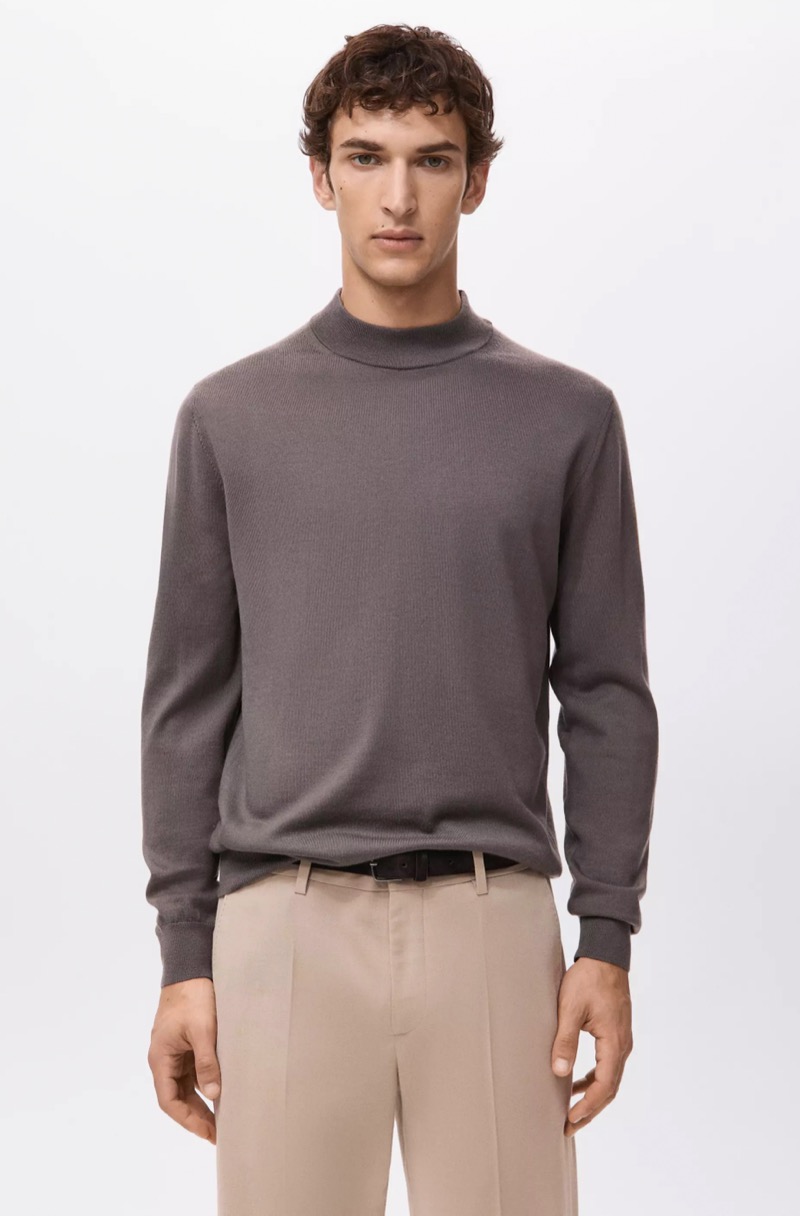
A mock neck sweater is a pullover with a short, upright collar that covers part of the neck but does not fold over. It sits between a crewneck and a turtleneck in both height and formality, offering coverage and warmth with a cleaner line than a full rollneck.
The mock neck has gained ground as a modern alternative for men who want neck coverage but find the full turtleneck fold restrictive or too formal. The shorter collar also works well for men with shorter necks, where a full turtleneck can compress the proportions. The same fabric and styling rules apply as the turtleneck.
Best for cold weather, men who want neck coverage with a modern look, layering under jackets, smart casual outfits.
Quarter-Zip Pullover
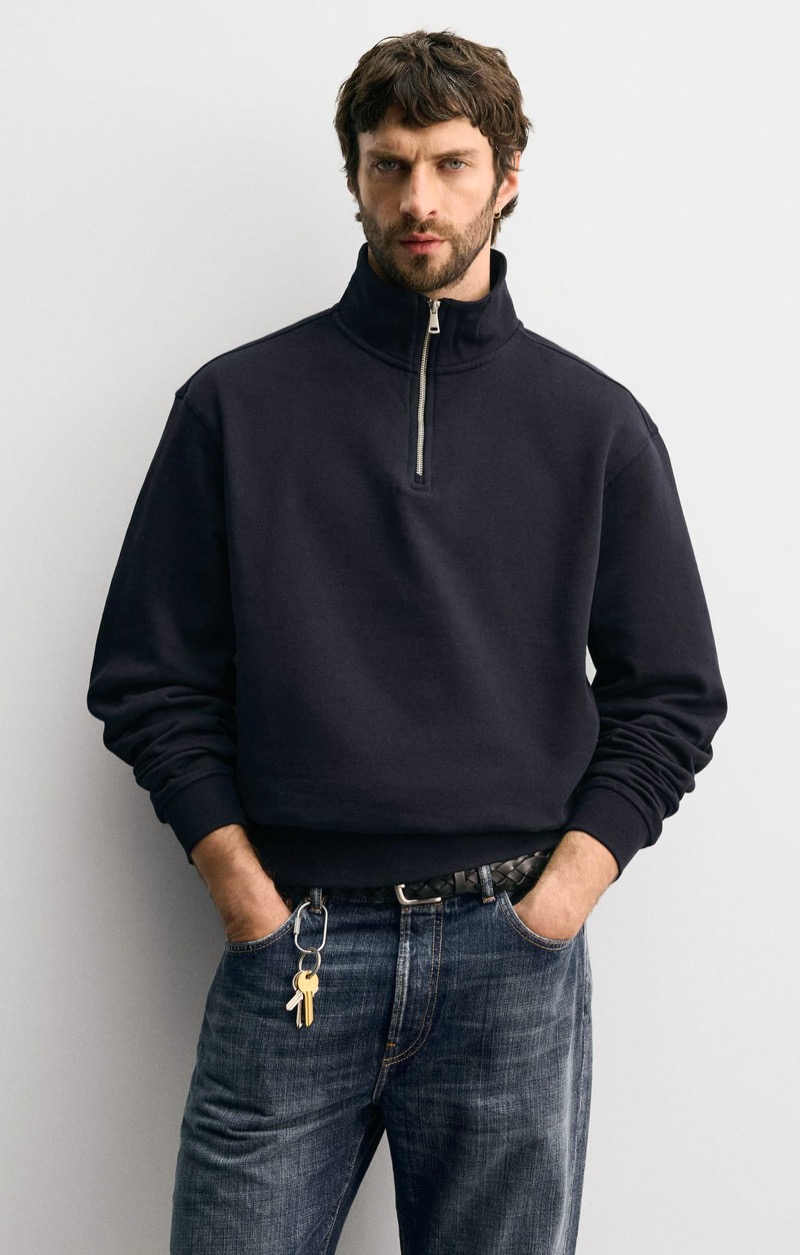
A quarter-zip pullover is a collared sweater with a zipper that runs from the chest to the throat, allowing ventilation and easy on-and-off. It is the most casual sweater type in a standard rotation, sitting closer to activewear than tailored knitwear. The go-to pullover for men who want comfort and warmth in a single layer.
Quarter-zips come in everything from technical fleece to merino wool. The fabric determines the context. A fine-gauge wool quarter-zip pairs with chinos and a collared shirt for a business casual Friday. A fleece quarter-zip is weekend-only. The zipper makes temperature regulation easy, which is why this style has become a default for men who move between indoors and outdoors throughout the day.
Best for casual wear, weekend outfits, golf, business casual in relaxed offices, transitional weather.
Full-Zip Sweater
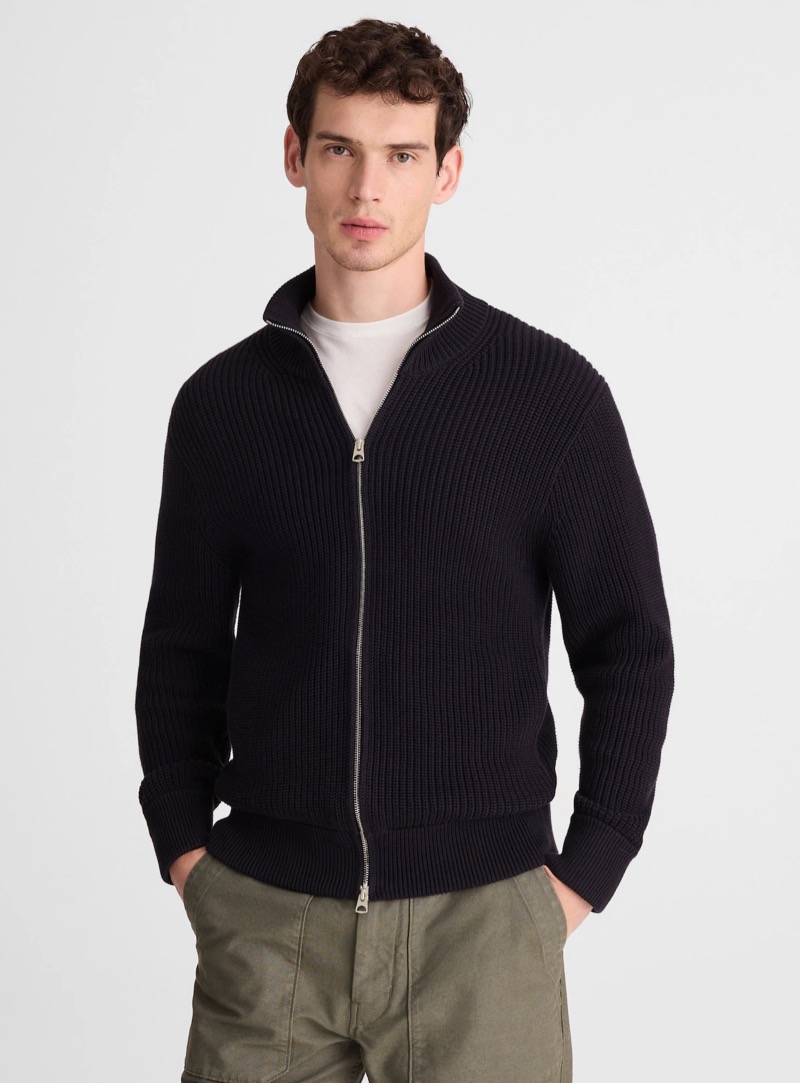
A full-zip sweater is a knitted layer with a zipper that runs from the hem to the collar, functioning as a sweater jacket that goes on and off like outerwear. The full zipper gives it the convenience of a cardigan with a cleaner, sportier line.
Full-zip sweaters sit between a quarter-zip and a cardigan in both look and utility. A fine-gauge merino full-zip in navy or charcoal works as a light jacket for office commutes and travel. A heavier wool or cashmere-blend version replaces a casual jacket on cool evenings. The key is avoiding the fleece-vest look. Stick to knitted fabrics, keep the fit trim, and treat it like a piece of knitwear that happens to zip, not a jacket made from sweater material.
Best for travel, commuting, transitional weather, men who want the ease of a jacket with the feel of a sweater.
Cable Knit Sweater
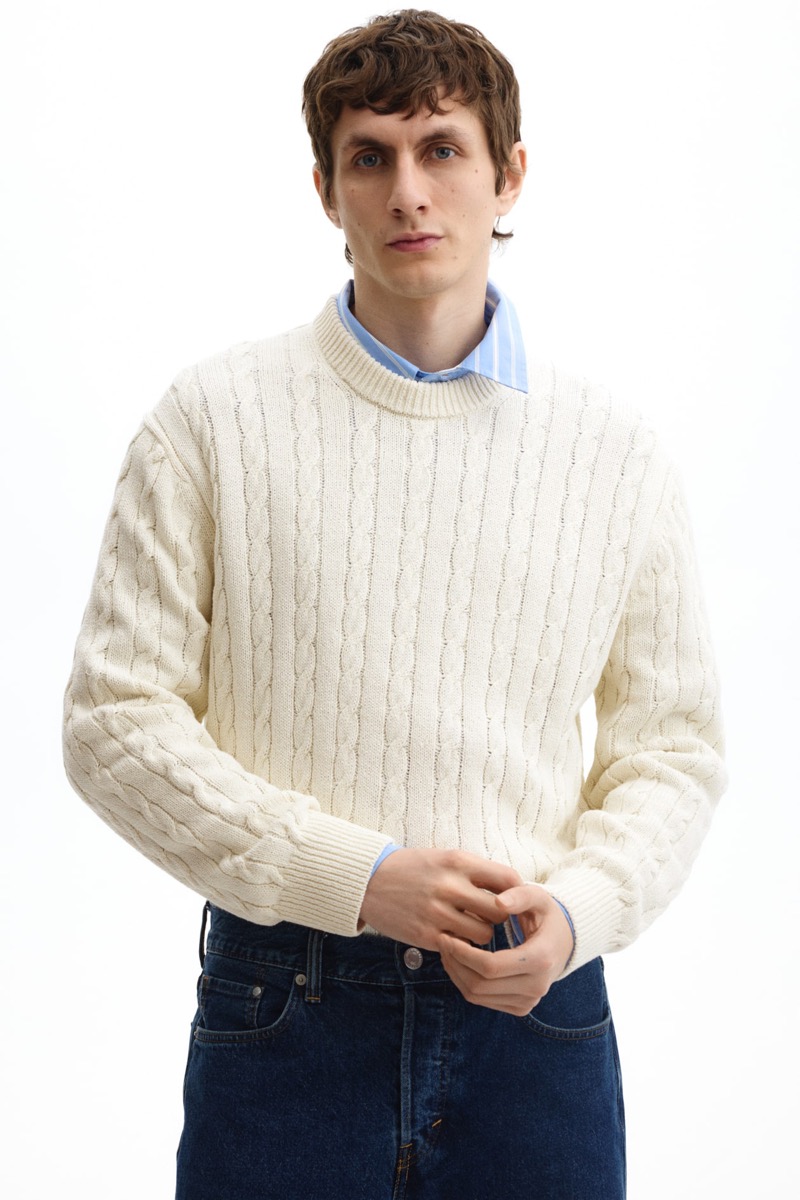
A cable knit sweater is a heavyweight knitted sweater featuring raised, interlocking rope-like patterns across the fabric. The men’s cable knit sweater originated with fishermen in the British Isles, where the dense weave served as insulation against North Atlantic wind and spray.
The texture makes cable knit sweaters the most visually substantial option in a knitwear rotation. They command attention in a way that flat-gauge knits do not. A cream or oatmeal cable knit over a chambray shirt with dark denim is one of the strongest cold-weather casual outfits in menswear. Keep the rest of the outfit simple. The knit does the talking.
Best for cold weather, casual weekend wear, statement layering, rugged and heritage-inspired outfits.
Fisherman Sweater
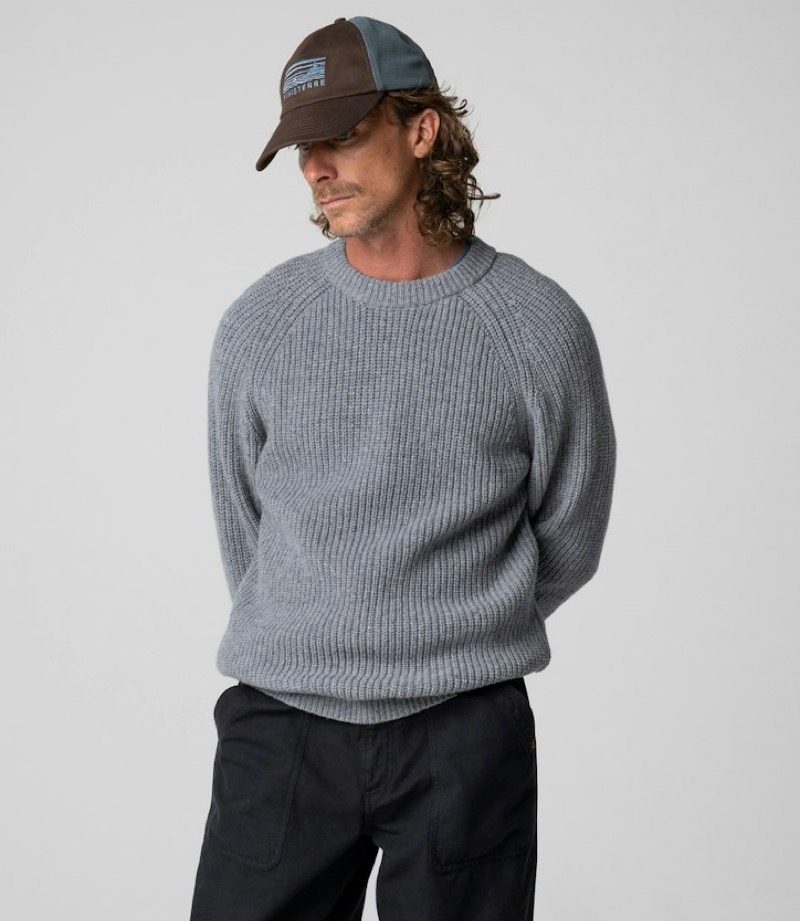
A fisherman sweater is a heavyweight wool pullover originating from coastal Ireland and the Aran Islands, featuring multiple textured stitch patterns across the body. Where a cable knit sweater uses one repeating pattern, a fisherman sweater combines cables, diamonds, honeycomb, and moss stitches into panels that run vertically down the garment.
Traditional fisherman sweaters were knitted from undyed, lanolin-rich wool that repelled seawater. Modern versions come in a wider range of colors and blends, but cream and oatmeal remain the most recognizable. The density of the knit makes fisherman sweaters some of the warmest in any rotation. They are substantial garments. A fisherman sweater over a simple T-shirt and dark jeans is a complete cold-weather outfit that needs nothing added to it.
Best for deep winter, heritage and coastal style, standalone cold-weather outfits, men who want maximum texture and warmth.
Fair Isle Sweater
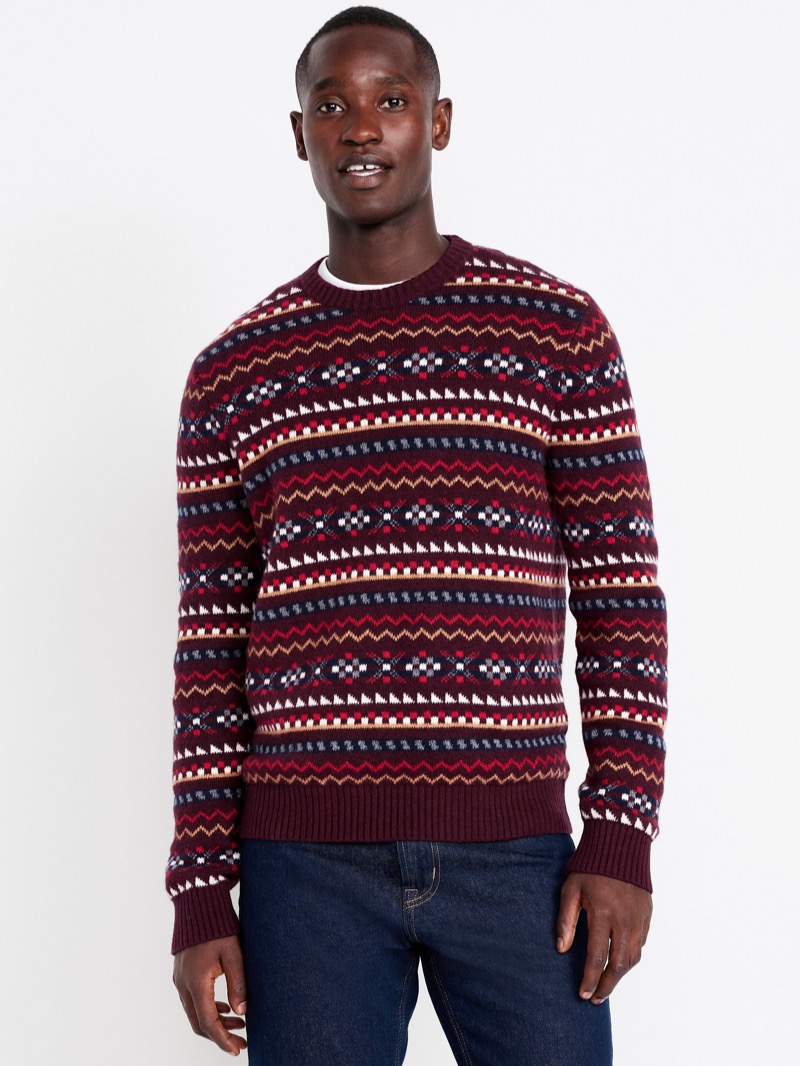
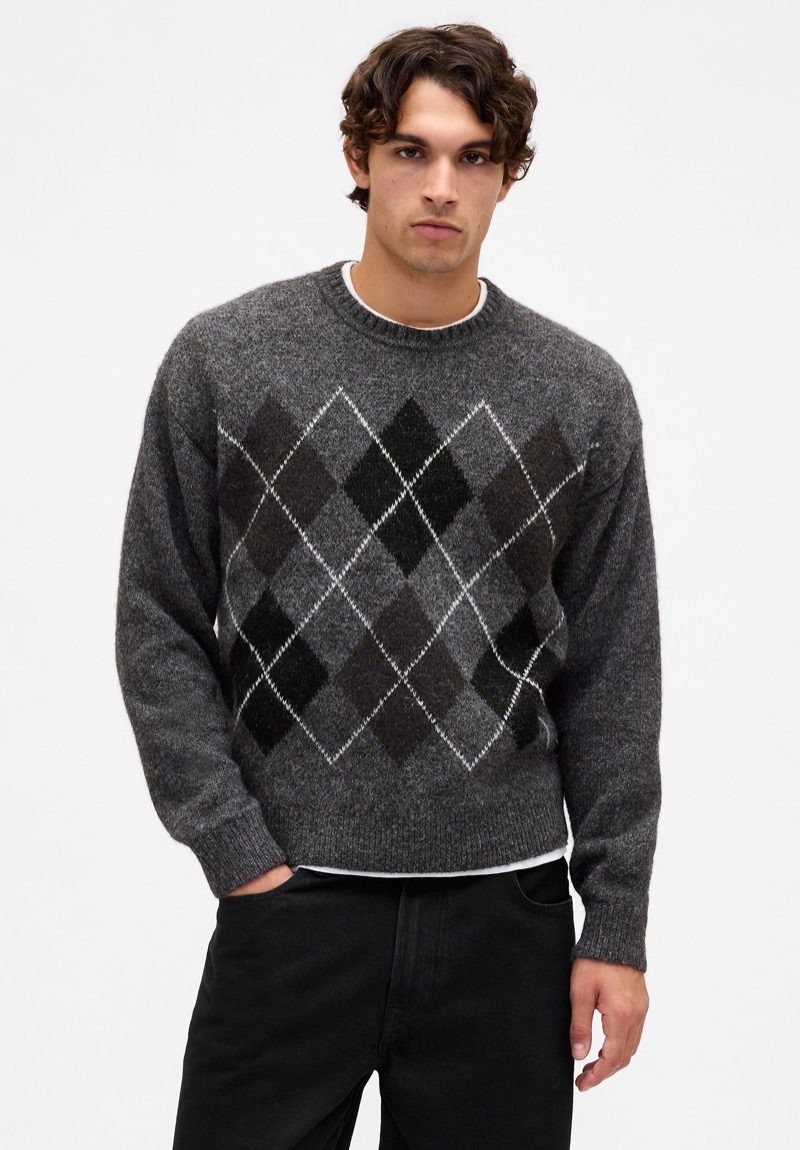
A Fair Isle sweater is a patterned knit sweater featuring bands of multicolored geometric motifs, originating from Fair Isle, a small island between Scotland and Norway. The patterns are knitted in, not printed, which means each row uses multiple yarn colors worked simultaneously.
Fair Isle sweaters are seasonal by nature. They appear in fall and winter rotations and feel out of place in warm weather. The pattern itself is busy, so the rest of the outfit should stay subdued. Solid-color trousers, simple footwear, and no other patterns in the outfit. One Fair Isle sweater adds personality to an entire cold-weather wardrobe.
Best for fall and winter casual, holiday gatherings, adding pattern to a neutral wardrobe, heritage style.
Shawl Collar Sweater
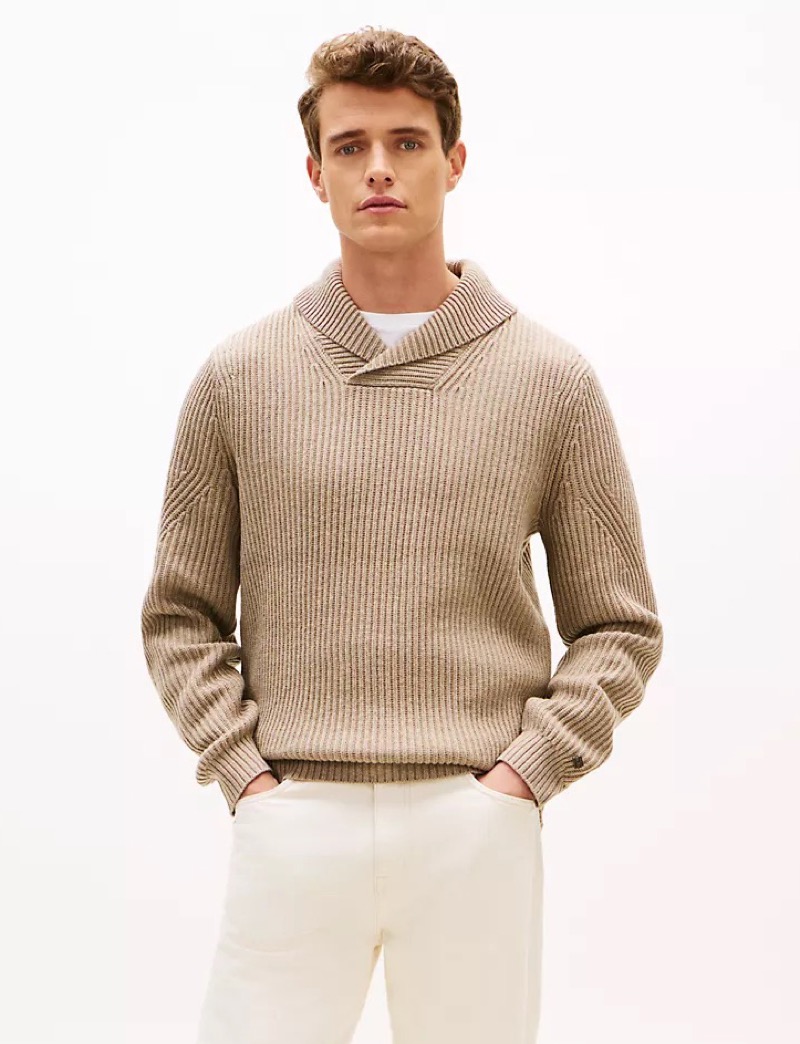
A shawl collar sweater has a wide, continuous collar that rolls from the back of the neck into overlapping lapels at the front, resembling the drape of a shawl. The collar gives the sweater a relaxed formality that sits between a standard crewneck and a sport coat.
Shawl collar sweaters work best in heavier weights. A chunky wool or wool-blend version over a T-shirt or henley makes a strong standalone cold-weather piece. The collar frames the face and chest, which gives the upper body visual presence. Cardigan versions with a shawl collar are common and function as a soft alternative to a blazer on evenings that call for something between casual and dressed up.
Best for cold-weather evenings, fireside settings, date nights, standalone layering when a jacket feels too formal.
Sweater Vest
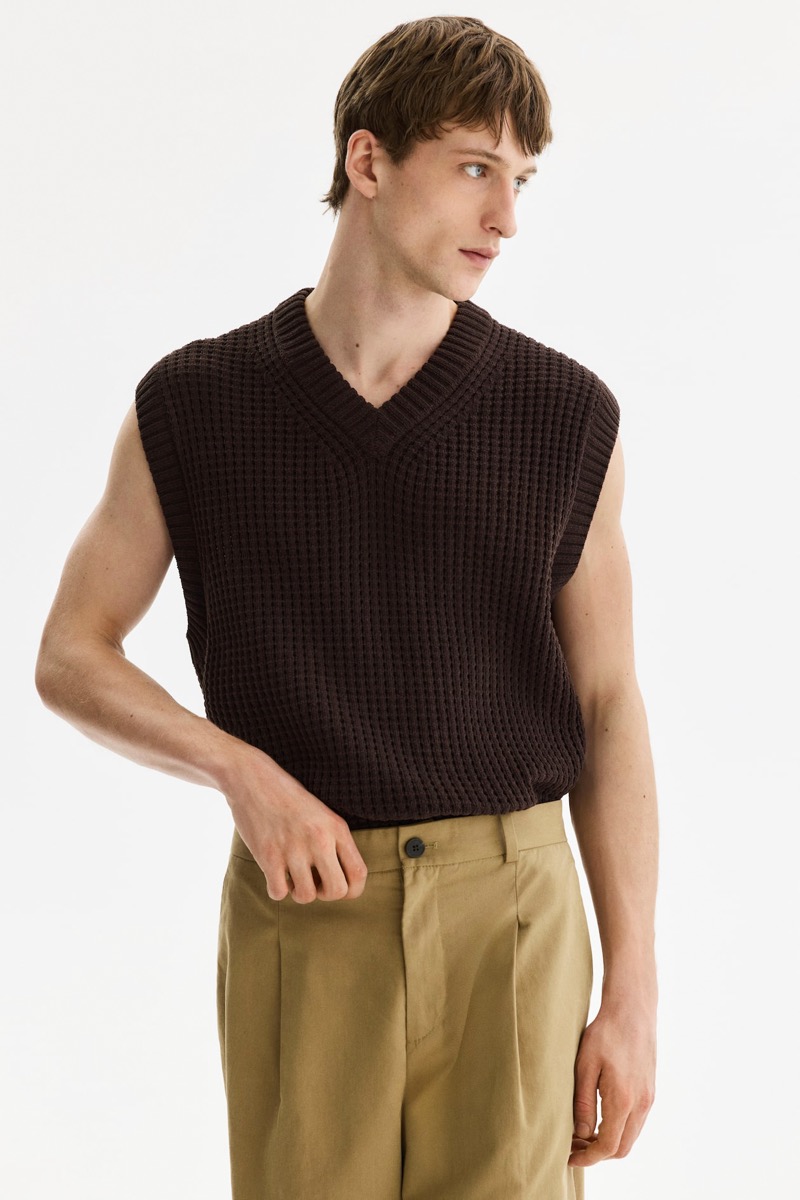
A sweater vest is a sleeveless sweater that covers the torso and leaves the arms exposed. It functions as a layering piece over a shirt, adding warmth to the core while keeping the arms free for movement or temperature regulation.
The sweater vest has cycled between unfashionable and desirable multiple times. The current cycle has it firmly in play, driven by a broader return to preppy and academic aesthetics. A V-neck sweater vest over a white Oxford with the sleeves rolled is the signature look. Crewneck sweater vests work over T-shirts for a casual, slightly vintage approach. The fit should be trim. A baggy sweater vest looks like a hand-me-down.
Best for layering over dress shirts, preppy and academic style, office wear, transitional seasons.
Henley Sweater
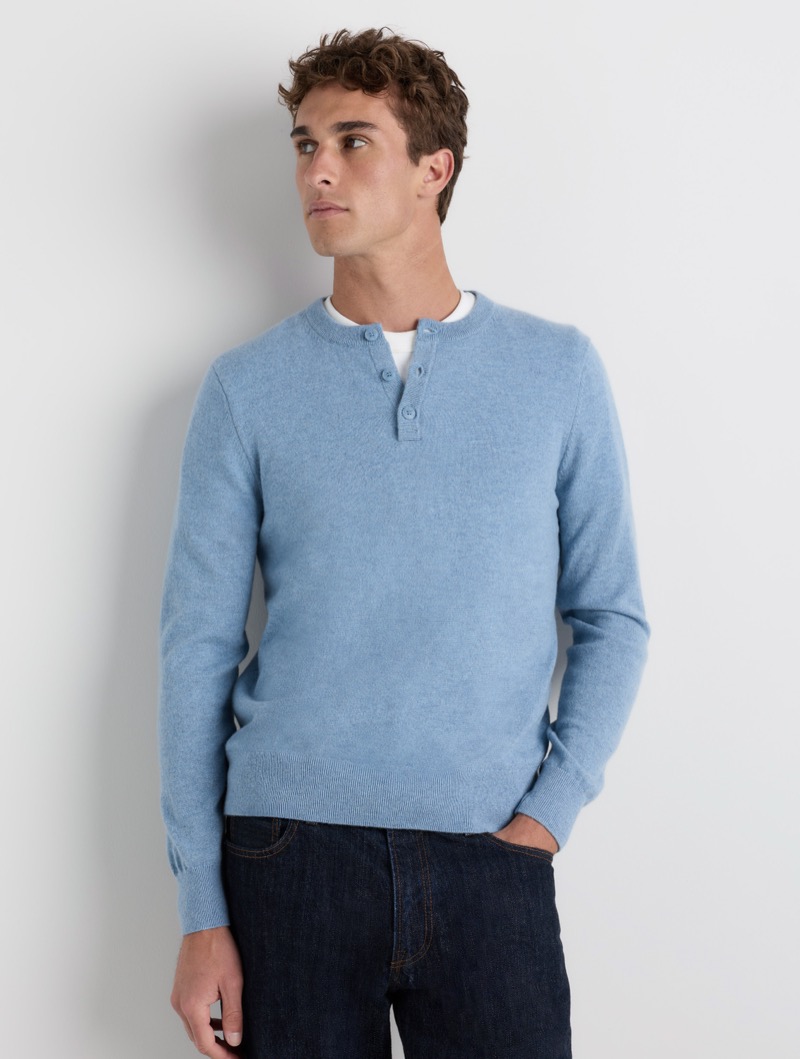
A henley sweater is a collarless pullover with a short button placket at the neckline, typically featuring two to four buttons. The placket adds visual detail that a crewneck lacks, which gives the henley sweater a casual ruggedness that pairs naturally with denim and workwear-inspired outfits.
The henley sweater sits between a basic crewneck and a polo sweater in terms of visual interest. It offers texture and detail at the neckline while keeping the overall look relaxed. Waffle-knit and thermal henleys are common variations that add fabric texture to the placket detail. Earth tones, oatmeal, and muted greens work well in this style.
Best for casual wear, weekend outfits, workwear-inspired looks, layering under open jackets.
Polo Sweater
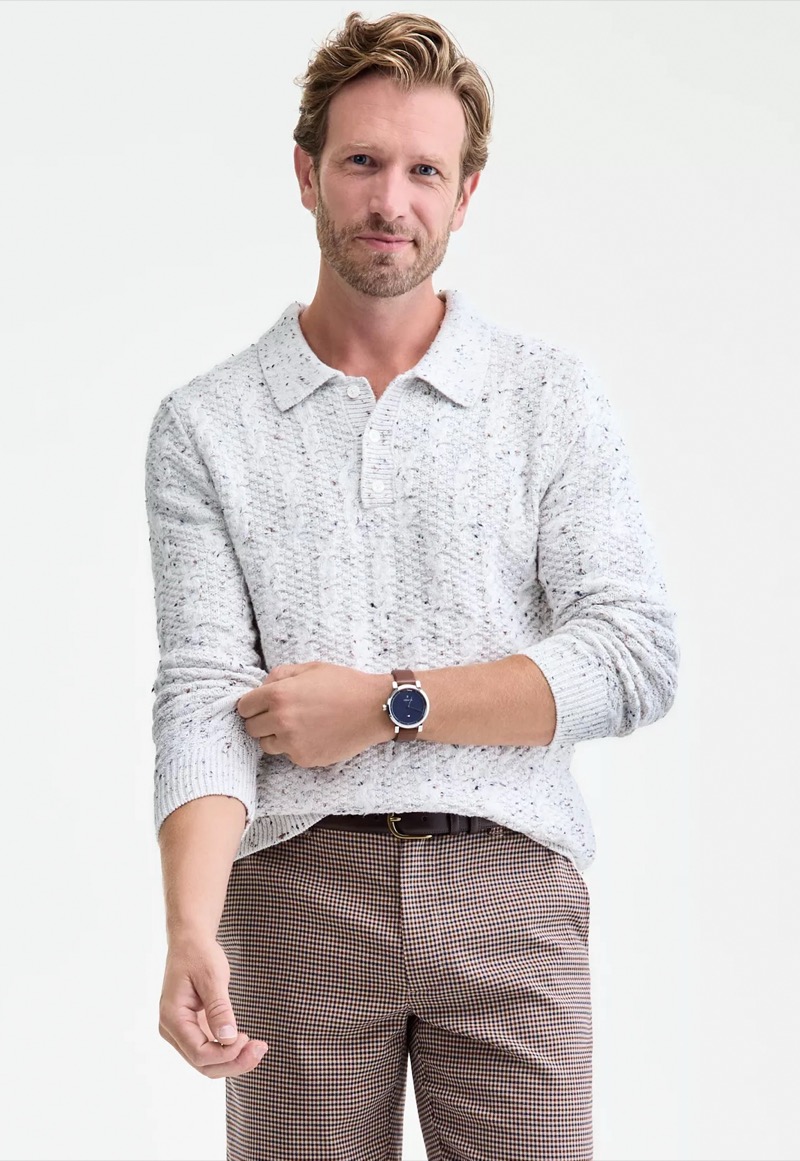
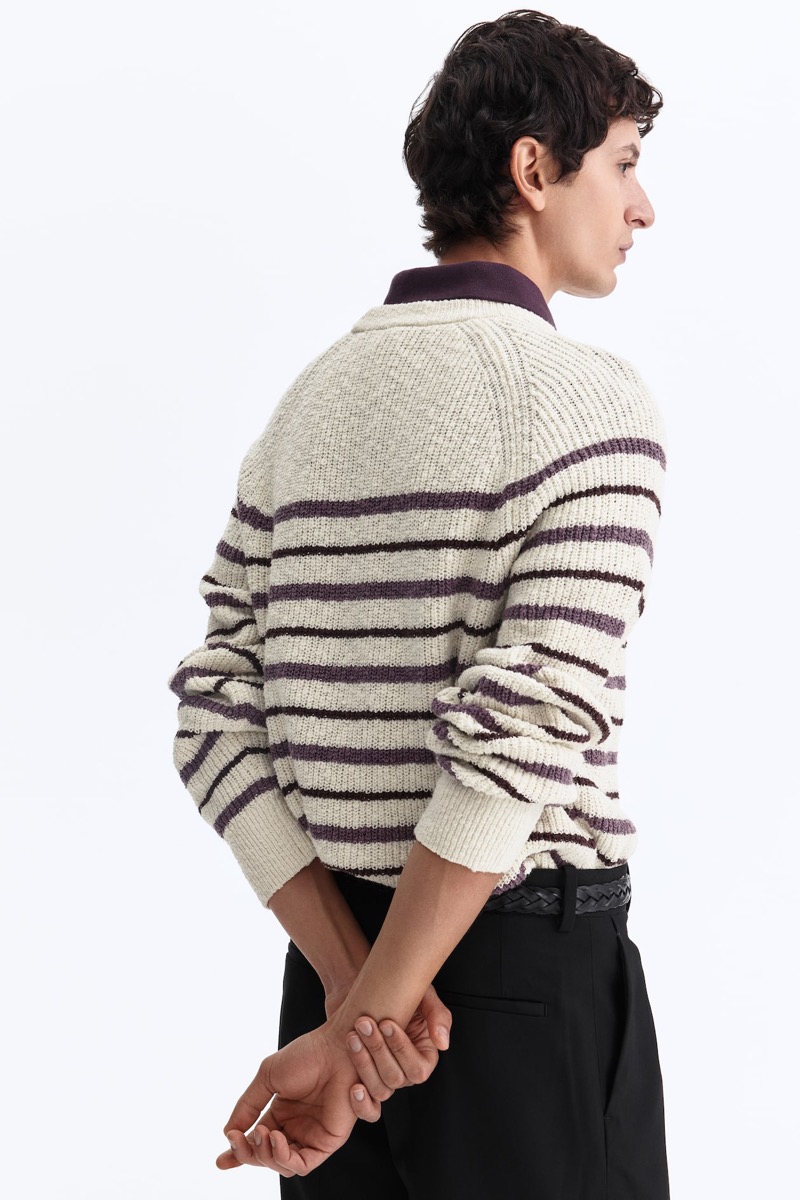
A polo sweater is a knitted sweater with a flat polo collar and a two-to-three-button placket, combining the structure of a polo shirt with the weight and warmth of a sweater. It sits at the intersection of casual and smart casual, offering dressier potential than a crewneck while maintaining a relaxed collar.
The polo sweater works especially well in fall and spring when a full sweater feels too heavy and a polo shirt feels too light. Merino wool and cotton-cashmere blends give the polo sweater the drape and body it needs. Navy, burgundy, and forest green are the strongest color choices. Pair with tailored trousers or chinos for a look that handles dinner reservations and weekend gatherings with equal confidence.
Best for smart casual settings, fall and spring layering, dinner outfits, a polished alternative to a standard polo shirt.
Hooded Sweater
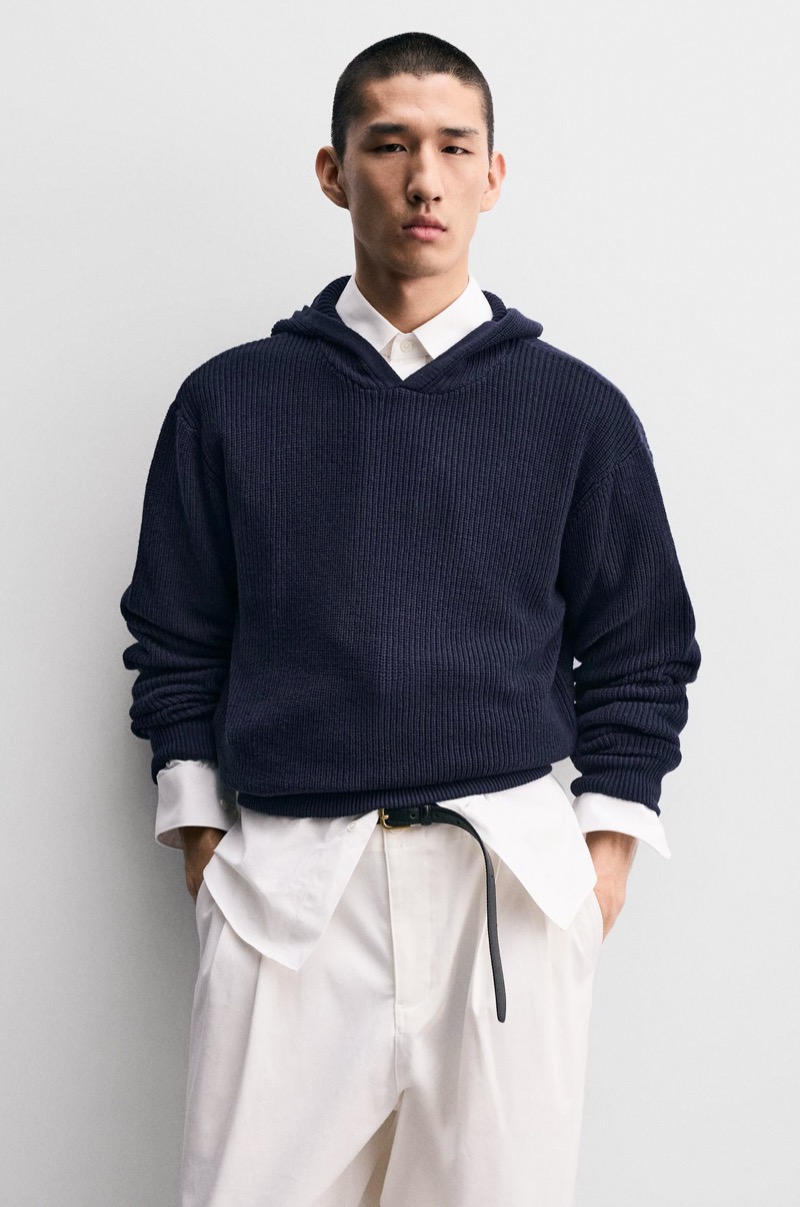
A hooded sweater is a knitted pullover or zip-front layer with an attached hood, combining the warmth of knitwear with the casual utility of a hoodie. The knitted construction separates it from a standard cotton fleece hoodie, giving it a dressier texture and a cleaner drape.
The hooded sweater works for men who want the comfort of a hood in a fabric that looks polished enough for a restaurant or a casual office. A ribbed wool or cotton-blend version over a collared shirt keeps the look grounded. The hood adds a layer of warmth around the neck and head that no other sweater type offers, which makes it practical for unpredictable weather and outdoor settings where a scarf feels like too much.
Best for casual layering, unpredictable weather, men who want hood functionality in a polished knit, relaxed smart casual.
Sweater Materials and Fabrics
The fabric of a sweater determines its warmth, weight, drape, and how it ages. Two sweaters in the same silhouette will feel and perform entirely differently depending on the yarn.
Merino wool is the strongest all-around sweater material for men. It regulates temperature, resists odor, and drapes well against the body. Merino is finer than standard wool, which means it avoids the itch that keeps some men away from wool knitwear entirely. A men’s wool sweater in merino handles three seasons comfortably.
Cashmere is softer and lighter than wool, with a luxurious hand that makes it immediately noticeable. It insulates well relative to its weight. The trade-off is durability. Cashmere pills faster than merino and requires careful handling. Treat it as a special-occasion fabric, not an everyday one.
Lambswool is the first shearing from a young sheep, which makes it softer than standard wool but coarser than merino. It is warm, durable, and relatively affordable. Lambswool sweaters hold up well over years of wear and make strong cold-weather workhorses.
Cotton produces a lighter, breathable sweater suited to spring and early fall. Cotton knits do not insulate as well as wool, which limits them to mild weather and indoor wear. They wash easily and feel comfortable against skin, which makes cotton sweaters a good entry point for men new to knitwear.
Alpaca is warmer than sheep’s wool, hypoallergenic, and has a subtle sheen. Alpaca sweaters are heavier and tend toward a chunkier aesthetic. They are well suited to deep winter and outdoor settings where maximum warmth matters.
Synthetic blends combine natural fibers with nylon or polyester to add stretch, reduce pilling, and lower cost. A merino-nylon blend resists wear and maintains shape through repeated washing. Pure synthetic sweaters lack the breathability and hand feel of natural fibers but hold up to machine washing and daily use.
How to Choose the Right Sweater
Occasion. Start with where you’ll wear it. Business casual sweaters typically mean a fine-gauge merino crewneck or V-neck in a solid color. A professional sweater for the office should be smooth, fitted, and understated. Weekend sweaters can go heavier, chunkier, and bolder in texture. Match the knit weight to the setting.
Season. Sweater weight should match the temperature. Lightweight cotton and thin merino work for spring and early fall. Mid-weight merino and lambswool cover the bulk of the cold months. Heavyweight cable knits, alpaca, and chunky wool handle the deepest winter. Men’s winter sweaters need body and density. Transitional-season sweaters need versatility.
Fit and body type. A sweater should follow the line of the body. The shoulder seam should sit at the edge of the shoulder. The body should be close but not tight, with enough room to layer a shirt underneath. Slimmer men benefit from structured knits like cable and rib that add visual texture. Broader men do well in flat-gauge knits that drape cleanly. Fit matters as much with sweaters as it does with any other garment.
Color. Navy, grey, and black are the foundation. Charcoal, cream, and burgundy expand the range. Earth tones like olive, camel, and rust suit heavier knits and fall wardrobes. Start with neutrals that pair with everything in your types of pants for men rotation, then add accent colors once the basics are covered.
Weight and gauge. Gauge refers to the tightness of the knit. Fine gauge means tightly knitted, which produces a smoother, dressier surface. Chunky gauge means loosely knitted, which produces texture and volume. Fine-gauge sweaters layer under jackets easily. Chunky-gauge sweaters function as standalone outerwear alternatives. Choose based on how you plan to layer.
How to Care for Sweaters
Proper care doubles the lifespan of a sweater. Knitwear is not constructed like woven fabric, and it responds differently to washing, drying, and storage.
Washing. Hand wash when possible. Use cold water and a wool-specific detergent. If using a machine, place the sweater in a mesh bag and run a delicate cold cycle with a gentle spin. Cashmere and merino especially benefit from infrequent washing. Airing out between wears extends the time between washes.
Drying. Never hang a wet sweater. The weight of the water stretches the fibers and distorts the shape. Lay flat on a clean towel, reshape by hand, and air dry away from direct heat. A drying rack works. A hanger does not.
Storage. Fold sweaters and store them on shelves or in drawers. Hanging stretches the shoulders over time, especially on heavier knits. For off-season storage, clean the sweater first, then store in a breathable garment bag with cedar blocks to deter moths.
Pilling. Pills form when loose fibers tangle on the surface of the fabric. This is normal, especially with cashmere and lambswool. Use a fabric comb or a sweater stone to remove pills gently. Do not pull them off by hand, which damages the knit.
Frequently Asked Questions
What is a sweater?
A sweater is a knitted garment worn on the upper body, typically made from wool, cotton, or synthetic yarn. It provides insulation and layers over shirts, T-shirts, or other base layers. Sweaters differ from woven tops in that they are constructed from interlocking loops of yarn, which gives them stretch, texture, and a distinctive drape.
What is the difference between a sweater and a sweatshirt?
A sweater is knitted from yarn, typically wool, cotton, or cashmere, using interlocking loops. A sweatshirt is made from a woven cotton fleece fabric, usually French terry or brushed fleece, and constructed like a standard cut-and-sew garment. Sweaters are dressier and vary widely in texture and weight. Sweatshirts are casual by default and uniform in feel regardless of brand.
What type of sweater is best for business casual?
A fine-gauge merino crewneck or V-neck in a solid color is the safest choice for business casual settings. Navy, charcoal, and grey pair well with dress shirts and chinos. The V-neck is ideal when you want to display a shirt collar and tie. Business casual sweaters should be smooth in texture and tailored in fit.
What are the warmest sweaters for men?
Cable knit sweaters, chunky lambswool, and alpaca knits are the warmest options in men’s knitwear. The dense construction and heavyweight yarn trap body heat effectively. For extreme cold, a turtleneck in a heavy merino or cashmere-wool blend provides both warmth and full neck coverage. Men’s winter sweaters perform best in natural fibers that insulate and breathe simultaneously.
How should a sweater fit a man?
The shoulder seam should land at the point of the shoulder, not past it. The body should follow your frame closely enough to show shape but loosely enough to layer a shirt underneath. Sleeves should reach the wrist bone when your arms hang naturally. The hem should fall at or just below the belt line. A sweater that fits well looks deliberate, and one that’s too large looks borrowed.
What sweater goes with everything?
A navy crewneck in merino wool is the single most versatile sweater a man can own. It pairs with jeans, chinos, tailored trousers, and shorts in transitional weather. It layers under blazers and over button-down shirts. Navy works with virtually every color in a standard wardrobe, which makes it the first sweater to buy and the last to retire.
Can you wear a sweater to the office?
Yes, and in most professional environments a sweater is expected during colder months. A fine-gauge merino in a solid color over a collared shirt is appropriate for nearly every office setting. A professional sweater should be clean, well-fitted, and free of bold patterns or heavy textures. V-necks and crewnecks are the standard office sweater types.
How do you style a cardigan for men?
A lightweight cardigan over a white T-shirt with jeans or chinos creates a clean, layered casual outfit. For a smarter look, wear a mid-weight cardigan buttoned over a dress shirt with the collar showing. Leave the bottom button undone. Shawl collar cardigans work as soft jacket substitutes on cooler evenings. Match the cardigan weight to the season and the rest of the outfit stays simple.